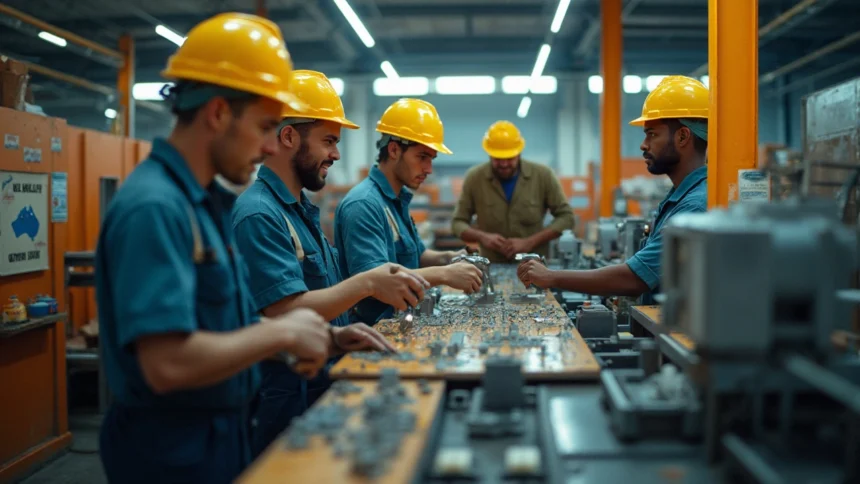
After years of relying on global supply chains, India is witnessing a strong revival of local manufacturing in 2025. What seemed like a slow-moving shift a few years ago has now turned into a national movement driven by technology, government support, and changing consumer behavior. The idea of “Made in India” is no longer just a slogan—it’s becoming a real economic force.
Several factors are fueling this comeback. Rising import costs, global trade disruptions, and the push for self-reliance have encouraged industries to strengthen domestic production. Small and medium-scale units in Tier-2 and Tier-3 cities are now playing a crucial role by supplying components and finished products to larger companies. This decentralization has not only boosted local employment but also helped balance regional economic growth.
Technology has also made local production more efficient. Automation, digital tools, and AI-based manufacturing systems allow Indian businesses to compete globally in both quality and pricing. Many young entrepreneurs are entering the manufacturing sector with innovative ideas, building everything from sustainable packaging to electric vehicle parts using homegrown talent and resources.
Consumers too are driving the change. A growing preference for locally produced goods—whether for economic patriotism or quality assurance—is reshaping demand patterns. Indian-made electronics, textiles, and home products are now being seen as dependable alternatives to foreign brands.
Local manufacturing’s revival is more than an economic trend; it’s a mindset shift. It shows how India is learning to trust its own capabilities again. As industries adapt and innovate, 2025 could mark the start of a long-term industrial renaissance where Indian factories don’t just serve the nation, but also make their mark on the global stage.