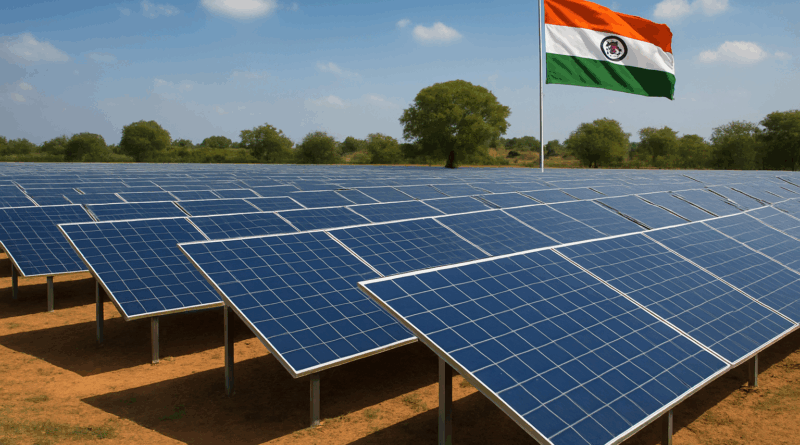
India’s renewable energy developers are reporting strong expansion in planned solar capacity, but project execution timelines are being shaped by grid availability challenges. As new utility scale and distributed solar projects move into development stages, transmission access and evacuation readiness are emerging as decisive factors influencing delivery schedules.
Solar capacity pipeline strengthens across states
India’s renewable energy targets and falling module costs have supported a robust pipeline of solar projects across multiple states. Large developers continue to bid actively in auctions, and corporate buyers are signing up for open access and captive solar arrangements to cut power costs. The pipeline includes both utility scale parks and distributed rooftop and commercial installations. Demand is rising from sectors such as manufacturing, telecom, data centers, and logistics, where power cost savings materially improve operating margins. However, pipeline growth is increasingly outpacing grid upgrade timelines, creating a gap between capacity planned and capacity delivered on schedule.
Grid congestion emerging at high growth nodes
Secondary keyword: transmission capacity constraints
Grid load is concentrated in regions where renewable parks cluster and where industrial demand is expanding. States with strong solar irradiation and high land availability often face bottlenecks when multiple projects feed into the same substation or transmission corridor. Developers report cases where capacity was awarded but evacuation readiness lags by several months or quarters. Even temporary grid constraints increase holding costs, delay revenue realization, and complicate lender commitments. Transmission utilities are working to expand networks, but coordination across planning, land acquisition, and environmental approvals influences the pace of expansion.
Balancing renewable supply with demand centers
Renewable project locations are often far from major consumption centers. Moving large scale solar electricity across long distances requires high voltage transmission networks that need advance planning. Industrial clusters, commercial hubs, and growing urban regions require power reliability, making grid stability a core requirement. Developers highlight the need for integrated infrastructure planning so generation capacity additions align with transmission and distribution upgrades. Without synchronized rollout, renewable power risks curtailment, where available power cannot be dispatched due to network limitations. Curtailment directly affects project economics and investor confidence.
Storage solutions gaining relevance
Secondary keyword: battery storage integration
Energy storage is increasingly discussed as a way to stabilize renewable power supply and alleviate grid stress. Battery energy storage systems can shift solar generation to evening demand peaks and reduce congestion during high generation periods. However, storage deployment costs are still high compared to standalone solar, and large scale storage procurement frameworks are evolving gradually. Developers are evaluating hybrid solar plus storage bids and pilot projects at specific sites, but broad adoption depends on tariff design clarity, incentive structures, and long term revenue visibility. Storage could meaningfully reduce curtailment risks if commercial models stabilize.
Policy and coordination efforts underway
Central and state agencies are tracking renewable adoption targets alongside transmission capacity planning. The government has been pushing for faster interstate corridor development, green energy corridors, and transmission lines dedicated to renewable clusters. However, land acquisition complexity and environmental clearances influence project speed. Developers are calling for more synchronized communication between state nodal agencies, transmission utilities, and renewable project companies. Streamlined approval and phased capacity reservation systems could reduce uncertainty and improve pipeline conversion rates.
Corporate renewable procurement shifts strategy
Corporate buyers entering long term power purchase agreements are evaluating grid readiness as a core criterion when selecting project partners. Open access projects require assurance on transmission reliability to justify investment commitments. Companies are increasingly preferring developers with stronger execution track records, grid planning awareness, and diversified project locations to mitigate bottleneck risks. This shift could consolidate market share among larger renewable developers that have deeper operational planning capabilities.
Rooftop and distributed solar demand remains robust
Rooftop and commercial scale solar installations are growing steadily in industrial parks, warehouses, and institutional campuses. While these projects do not rely on interstate transmission networks, they depend heavily on local distribution network capacity. In densely populated urban substations, distribution transformer loading constraints can limit project scale or require additional upgrades. Developers are working closely with discoms to ensure load balancing and technical feasibility before project finalization. This segment remains resilient due to clear cost savings and shorter project timelines.
Outlook depends on synchronized infrastructure delivery
India’s renewable energy momentum remains strong, supported by clear policy direction, technology cost reduction, and private sector demand. However, unlocking the next phase of growth requires timely grid expansion and more coordinated rollout between generation and transmission development. Developers, investors, and policymakers are aligned on the need for infrastructure readiness to avoid curtailment risks and maintain financial stability across future projects. The trajectory suggests strong long term growth, but near term project execution depends on grid capacity availability.
Takeaways
• Solar capacity pipeline is expanding quickly across utility and commercial segments
• Grid bottlenecks and evacuation delays are emerging as key execution challenges
• Storage integration and coordinated planning can reduce curtailment risks
• Transmission infrastructure timelines will shape renewable deployment pace
FAQ
Why are grid bottlenecks becoming a concern for renewables?
Because new solar capacity is being built faster than transmission networks are being upgraded, creating potential delays in power evacuation.
Do these bottlenecks affect project costs?
Yes. Delays increase holding costs, push back revenue timelines, and may affect financing conditions and developer cash flow cycles.
Will energy storage solve the bottleneck problem?
Storage can help balance load and reduce curtailment, but widespread adoption depends on tariff clarity and cost reductions in storage systems.
Is renewable demand still strong despite these challenges?
Yes. Demand from utilities and corporates remains strong, but execution pace will depend on synchronized grid infrastructure readiness.