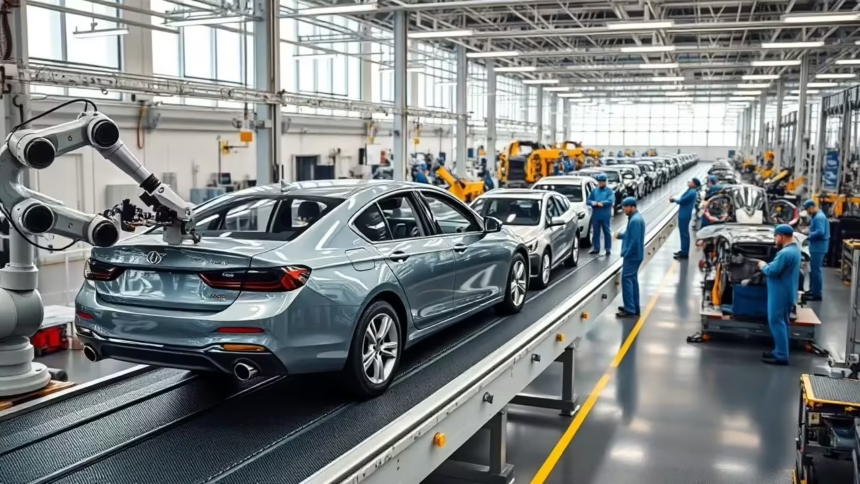
The recent GST rate cut has ignited a sharp revival in India’s auto sector as manufacturers ramp up output by 20-40 percent. This jump reflects strong consumer demand, improved affordability and an urgent push to resolve supply-side bottlenecks.
Why GST reform is changing the game for Indian carmakers
India’s new GST rates now tax small petrol cars (≤ 1200 cc) and similarly specified models at 18 percent instead of 28 percent. GST on larger or luxury vehicles has been adjusted to 40 percent. These shifts reduce cost burdens for affordable models and boost sales momentum. The result: India’s top carmakers are announcing major capacity expansions to meet pent-up demand and cut wait-lists.
Demand surge amid festive and tax tailwinds
Following the GST cuts, several carmakers reported record bookings and depleted dealer stocks. For example, one major manufacturer set a November production target of over 200,000 units versus approximately 172,000 units average in earlier months. Another vendor asked its supply-chain partners to gear up to produce 65,000-70,000 vehicles per month, up from about 47,000 units earlier. With retail sales hitting over 550,000 units in October, the industry anticipates strong momentum for the remainder of the financial year.
Capacity ramp-up and supply-chain mobilisation
Output growth plans of 20-40 percent are underway across plants. For instance, one manufacturer has already initiated dual-shift operations at a second plant to raise capacity by up to 20 percent. The expansions are not just about vehicles but components too—lower GST on auto parts (18 percent) helps ancillary units scale faster. This cascading effect puts manufacturing clusters in Tamil Nadu, Maharashtra and Gujarat on alert for significant ramp-up.
Impacts for buyers, OEMs and the value chain
For buyers, the GST cuts translate directly into price benefits—in some models cost reductions ran up to ₹1.3 lakh, making entry-level cars more accessible. For OEMs the challenge is converting the demand spike into sustained orders without overextending inventory. The broader value-chain—from steel and plastics to glass and tyres—stands to gain from rising volume, but must manage lead-times, logistics and inflationary pressures for raw inputs.
Risks and watch-points amid the output sprint
While the outlook is positive, execution risks remain. Builders must ensure that production capacity, supplier readiness and logistics align with order inflow. Any mismatch could create bottlenecks or inflationary cost pressures. Additionally, sustaining the post-GST demand spike beyond the festive season will require product refreshes and timely deliveries. Another risk: if interest rates rise or macro-conditions soften, discretionary auto demand may cool.
Bigger strategic implications for the auto sector
This GST reform reinforces India’s transformation into a global manufacturing hub for affordable cars. As cost base improves and volumes rise, exports will become a sharper focus. Also, the tax change supports government goals of cleaner mobility and vehicle fleet renewal by accelerating replacement of older vehicles with new models. For global auto players, India’s demand surge makes the market more attractive for investment and localisation.
Takeaways
- The GST rate cut on smaller cars (to 18 percent) triggered a demand surge and output expansion plan of 20-40 percent among major Indian carmakers.
- Car-makers are converting this opportunity into capacity growth: new shifts, higher component sourcing and reduced dealer wait-lists.
- Buyers benefit from significant price drops and faster deliveries but must still monitor variant availability and delivery timelines.
- Industry risks remain: supply-chain readiness, sustaining momentum beyond festive season and macro headwinds could temper growth.
FAQs
Q: What exactly changed in the GST rates for cars?
Small petrol cars (petrol/LPG/CNG up to 1,200 cc and ≤ 4,000 mm length) and small diesel cars (≤ 1,500 cc) now attract 18 percent tax instead of earlier 28 percent. Larger vehicles are taxed at 40 percent. Auto components have also moved to 18 percent.
Q: Why are output targets rising by 20-40 percent now?
Because automakers face strong orders after price reductions and are focusing on clearing backlog, reducing wait-lists and capitalising on festive buying. With dealer stocks low and bookings high they are scaling up capacity aggressively.
Q: Will this surge in production benefit only the OEMs or also suppliers?
Suppliers benefit significantly—auto parts manufacturers, logistics firms and component MSMEs all stand to gain from higher volumes. However, they must manage capacity, quality and delivery timelines or risk bottlenecks.
Q: Could this growth pace stall?
Yes. If supply-chain disruptions occur, interest rates rise, or demand cools after the festival period, production growth could slow. Also, if automakers over-invest in capacity without seeing sustainable demand, inventory risk could build up.