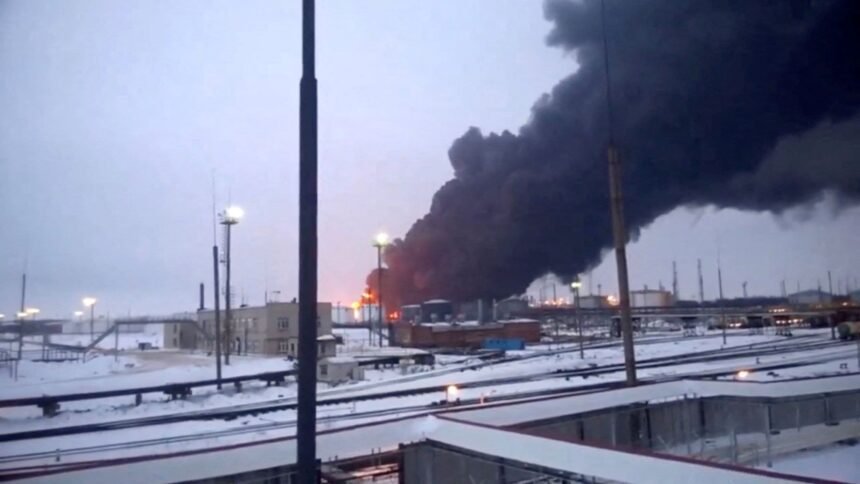
Oil prices rose sharply today as a Ukrainian drone strike on a Russian oil depot triggered supply-risk fears. The surge reflects renewed inflation risk in global markets, as disruptions in Russia’s export chain strike at the heart of energy flows.
A drone attack hit the oil export hub in the Russian Black Sea port of Novorossiysk, raising concerns about crude and fuel-product supply disruption. Oil benchmarks climbed around 2 percent as the market priced in higher risk premiums for global energy. The incident comes amid looming sanctions on major Russian oil firms and elevated inventory builds in the United States—an unusual mix of bullish and bearish signals for oil markets.
What Happened At The Russian Export Hub
The port of Novorossiysk is a key transit point for Russia’s seaborne crude exports. The drone attack damaged a ship, adjacent infrastructure and at least one storage facility. Russian officials confirmed three crew members were injured. The timing is significant: the strike follows earlier disruptions at other Russian export terminals and comes ahead of new sanctions on Russia’s major oil companies.
These events highlight systemic vulnerability in Russia’s oil export chain. While Russia maintains large production capacity, export logistics bottlenecks—particularly in the Black Sea region—are now in sharper focus. Markets interpreted the strike as a signal that further escalation could cut off significant volumes of crude or refined products from export.
Why Oil Is Reacting With Inflation Risk In Mind
Oil price movements carry direct implications for global inflation. Higher fuel costs feed into transport, manufacturing and consumer prices. With global inflation already elevated and central banks under pressure, this oil-shock adds another layer of uncertainty. The premium placed on oil reflects both real supply risk and sentiment that inflation pressures could worsen.
Additionally, the inventory data from the U.S. showed crude stocks rising by about 6.4 million barrels in a recent week—well above expectations. While rising inventories normally weigh on prices, the supply risk from Russia created a countervailing effect. The result is greater price volatility rather than a clear trend. For inflation watchers, the key concern is not simply the price level but the swing risk: a supply cut in Russia combined with demand rebound could trigger a sharper move upward.
Global Market And Policy Implications
For energy-importing regions, a sustained rise in oil prices complicates monetary policy decisions. Central banks may face pressure to respond to fuel-driven inflation, adding to existing challenges of slower growth and tightening financial conditions. In emerging markets, fuel import bills may widen current account deficits and may pressure local currencies further.
In commodity markets, the supply risk in Russia may prompt companies to hedge more aggressively or accelerate alternative sourcing. Some crude buyers may shift away from Russian barrels to West Africa or Middle East producers, increasing logistics cost and potentially tightening global supply even more. For refiners and shipping companies, the uncertainty around export hub reliability may raise insurance premiums and rerouting costs.
What Investors Should Watch Next
Keep an eye on whether the strike triggers a sustained export cut or is an isolated event. Monitor Russian export data, shipping loadings from Novorossiysk and other Black Sea ports. Also watch U.S. inventory reports, especially unexpected draws in distillates or gasoline, which may signal tightening even as crude stocks build.
Up next: sanctions implementation on Russia’s major oil firms (effective late November) may amplify supply disruptions. Policy actions by OPEC+, especially if they revise future production targets in response to tighter supply, are also key. In financial markets, inflation surprise readings or central bank commentary on fuel-driven inflation will influence broader risk sentiment and risk asset flows.
Takeaways
- A drone strike on Russia’s Novorossiysk oil export hub triggered a sharp jump (~2 percent) in global oil prices.
- The event raises inflation risk globally, as higher fuel costs feed into broader consumer and input prices.
- Supply concerns in Russia now intersect with high U.S. inventories, creating an unusual risk-versus-fundamental tension.
- Investors and policymakers must monitor export flow disruptions, inventory signals and inflation readings for the next move.
FAQs
Q: Why did the oil market react so strongly to the drone strike?
Because the attacked facility is a vital export hub, and any disruption there raises risk that crude or fuel exports from Russia could fall, tightening global supply.
Q: Does this mean oil prices will keep rising?
Not necessarily. Prices rose on fear of disruption, but high inventories and demand headwinds still pose risks. The key is whether supply is materially cut.
Q: How does this affect inflation globally?
Higher oil prices raise costs for transport, manufacturing and fuels. That adds to inflation pressures just when central banks are trying to contain price growth.
Q: Should investors shift into energy stocks because of this?
Energy stocks could benefit if supply disruptions persist. But the situation is uncertain; investors should weigh company-specific strength, not just the broad sector.