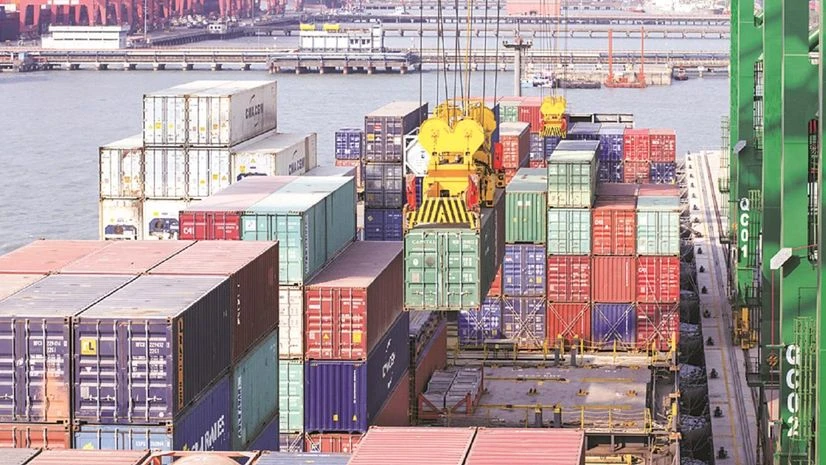
The recent hike in U.S. tariffs has put considerable stress on export-oriented states in India, particularly Tamil Nadu and Gujarat, which are major hubs for industries like textiles, engineering, and chemicals. As the U.S. imposes higher duties, the impact on these states’ economies is becoming increasingly apparent, with mounting risks to employment.
Export-dependent industries in India have long been critical to the national economy, but recent tariff increases from the U.S. have triggered alarm. The implications for states like Tamil Nadu and Gujarat, which contribute significantly to India’s export revenue, are far-reaching. The rise in duties threatens not only trade volumes but also local job markets, as companies grapple with reduced competitiveness in the U.S. market.
Impact of U.S. Tariff Hikes on Indian Exports
The U.S. has significantly raised tariffs on various Indian goods, notably textiles, garments, and chemicals. For states like Tamil Nadu and Gujarat, this poses a serious challenge. These states are major exporters of textiles and garments, with industries heavily reliant on U.S. demand. Higher tariffs reduce the price competitiveness of Indian goods, resulting in fewer orders and potentially lower export revenues.
In Tamil Nadu, textile manufacturing employs millions of people, and any dip in exports could have a cascading effect on jobs in weaving, dyeing, stitching, and other related sectors. Similarly, Gujarat, a major exporter of chemicals and engineering goods, faces a sharp downturn as U.S. companies seek cheaper alternatives due to higher duties.
Pressure on Employment in Key Sectors
The job market in export-centric sectors, particularly in manufacturing, faces an immediate risk due to these tariff hikes. States like Tamil Nadu, where textile manufacturing employs over 5 million workers, are seeing rising layoffs and reduced hiring. Workers in smaller factories and MSMEs are particularly vulnerable, as these businesses have thinner margins and limited flexibility in responding to external shocks.
In Gujarat, the chemical and engineering sectors are equally at risk. These industries employ a significant number of people in both urban and rural areas, and a sustained dip in export demand could lead to widespread job losses. The risk of unemployment in these sectors is compounded by the slowdown in global trade and economic uncertainty.
The Ripple Effect on Local Economies
Job losses in key export industries are not limited to the workers directly involved in production. The economic ripple effect is felt across entire regions. In export-oriented states like Tamil Nadu and Gujarat, a reduction in industrial activity leads to reduced spending power, which impacts local businesses, including retail, services, and logistics.
Furthermore, these states depend on robust export activity to generate tax revenues, which fund infrastructure projects and social welfare schemes. A prolonged downturn in exports could result in lower state revenue, leading to cutbacks in public spending, further affecting the local economy and job market.
Adapting to the New Reality: Diversification Strategies
To mitigate the fallout from U.S. tariff hikes, states like Tamil Nadu and Gujarat will need to focus on diversification and finding new export markets. While the U.S. has been a traditional trade partner, emerging markets in Southeast Asia, Africa, and Latin America could offer new opportunities.
Both states have started encouraging industries to diversify product lines and reduce dependence on the U.S. market. For instance, Gujarat’s chemical industry is exploring new applications in agriculture and pharmaceuticals, while Tamil Nadu’s textile sector is looking to expand into European and Middle Eastern markets. In addition, there’s a push towards upgrading manufacturing processes to improve competitiveness globally.
What the Government Can Do to Support Affected States
To help offset the negative impacts of U.S. tariffs, the Indian government needs to step in with targeted support. This includes offering subsidies or financial assistance to industries most affected, like textiles and chemicals. Additionally, the government could incentivize innovation and technology adoption to help businesses stay competitive despite tariff hikes.
Moreover, addressing the skills gap in sectors such as textile manufacturing can enable workers to transition to higher-value roles, reducing the risk of widespread unemployment. Trade diversification, too, should be at the forefront of policy planning, with government efforts to strengthen bilateral agreements with countries outside of the U.S. to maintain export momentum.
Takeaways
- The U.S. tariff hikes are directly affecting India’s export-heavy states like Tamil Nadu and Gujarat, which are facing reduced competitiveness in global markets.
- Employment in key export sectors such as textiles, chemicals, and engineering is at risk, especially in MSMEs and labor-intensive industries.
- The local economy in export-driven states is feeling the strain as reduced industrial activity impacts regional businesses, retail, and services.
- State governments must focus on diversification, market expansion, and innovation while the Indian government needs to provide targeted support for industries hit by tariffs.
FAQs
Q: How are U.S. tariff hikes affecting Tamil Nadu and Gujarat specifically?
A: U.S. tariff hikes on products like textiles, chemicals, and engineering goods directly impact Tamil Nadu and Gujarat, where these industries employ millions of workers and contribute significantly to exports.
Q: What sectors in Tamil Nadu and Gujarat are most affected?
A: Textiles and garments in Tamil Nadu, and chemicals and engineering in Gujarat, are the hardest hit sectors due to higher U.S. duties, leading to reduced exports and job losses.
Q: What can be done to mitigate the effects of these tariff hikes on local job markets?
A: Both states can diversify their export markets, encourage product innovation, and invest in skills training to reduce dependency on U.S. exports and improve competitiveness in other regions.
Q: How can the Indian government help affected industries?
A: The Indian government can provide financial support, encourage market diversification, and incentivize the adoption of technology to help industries adapt and remain competitive in the face of higher tariffs.