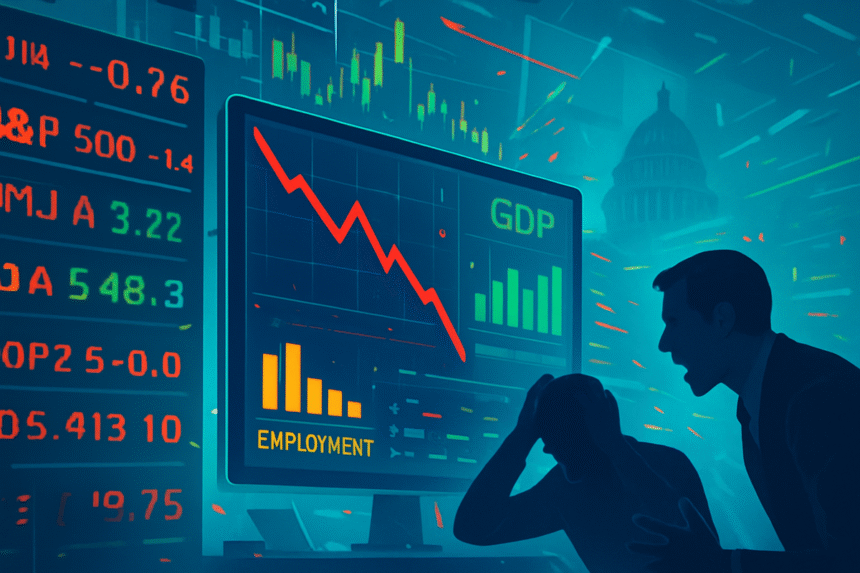
Global markets are preparing for a heavy backlog of US economic data after the government shutdown delayed the release of critical indicators. With jobs, inflation and spending numbers set to land in a compressed window, investors face heightened uncertainty and volatile trading conditions.
Data backlog raises volatility risk across markets
The phrase backlog of US data captures the central tension. Because the shutdown disrupted agencies responsible for labor, inflation and retail statistics, several high impact releases will now arrive in clusters. Markets typically rely on staggered data to adjust expectations gradually. A compressed release schedule increases the probability of outsized reactions, especially for rate sensitive assets.
Equity markets, bond traders and currency desks are recalibrating models ahead of the data wave. Investors fear that a surprise in either direction will be harder to digest when multiple indicators land at the same time. This amplifies risk across global indices and increases demand for hedging instruments.
Policy uncertainty intensifies as Fed guidance remains clouded
The Federal Reserve’s policy path is harder to read without updated economic information. Rate expectations had already turned volatile due to mixed macro signals, but the shutdown induced blackout has intensified uncertainty. Without clear data on job creation, wage pressure and core inflation, Fed officials have limited visibility on whether the economy is cooling or overheating.
As a result, markets are split on the likelihood of future tightening or extended pauses. Treasury yields have swung in response to speculation, and segments of the bond curve continue to invert depending on risk sentiment. Investors will treat upcoming data as a reset point that could shift the policy narrative rapidly.
Impact on global equities and risk sentiment
Global equities have softened ahead of the data batch. Without reliable US macro indicators, money managers are taking a wait and watch stance. The US remains the anchor of global demand and capital flows; uncertainty about its trajectory carries global spillovers. In Europe and Asia, markets tied to cyclical sectors such as autos, technology hardware and chemicals have shown more sensitivity, reflecting exposure to export demand.
Emerging markets are facing dual pressure: delayed US data complicates FX strategy, while rising US yields curb capital flows. The lack of clarity has pushed activity into defensive sectors and high quality balance sheets. Volumes are muted as institutional desks trim intraday risk and avoid aggressive positioning until data clarity returns.
Currency markets brace for sharp swings
In currency corridors, the dollar remains the centre of gravity. Traders are ready for sharp moves if incoming data surprises on employment or inflation. A stronger than expected jobs print or sticky inflation could reignite bets on tighter policy, pushing the dollar stronger and weighing on emerging market currencies. Conversely, weaker numbers could trigger a drop in the dollar and spark a relief rally across risk assets.
Volatility indicators in the FX market have already risen. Dealers report increased interest in hedging products ahead of the data window. The yen and Swiss franc are seeing safe haven flows, while commodity currencies are tracking oil and global demand cues more closely.
Bond markets position for rate volatility
US bond markets have shifted into defensive positioning. With critical inflation and labor data missing, traders are relying on second order indicators like private payroll surveys, shipping data and consumer sentiment reports. This raises model uncertainty and widens trading ranges.
The yield curve has seen renewed choppiness. Short term yields remain sensitive to policy expectations, while long term yields are discounting uncertainty in global growth and inflation. The backlog effect may cause sudden repricing in both segments once data lands, with potential spillovers into mortgage rates, corporate borrowing costs and global fixed income flows.
What investors should watch as releases approach
Investors should monitor not just headline numbers but also revision trends, which may be unusually large due to data processing delays. Labour force participation, wage growth, core PCE trends and services inflation will carry outsized influence on market direction. The sequencing of releases will matter: whether jobs land before inflation or vice versa could affect how markets digest the information.
Portfolio managers are advising caution, reduced leverage and tighter risk limits. Until data resumes a normal cadence, sentiment is likely to remain fragile.
Takeaways
- Global markets face heightened uncertainty as a backlog of US jobs and inflation data arrives after the shutdown.
- Policy visibility is limited, making Federal Reserve expectations volatile and complicating rate forecasts.
- Equity, currency and bond markets are bracing for sharper swings and larger reactions due to compressed data releases.
- Investors are shifting towards defensives, hedging strategies and reduced risk exposure until clarity improves.
FAQs
Q: Why does the backlog of US data increase market risk?
A: Because multiple high impact releases arriving together remove the normal adjustment period markets rely on, increasing the odds of outsized reactions and mispricing.
Q: How will this affect Federal Reserve policy expectations?
A: The Fed will use the upcoming data wave to reassess the economy. Strong numbers may revive tightening expectations while weak data could shift the narrative toward easing, but uncertainty remains high.
Q: Which markets are most vulnerable to the backlog effect?
A: US Treasuries, global equities with cyclical exposure, emerging market currencies and rate sensitive tech stocks are among the most vulnerable.
Q: How should investors navigate this period?
A: Maintain conservative positioning, hedge currency and rate risk, prioritise balance sheet strength and avoid overexposure to short term directional bets.