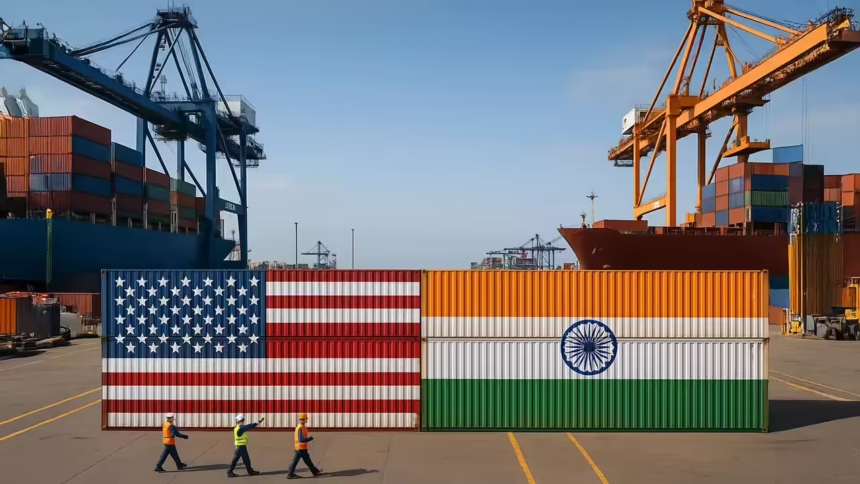
India’s new export orders have recorded the slowest growth since March, as U.S. tariffs and soft global demand weigh on outbound shipments. The export orders slowdown signals pressure across manufacturing and engineering segments in the country’s trade chain.
Export order slump hits hardest in goods-export sectors
India’s new export orders expanded at the weakest pace since March, a trend reflected in the latest composite private sector survey, as export growth lost momentum and global headwinds hit Indian manufacturers. The decline in new export orders comes amid U.S. tariffs of up to 50% on key Indian goods and a sharper than expected drop in shipments to major markets. Export-led manufacturers reported weaker intake of new overseas business and noted intensifying price competition from rival nations.
Tariff hit and segmented impact on key export sectors
U.S. importers of Indian goods now face tariffs of around 50% in several categories; apparel, textiles, gems and jewellery, and engineering goods have been impacted. For example, textiles exports fell nearly 13% year-on-year in October and shipments to non-U.S. markets dropped more than 12% as well. The dual effect of tariff pressure in the U.S. and demand softness outside the U.S. has squeezed new orders for engineering, petroleum and jewellery segments especially.
Global demand, diversification and competitive pressures
Beyond tariffs, Indian exporters face a combination of weaker global demand, currency headwinds and competition from low-cost producers such as Vietnam and Bangladesh. Diversification efforts into African, Middle East and European markets have gained urgency, but these channels cannot immediately offset the collapse in U.S. orders. With new non-U.S. orders contracting at their fastest rate since the data series began, companies relying on global value chains are seeing margins tighten and future intake soften.
Policy tailwind and export support measures
The Indian government has responded with supporting measures: export credit guarantees, incentives, tax-input relief and contingency funding to cushion the blow. Exporters are offering discounts of 10 %-20 % to retain U.S. buyers and are reworking supply-chain delivery schedules to mitigate tariff impact. While these measures aid resilience, they do not eliminate the structural challenge of tariff-driven demand loss and must be coupled with deeper supply-chain reconfiguration and market-base expansion.
Corporate and investor implications
For export-oriented companies the slowdown signals reduced orders ahead and a need to reassess order-book visibility and cash‐flow risk. Investors should factor in margin compression, longer shipment cycles and potential inventory build‐up. On the policymaker side, the drop in export orders adds to the urgency of trade reform, bilateral negotiations (notably with the U.S.) and pushing Indian firms towards higher-value and differentiated exports rather than only labour-intensive goods.
Takeaways
- New export orders in India have risen at their slowest rate since March, reflecting weakening global demand and tariff pressure.
- U.S. tariffs of up to 50% on Indian goods, combined with slumping non-U.S. orders, are major drivers of the export-order decline.
- Sectors such as textiles, gems and jewellery, engineering and petroleum products are among the hardest hit.
- Policy responses include export credit support and shift in market diversification, but exporters must shift strategy and adapt supply chains for resilience.
FAQs
Q: What is the significance of new export orders weakening?
A: New export orders are forward-looking indicators of overseas demand and production requirements. A slowdown points to weaker future shipments, inventory risk, production slow-down and margin pressure.
Q: Why are the U.S. tariffs such a big issue for Indian exporters?
A: The U.S. is one of India’s largest export destinations. Large tariffs raise cost of Indian goods in U.S. markets, forcing price cuts or loss of orders and making Indian exporters less competitive versus rivals.
Q: Can diversion to other markets solve the export order problem quickly?
A: Diversification helps but cannot offset immediately the fall in U.S. orders given established channel advantages of competitors, differences in market access, and shift-cost time for exporters.
Q: What should export-oriented firms do now?
A: Firms need to review cost-structures, reduce reliance on tariff-affected markets, focus on higher value-added exports, improve delivery flexibility and work with government schemes for support and diversification.