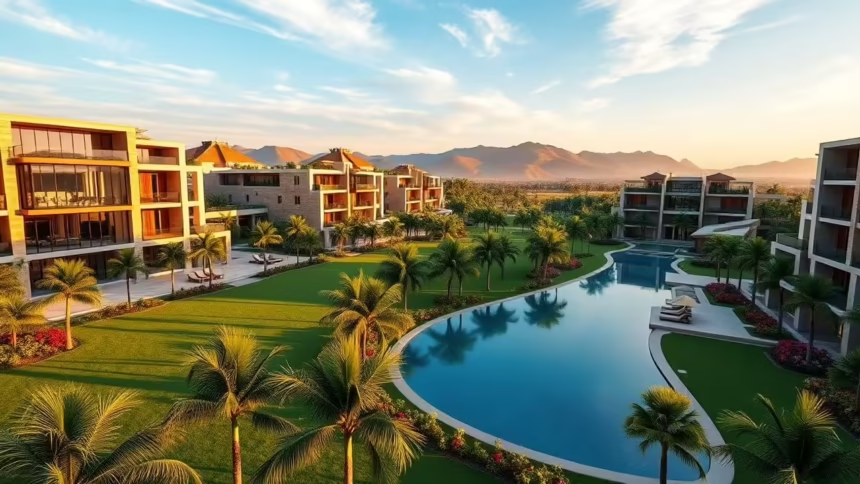
India has officially entered the global top 10 for branded residences, reflecting strong growth in luxury real estate and rising demand for premium, brand-affiliated homes in key Indian markets.
India’s inclusion in the global top 10 branded residences ranking signals a major shift for its real-estate market. With local developers partnering major global hospitality and lifestyle brands, high-net-worth individuals (HNWIs) are driving demand for branded homes with premium services, design credentials and global cachet. Cities such as Mumbai, Pune and Delhi-NCR are now hotspots, and the move suggests luxury real estate in India is shifting from regional luxury to global class.
Why branded residences are gaining momentum in India
Branded residences—luxury homes affiliated with well-known hotel, lifestyle or design brands—offer services, amenities and design standards that transcend typical high-end apartments. In India, the market for these homes is being fuelled by a growing HNWI base, rising aspirations for global-style living, and brand-developer tie-ups. Non-hotel brands dominate the Indian segment, accounting for around 75 % of supply, and buyers are willing to pay sizable premiums—commonly 20 %-40 % more than standard luxury homes—because of the lifestyle, service and investment angle. India’s luxury residential market is also evolving to match global benchmarks, and its emergence in the top 10 list signals broader international investor interest.
India’s key cities and supply dynamics
In India, cities like Mumbai and Pune lead branded residences deployment, followed by Delhi-NCR and Bengaluru. Mumbai’s premium addresses like Worli and Bandra-Khar are home to projects tied to global brands, while Pune and Hyderabad are emerging as second-tier branded-residence hubs. Supply remains limited, which adds to exclusivity: developers typically limit units and focus on high-service living models, leading to scarcity and strong resale appeal. At the same time, brand-developer alliances are increasing, and international hospitality names are keener to place residences in India. This mix of scarcity, brand value and service model is making India’s branded residence segment stronger.
Investment premium and resale dynamics
Branded residences globally command a significant premium over non-branded luxury homes, and India is no exception. In Indian cities, the premium ranges between 21 % and 40 %, depending on brand name, location and amenities. For investors, these homes offer a differentiated value proposition: global brand equity, professional management, luxury services and appeal to international and domestic buyers alike. On the resale front, branded residences tend to capture interest faster and from a more global pool. That means liquidity and appreciation potential may be higher than traditional luxury homes, especially when aligned with good locations, strong developer brand and high-end services.
Challenges and risk factors in the branded segment
Despite the strong momentum, several risk factors persist. Operating costs and maintenance charges for branded services are higher and must be clearly explained to buyers. Buyers may face higher entry prices which narrows the buyer pool. Brand affiliation does not guarantee delivery; project delays, poor service execution or weak brand fit can erode value. Furthermore, the resale value depends heavily on how well the brand and developer maintain the property, local infrastructure and broader luxury‐housing demand. For India, regulatory clarity, project timelines and cost escalation remain watch points.
What this means for developers, buyers and investors
For developers, the inclusion in global top 10 means branding alliances and service models are more important than ever. They must ensure high-quality delivery, strong amenities and sustained management to match the promise. For luxury home-buyers, this is an indicator of a maturing segment offering global-standard living experiences and potential strong investment value. For investors, branded homes in India represent a category that straddles real estate and luxury branding with higher entry cost but potentially higher reward. The key is to pick projects with strong brand tie-ups, prime locations and clear service models.
Takeaways
• India’s branded residence market has elevated into the global top 10, confirming its rising role in luxury real-estate worldwide.
• Brand-developer partnerships, rising HNWI numbers and premium paid for brand affiliation drive this shift.
• Buyers can expect higher premiums but also stronger resale potential and service-led living in branded schemes.
• Developers must focus on delivery, service excellence and brand credibility, while investors should prioritise location, brand strength and long-term sustainability.
FAQs
Q: What defines a branded residence?
A: A luxury home affiliated with a recognised hotel, lifestyle or design brand that offers elevated services, curated amenities and brand equity beyond standard luxury residences.
Q: How much premium do branded residences command in India?
A: In India, branded homes commonly command 20 %-40 % higher prices than comparable non-branded luxury homes, depending on brand, location and service offering.
Q: Are branded residences a good investment?
A: They can offer higher resale potential and attract global buyers, but success depends on brand strength, developer delivery, location and ongoing service quality.
Q: Which Indian cities are leading the branded residence market?
A: Mumbai and Pune are current hotspots, followed by Delhi-NCR and Bangalore, with emerging interest in Hyderabad and other tier-2 cities.