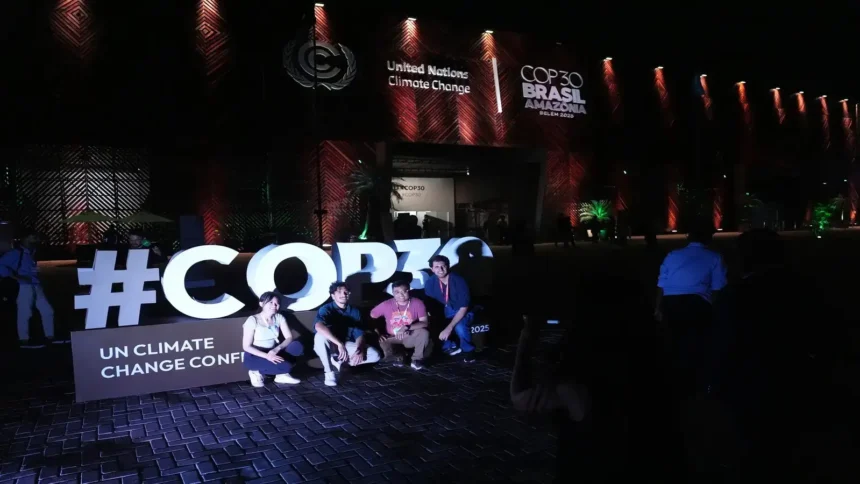
At COP30 in Belém, Brazil, a fierce dispute erupted when the European Union rejected the host’s draft agreement because it omitted any reference to fossil fuels, raising doubts over whether the global climate summit will conclude with a unified outcome.
The draft text released by the Brazilian presidency excluded language on phasing out oil, gas and coal, sparking protests from the EU and more than 80 countries that had backed a roadmap for fossil-fuel transition. As negotiations extend beyond the scheduled end, adaptation finance, trade issues and emissions commitments are also contested—the summit risks ending without consensus.
What the draft omitted and why it matters
The heart of the conflict is the draft’s deletion of any mention of fossil fuels or a transition roadmap. Secondary keyword: “fossil-fuel transition exclusion”. Instead the text called for “low greenhouse gas emission development” without explicitly naming fossil fuels. The omission undercuts earlier commitments where nearly 200 nations had agreed to a “phase-down” of fossil fuels. The EU declared the text “unacceptable” and threatened to block the final decision unless stronger mitigation language is included.
Diverging priorities: mitigation versus adaptation and trade
Secondary keyword: “adaptation finance stalemate”. Behind the fossil-fuel dispute lies a broader division: the EU and vulnerable countries demand strong mitigation (emissions cuts, fossil-fuel phase-out) while many developing and fossil-exporting nations emphasise adaptation finance, energy security and trade concerns. The draft proposes tripling adaptation financing by 2030 but does not clarify funding sources or legal obligation. Countries such as India, Saudi Arabia and others argue a “just transition” cannot ignore development needs and fossil-fuel-dependent economies.
Geopolitics and strategic implications for global climate governance
Secondary keyword: “climate cooperation equilibrium”. COP30’s turmoil reflects shifting geopolitics: the US absence, the rise of fossil-fuel producers in negotiations and competing development philosophies. The EU is pivoting from traditional consensus-seeking toward setting red-lines—on fossil-fuel language and finance links. For Brazil as host, the fractured text threatens the summit’s credibility and the wider UN climate regime’s ability to deliver binding progress ahead of the next key review cycle.
What happens if no deal is reached and next steps
Secondary keyword: “climate summit no-deal risk”. If COP30 ends without an agreed outcome, it would be the first major back-slide in the post-Paris era and could undermine investor confidence, delay fossil-fuel phase-out timelines and hamper climate-finance flows. Some parties already discuss launching separate side-agreements on fossil-fuel transition rather than a unified text. Key triggers next include whether fossil-fuel language is reintegrated, adaptation finance details are formalised and trade-related carve-outs for developing countries are resolved.
Takeaways
• COP30’s draft agreement omits any mention of fossil-fuel phase-out, provoking rejection from the EU and high-ambition countries.
• The core divide rests between mitigation-focused states (pushing fossil-fuel transition) and developing/fossil-fuel-dependent states emphasising adaptation, energy security and trade.
• The draft deals with adaptation finance and trade issues but lacks binding commitments on key mitigation steps, raising the prospect of a no-deal outcome.
• The world is watching: if COP30 fails to deliver, the credibility of multilateral climate action and the path to 1.5°C may face a serious setback.
FAQs
Q: Why did the EU reject the draft at COP30?
A: The EU rejected it because the draft omitted any language on fossil-fuel phase-out and lacked strong mitigation commitments, which the bloc sees as non-negotiable for credibility.
Q: What is the significance of fossil-fuel transition language?
A: Including clear fossil-fuel transition language is considered critical by many countries and climate scientists to signal that the root drivers of emissions (coal, oil, gas) will be addressed in global policy.
Q: What is adaptation finance and why is it so contentious?
A: Adaptation finance refers to funding to help vulnerable countries cope with climate impacts (floods, droughts, heat). It is contentious because developing countries argue mitigation actions alone are insufficient without reliable, predictable funding from wealthier nations.
Q: What happens if COP30 ends without a final agreement?
A: A no-deal outcome would trigger questions about the effectiveness of the UN climate process, delay global action on key issues and potentially undermine business and investor confidence in transition pathways.