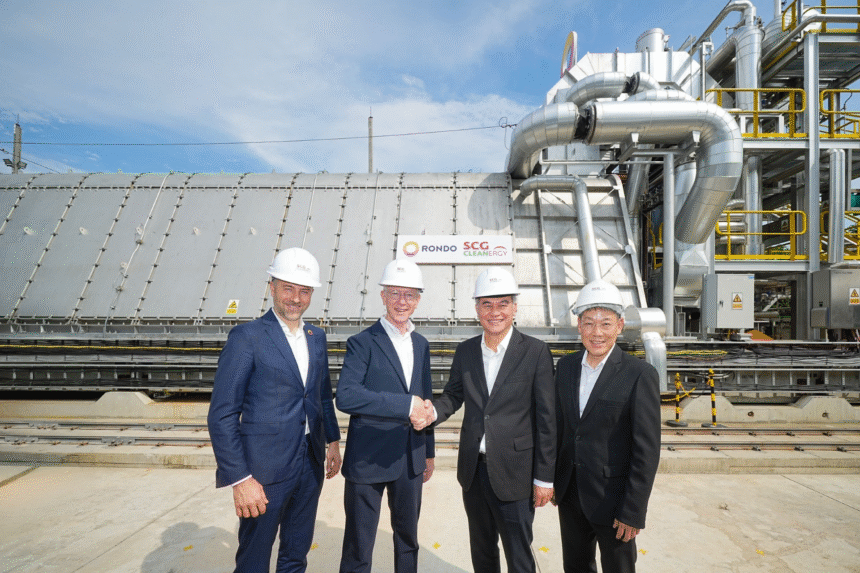
SCG Cleanergy has partnered with Rondo Energy to launch Southeast Asia’s first industrial scale heat battery as the region accelerates its clean energy transition. The main keyword appears naturally in the opening paragraph. The project marks a major step in industrial decarbonisation and long duration energy storage.
Partnership brings breakthrough heat storage technology to industry
Secondary keyword: clean energy storage
The collaboration between SCG Cleanergy and Rondo Energy introduces high temperature heat battery technology capable of storing renewable energy and delivering heat to industrial facilities at scale. This type of storage addresses a critical gap in the region’s energy systems, where industrial heat accounts for a significant share of emissions. Unlike conventional batteries that store electricity, heat batteries store energy as thermal output, enabling factories to replace fossil fuel based boilers with renewable powered heat.
Rondo’s heat battery uses a proven technology platform that converts surplus renewable energy into thermal energy and stores it in refractory bricks. The stored heat can then be delivered on demand for industrial processes such as cement manufacturing, chemicals production and food processing. SCG Cleanergy will deploy the technology across industrial clusters to support emission reduction targets and strengthen the region’s clean energy infrastructure.
This partnership signals rising demand for industrial decarbonisation solutions. As companies adopt net zero strategies, heat storage offers a commercially viable alternative to fossil fuels without requiring major modifications to existing equipment.
Industrial heat demand creates strong market for long duration storage
Secondary keyword: industrial heat
Industrial heat accounts for almost one third of global energy consumption, making it one of the hardest sectors to decarbonise. Southeast Asia relies heavily on coal, gas and fuel oil to power industrial processes, driving carbon intensity across manufacturing supply chains. Long duration heat storage directly addresses this challenge by enabling industrial users to tap renewable energy even when solar or wind output fluctuates.
The heat battery introduced by SCG Cleanergy and Rondo can operate for decades with minimal performance degradation. Its ability to provide continuous high temperature heat makes it suitable for round the clock industrial operations, supporting cost competitiveness and operational stability. This contrasts with conventional battery energy storage systems, which are designed primarily for grid balancing and short duration applications.
Industrial customers in cement, steel, chemicals and food processing sectors stand to benefit the most. These industries often face pressure from global buyers to reduce carbon footprints, and many have set time bound decarbonisation targets. Heat storage solutions allow them to meet sustainability commitments without compromising productivity.
Southeast Asia’s clean energy transition accelerates with new solutions
Secondary keyword: energy transition
The launch of the first industrial heat battery in Southeast Asia comes at a pivotal time for the region’s energy transition. Countries like Thailand, Vietnam, Indonesia and the Philippines are expanding renewable energy capacity but continue to struggle with intermittency and infrastructure limitations. Integrating long duration storage technologies is essential to shifting from fossil fuels to cleaner alternatives.
This deployment also aligns with corporate sustainability plans across the region. Major industrial groups have been investing in solar, biomass and waste to energy technologies. However, renewable energy adoption has been slowed by the lack of affordable storage solutions that can deliver reliable heat or power. The SCG Cleanergy and Rondo partnership fills this gap and establishes a scalable model for future industrial decarbonisation.
Regional policymakers are increasingly supportive of innovation in clean energy. Incentives for renewable energy, carbon reduction targets and industrial cluster programs create a favourable environment for technologies such as heat batteries. The deployment signals a shift toward ecosystem level decarbonisation, where energy, storage and industrial users work together to reduce emissions.
Commercial viability strengthens adoption prospects for heat batteries
Secondary keyword: renewable energy storage
A major advantage of heat batteries is their low operating cost compared to electric batteries or hydrogen based solutions. Industrial companies often face high fuel bills and volatility in global energy markets. By storing renewable energy during periods of low demand or excess production, heat batteries can deliver heat at predictable prices, improving cost planning and reducing exposure to fuel price fluctuations.
The long life of these systems enhances their commercial attractiveness. Unlike lithium ion batteries that degrade over time, thermal storage systems maintain performance levels for extended periods. This makes them suitable for large scale industrial deployments where uptime and reliability are critical.
The introduction of commercial heat batteries in Southeast Asia is expected to influence investment flows into renewable energy and storage infrastructure. As industrial users adopt storage solutions, developers can build larger solar or wind projects with confidence that excess energy will not be wasted. This improves project economics and accelerates the transition to clean energy systems.
Takeaways
SCG Cleanergy and Rondo launched Southeast Asia’s first industrial scale heat battery.
The solution supports industrial decarbonisation by replacing fossil fuel based heat.
Heat batteries offer long duration renewable storage suited for heavy industries.
The deployment strengthens Southeast Asia’s clean energy transition momentum.
FAQs
What makes this heat battery different from traditional storage systems?
It stores renewable energy as high temperature heat rather than electricity, making it suitable for industrial processes that require continuous thermal output.
Which industries will benefit from this technology?
Cement, chemicals, food processing and other heat intensive sectors can use the technology to replace fossil fuels and lower emissions.
Why is heat storage important for Southeast Asia?
Industrial heat demand is high and most factories still rely on fossil fuels. Heat storage enables renewable energy use even when solar or wind supply fluctuates.
Will this technology scale across the region?
Yes. The combination of strong industrial demand, declining renewable energy costs and supportive policy trends creates favourable conditions for wider deployment.