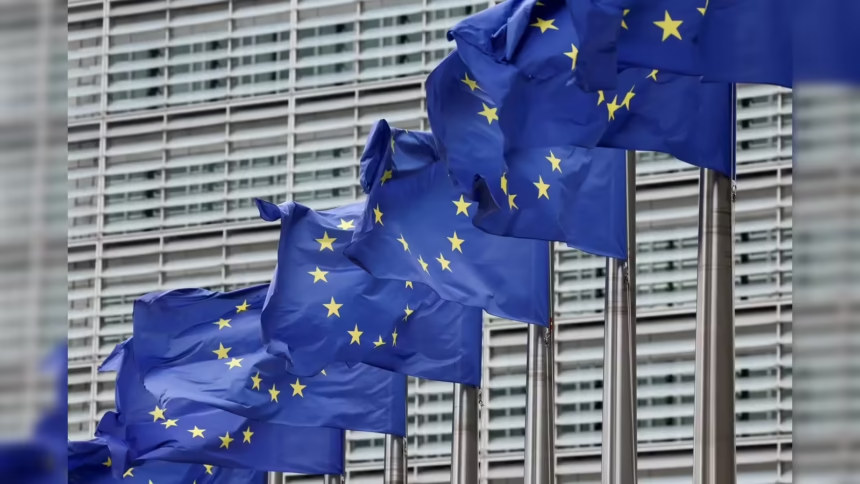
The EU has imposed tighter sanctions on Russian metals, triggering rapid reconfiguration across global raw material supply chains. Aluminium and copper markets are already experiencing volatility as traders, manufacturers and policymakers adjust to the new restrictions.
The topic is time sensitive and requires a news reporting tone. The main keyword appears naturally in the opening paragraph.
Sanctions target key Russian metal exports to curb revenue flows
The latest EU measures expand restrictions on Russian aluminium, copper and other non ferrous metals that play a central role in global manufacturing. The sanctions aim to reduce Russia’s export income while limiting access to European industrial supply chains. These metals are widely used in construction, automotive, aerospace, packaging and electronics, making the impact immediate and extensive.
European buyers have been instructed to wind down contracts with Russian suppliers and shift procurement to alternative markets. The shift is occurring at a time when global inventories are tight, putting upward pressure on premiums. Manufacturers that rely on just in time supply models are facing the challenge of recalibrating procurement strategies on short timelines.
Russia remains a major global supplier of aluminium and a meaningful producer of refined copper. While sanctions do not fully remove Russian metals from global circulation, they redistribute trade flows toward Asia, the Middle East and parts of Africa where restrictions are less binding.
Aluminium markets react quickly as buyers seek replacement sources
Aluminium markets have responded with increased volatility. European smelters and downstream manufacturers are now competing with Asian buyers for supply from alternative producers such as India, the United Arab Emirates, Australia and Canada. Spot premiums in Europe have risen as inventories tighten and transport routes adapt to shifting flows.
Producers in the Middle East, particularly in the Gulf, are expected to increase exports to Europe due to their large scale smelting capacity and competitive energy costs. However, logistical constraints and long shipping times may limit the speed of rebalancing. Some European firms are exploring long term contracts with non Russian suppliers to secure availability through 2026.
The aluminium value chain, which includes extrusion, rolling and casting operations, is experiencing pressure from higher input costs. Companies with diversified sourcing are better positioned, while those dependent on Russian supply face margin compression.
Copper markets brace for wider price swings and supply realignment
Copper markets are also in flux as sanctions create uncertainty in future supply patterns. Although Russia is not one of the largest global producers, its refined copper output is significant enough to affect regional supply dynamics. Traders expect that Russian copper will be redirected to China and other Asian markets at discounted prices, affecting global benchmark spreads.
European manufacturers that use copper in power infrastructure, electric vehicles, electronics and industrial machinery now face more complex procurement challenges. Long term copper demand remains strong due to electrification trends, making secure sourcing critical. The sanctions accelerate Europe’s need to diversify supply chains and invest in domestic refining capacity or negotiate long term contracts with producers in Chile, Peru and the Democratic Republic of Congo.
Copper prices may see broader fluctuations as financial markets respond to geopolitical risk, shifting inventories and revised demand expectations. Funds with exposure to base metals are recalibrating positions as regulatory and trade barriers reshape market liquidity.
Global supply chains reconfigure toward new trade corridors
The sanctions are accelerating a shift in global supply chains already underway due to geopolitical fragmentation. Russia is expected to deepen its metal trade ties with China, Turkey and the Middle East. These regions may re export processed materials, creating new trade routes and altering pricing structures. Such reconfiguration complicates traceability efforts for European companies seeking compliance with new sanctions.
Manufacturers in Europe and Asia are increasingly assessing the resilience of their raw material strategies. Firms with heavy metal requirements are revisiting supplier concentration risks, exploring recycling based inputs and investing in digital tools for supply chain monitoring.
Shipping routes and logistics networks are adjusting as cargo volumes shift away from Europe. This reallocation may strain certain ports while easing pressure on others, creating uneven cost effects across global logistics.
Broader economic implications and outlook for commodity markets
The EU’s decision could influence long term investment patterns in metals production and processing. Countries with abundant natural resources may attract more investment as buyers seek diversification. At the same time, producers in Europe face higher costs due to energy prices and regulatory constraints, potentially affecting competitiveness in energy intensive industries.
Financial markets are monitoring how sanctions influence inflation trends, especially in sectors reliant on base metals. Rising input costs can filter into consumer prices for vehicles, appliances, construction materials and packaging. Policymakers must balance strategic security goals with economic pressures from higher material costs.
Market participants expect continued volatility until trade flows stabilise. The medium term trajectory will depend on how quickly producers expand capacity, how Russia redirects supply and how effectively European manufacturers adapt procurement frameworks.
Takeaways
EU sanctions on Russian metals are reshaping global supply chains
Aluminium markets face tightening supply and rising premiums in Europe
Copper markets are adjusting to redirected Russian flows and new sourcing needs
Manufacturers must adapt to higher costs and shifting trade routes
FAQs
Why did the EU impose new sanctions on Russian metals
The sanctions aim to curb export revenue to Russia and limit its integration with European industrial supply chains while reinforcing geopolitical pressure.
How will aluminium supply be affected
European buyers must source from alternative producers, raising premiums and shifting trade flows toward the Middle East, India and Australia. Supply tightness is likely in the short term.
Will copper prices rise due to the sanctions
Prices may fluctuate due to redirected Russian supply, tighter inventories and geopolitical uncertainty. Long term demand for copper remains strong due to electrification trends.
How should manufacturers respond to the new trade environment
Firms should diversify suppliers, evaluate long term contracts, invest in recycling and build stronger digital tracking to ensure compliance with sanctions.