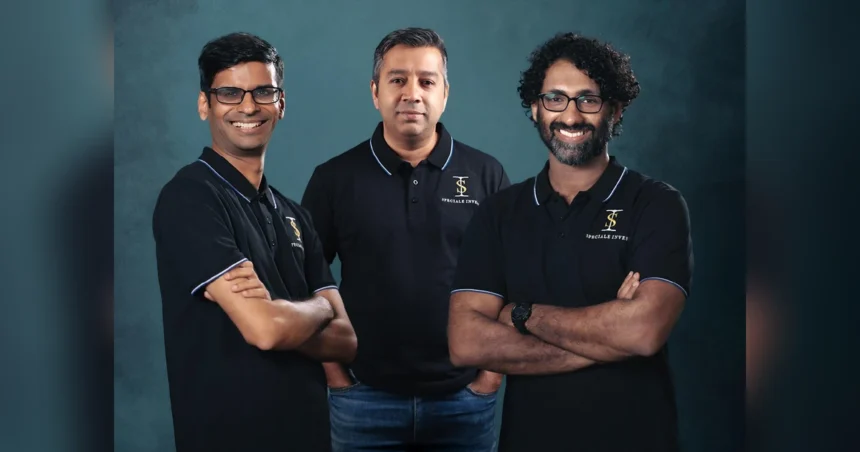
Speciale Invest has launched a ₹1,400 crore deeptech fund at a time when early-stage venture deals are thinning across India’s startup ecosystem. The Speciale Invest deeptech fund signals a strategic pivot toward capital-intensive, long-horizon technologies as investors recalibrate risk appetite.
The Speciale Invest deeptech fund launch is a time sensitive development rooted in current venture capital market conditions. Early-stage funding volumes have slowed, valuations have corrected, and investors are shifting focus from rapid scaling to defensible innovation. Against this backdrop, the fund marks one of the largest India-focused bets on deep technology in the current cycle.
Why Speciale Invest Is Doubling Down On Deeptech
The decision to raise a ₹1,400 crore deeptech fund reflects a belief that the next wave of value creation will come from core technology rather than consumer-led growth. Deeptech startups typically operate in areas such as semiconductors, space technology, advanced materials, robotics, climate tech, and industrial software. These sectors demand patient capital, technical expertise, and longer gestation periods.
Speciale Invest has built its strategy around backing founders with strong engineering depth and defensible intellectual property. As quick-return opportunities in consumer internet and SaaS face margin pressure and slower growth, deeptech offers differentiated risk-reward profiles. The fund’s size also suggests confidence that capital availability, not idea quality, is the main constraint in this segment.
Early-Stage Funding Slows Across The Market
India’s early-stage venture ecosystem has seen a visible slowdown over the past year. Seed and Series A deals have declined as investors become more selective, focusing on unit economics, revenue visibility, and capital efficiency. Many generalist funds have pulled back from first-time founders and experimental business models.
This slowdown has disproportionately affected deeptech startups, which often struggle to fit traditional venture timelines. By launching a dedicated deeptech fund, Speciale Invest is positioning itself to fill a gap left by cautious generalist investors. The thinning of early-stage deals creates an opportunity for specialised funds to negotiate better entry valuations and stronger governance rights.
Where The ₹1,400 Crore Will Be Deployed
The new fund is expected to back early to growth-stage deeptech startups, with cheque sizes larger than typical seed rounds. Capital deployment is likely to span sectors aligned with national priorities such as semiconductor design, defence technology, space systems, clean energy, and industrial automation.
A portion of the fund is also expected to support follow-on rounds, ensuring portfolio companies are not forced into premature fundraising. This approach reflects lessons from the last cycle, where promising startups struggled due to fragmented capital support. By committing larger pools of capital upfront, Speciale Invest aims to improve survival rates and long-term outcomes.
How This Compares With Traditional VC Strategies
Traditional venture capital in India has been driven by faster exits, consumer scale, and platform economics. Deeptech does not follow this playbook. Product development cycles are longer, customer acquisition is slower, and regulatory approvals can delay revenue.
However, once validated, deeptech businesses can achieve strong moats and global relevance. Speciale Invest’s pivot highlights a broader shift within the VC industry, where returns are expected to come from fewer but more durable winners. This contrasts with the portfolio-heavy approach used in consumer internet investing.
Implications For Founders And The Ecosystem
For deeptech founders, the fund launch is a positive signal. Access to larger, patient capital pools reduces pressure to chase short-term metrics. It also allows teams to invest in R&D, talent, and infrastructure without constant fundraising.
For the wider ecosystem, the move could attract co-investors and strategic partners into deeptech deals. Corporate interest, government support, and global collaborations tend to follow credible capital commitments. Over time, this could strengthen India’s position in frontier technologies and reduce dependence on imported innovation.
Risks And Execution Challenges
Despite the opportunity, deeptech investing carries execution risks. Technical failure, slower commercial adoption, and policy uncertainty can impact outcomes. Fund managers need deep domain expertise to evaluate technologies and guide founders effectively.
Capital deployment discipline will be critical. Writing large cheques without sufficient technical validation can amplify losses. The success of the Speciale Invest deeptech fund will depend on portfolio construction, hands-on support, and the ability to attract follow-on capital from global investors.
What This Signals For Indian Venture Capital
The fund launch reflects a maturation of India’s venture capital market. As easy growth stories fade, investors are being forced to specialise. Deeptech, once considered niche, is moving closer to the core of venture strategies.
If successful, the fund could encourage more dedicated deeptech vehicles and increase institutional confidence in long-horizon investing. If not, it will reinforce concerns about capital intensity and exit uncertainty in the segment. Either way, the move marks an inflection point in how Indian venture capital is being deployed.
Takeaways
- Speciale Invest has launched a ₹1,400 crore deeptech-focused fund
- The move comes as early-stage venture deals thin across India
- Deeptech startups gain access to larger and more patient capital
- The fund reflects a broader VC shift toward defensible technology bets
FAQs
What is driving the launch of the Speciale Invest deeptech fund?
Slower early-stage funding, valuation corrections, and a belief in long-term value creation through core technology are key drivers.
Which sectors will the fund focus on?
Likely focus areas include semiconductors, space tech, defence, climate technology, robotics, and industrial software.
Does this mean consumer startups will struggle to raise funds?
Consumer startups can still raise capital, but investors are more selective and focused on profitability and sustainability.
Is deeptech investing riskier than traditional VC?
Deeptech carries higher technical and time risks, but successful outcomes can create strong moats and global-scale companies.