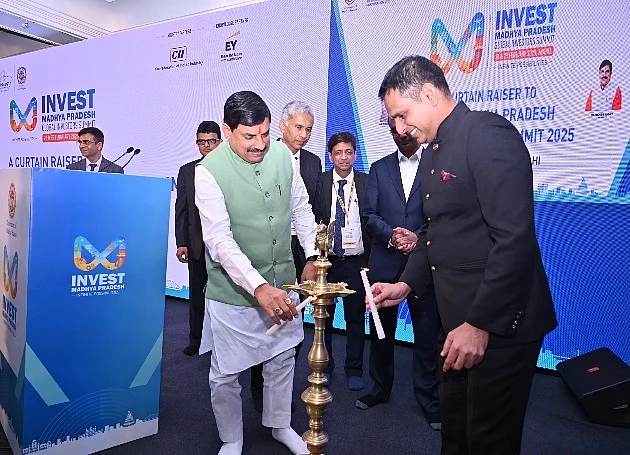
MP CM to woo Fortune 500s at Davos, pitching EV, renewables, and food processing hubs as Madhya Pradesh steps up its global investment outreach. The state is positioning itself as a cost competitive manufacturing and agri processing destination aligned with India’s long term growth priorities.
MP CM Takes Investment Pitch to Global Stage
MP CM to woo Fortune 500s at Davos is a clear signal that Madhya Pradesh is moving aggressively to attract large scale global capital. The outreach is timed around the World Economic Forum annual meeting, where global corporations, investors, and policymakers converge to assess long term investment destinations.
The state’s pitch focuses on three priority areas electric vehicles, renewable energy, and food processing. These sectors align with both global capital trends and Madhya Pradesh’s existing economic base. By engaging directly with top global companies, the state aims to convert policy intent into concrete investment commitments.
This approach reflects a broader competition among Indian states to secure anchor investors who can drive industrial clusters and employment creation.
Why EV Manufacturing Is Central to the Pitch
Electric vehicles form a core part of the Davos outreach due to their strategic importance in India’s manufacturing roadmap. Madhya Pradesh is positioning itself as a competitive EV manufacturing hub by highlighting land availability, power access, and policy incentives.
The state benefits from its central location, offering logistics advantages for serving both northern and western markets. Industrial zones with plug and play infrastructure are being showcased to reduce setup timelines for global manufacturers.
Beyond vehicle assembly, the pitch includes components, battery packs, and allied supply chains. Attracting a Fortune 500 anchor in this space could catalyze a broader ecosystem of suppliers and service providers, strengthening the state’s industrial base.
Renewables and Energy Transition Opportunities
Renewable energy is another key focus of the Davos meetings. Madhya Pradesh has significant solar and wind potential, supported by large land parcels and growing grid infrastructure. The state is positioning itself as a destination for utility scale renewable projects as well as green manufacturing.
The pitch emphasizes opportunities in solar module manufacturing, energy storage, and green hydrogen linked applications. Global investors seeking long term exposure to India’s energy transition may find these opportunities attractive given policy support and demand visibility.
Reliable and affordable power is also being positioned as a competitive advantage for manufacturing investments across sectors, not just renewables.
Food Processing Hubs and Agri Value Addition
Food processing is a natural inclusion in the state’s investment narrative. Madhya Pradesh is a leading producer of several agricultural commodities, including grains, pulses, and oilseeds. However, value addition has historically lagged production.
By pitching integrated food processing hubs, the state aims to move up the value chain. These hubs are designed to support processing, packaging, cold storage, and logistics in a single ecosystem. For global food and agribusiness companies, this offers an opportunity to build end to end operations close to sourcing regions.
The emphasis is on reducing post harvest losses, improving farmer incomes, and building export oriented agri businesses.
Policy Incentives and Ease of Doing Business Focus
To back the sectoral pitch, the state is highlighting policy incentives and administrative reforms. These include capital subsidies, tax incentives, and single window clearances aimed at shortening approval cycles.
Ease of doing business remains a key talking point at Davos. Madhya Pradesh is positioning itself as a state with improving governance metrics and faster decision making. For Fortune 500 companies, predictability and execution capability often matter as much as incentives.
The state is also emphasizing workforce availability and cost competitiveness, particularly for manufacturing and processing sectors that require large scale employment.
Competition Among States and Execution Risk
While the pitch is ambitious, competition is intense. Several Indian states are courting the same pool of global capital, often with overlapping sectoral priorities. Differentiation will depend on execution readiness rather than announcements.
Investors will evaluate land availability, infrastructure readiness, and the state’s track record of converting memorandums into operational projects. Delays in land acquisition or approvals could weaken credibility.
The challenge for Madhya Pradesh will be to follow up Davos meetings with swift on ground action. Global companies expect continuity beyond high level engagements.
Strategic Importance of the Davos Outreach
The Davos outreach serves multiple strategic purposes. It positions Madhya Pradesh as an outward looking investment destination and signals policy stability to global markets. It also allows the state to benchmark itself against other regions competing for similar investments.
For India, such state level engagement complements national investment promotion efforts. Successful conversion of even a few Fortune 500 discussions into projects can have a multiplier effect on employment, supply chains, and regional development.
Takeaways
Madhya Pradesh is targeting Fortune 500 capital through sector focused pitches at Davos
EVs, renewables, and food processing align with the state’s economic strengths
Execution speed and infrastructure readiness will determine conversion success
Global investor engagement reflects rising state level competition for capital
FAQs
Why is Madhya Pradesh focusing on EVs and renewables?
These sectors align with India’s energy transition goals and offer long term growth and employment potential.
What makes food processing attractive in Madhya Pradesh?
Strong agricultural output combined with low value addition creates significant opportunities for processing and exports.
Will Davos meetings lead to immediate investments?
Davos typically initiates discussions, with actual investment decisions following detailed evaluations and site visits.
How does this benefit the local economy?
Large investments can drive job creation, supply chain development, and improved infrastructure.