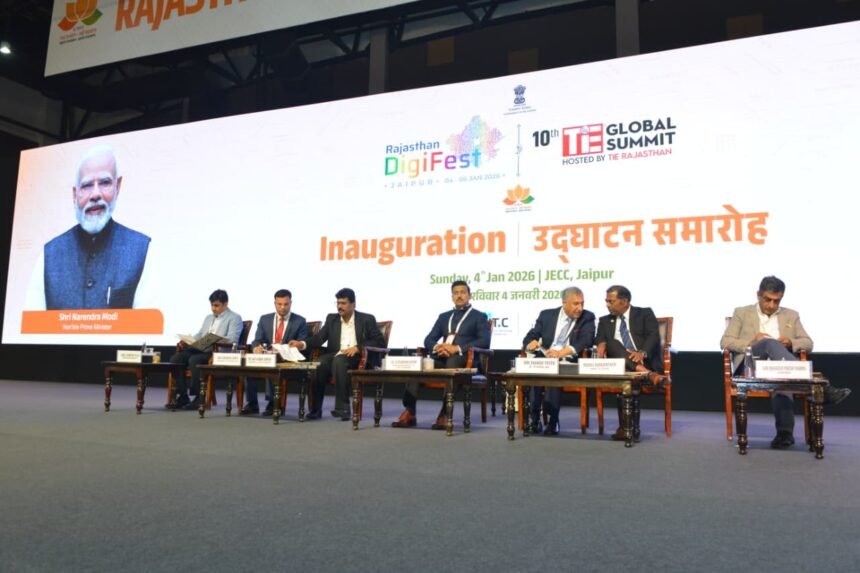
Rajasthan DigiFest X TiE Global Summit is set to bring policymakers, investors, and founders onto one platform, positioning the state as an emerging startup hub while signalling a sharper policy backed push to convert intent into capital flow and enterprise creation.
The topic is time sensitive and qualifies as policy and startup ecosystem news. The summit reflects an active effort by state authorities and global networks to catalyse startup growth through coordination rather than standalone events.
Rajasthan Uses Platform Strategy to Attract Capital
Rajasthan DigiFest X TiE Global Summit is designed as more than a showcase event. It is a coordinated platform where policy direction, investor appetite, and founder execution intersect. The state government’s participation signals intent to move beyond startup branding toward measurable outcomes such as funding access, enterprise formation, and job creation.
For Rajasthan, the timing is strategic. As competition among Indian states to attract startups intensifies, differentiation is shifting from incentives to ecosystem depth. By aligning with a global network like TiE, the state is attempting to bridge local startups with international capital and mentorship pipelines.
Policymaker Participation Anchors Credibility
One of the defining aspects of the summit is direct policymaker involvement. This matters because startups increasingly evaluate regulatory clarity, ease of compliance, and long term policy stability before committing resources. Public engagement from senior officials provides founders and investors with visibility into the state’s priorities.
Discussions are expected to focus on digital infrastructure, skill development, and sector specific opportunities. This creates a feedback loop where policy frameworks can be refined based on investor and founder input. Such interaction reduces friction that often delays startup scaling outside major metros.
Investors Look Beyond Tier One Markets
Investor interest in emerging startup hubs has grown as valuations in tier one cities remain competitive and crowded. Rajasthan presents an alternative with lower operating costs, improving digital infrastructure, and access to a large talent pool.
The summit creates a structured environment for investors to assess deal flow from the region. Rather than isolated pitches, investors gain ecosystem context, which improves confidence. This is especially relevant for early stage and growth funds seeking differentiated opportunities with manageable capital deployment.
Startup Focus Shifts From Visibility to Viability
Events like Rajasthan DigiFest X TiE Global Summit reflect a broader shift in India’s startup ecosystem. The emphasis is moving away from visibility driven participation toward viability driven engagement. Founders are expected to demonstrate business fundamentals, not just innovation narratives.
Pitch sessions, closed door meetings, and sector specific discussions encourage serious capital conversations. This raises the quality bar and filters out opportunistic participation. For startups, it is an opportunity to access not only funding but also structured mentorship and market access support.
Sectoral Priorities Reflect Regional Strengths
Rajasthan’s startup push is likely to highlight sectors aligned with regional strengths. These include agritech, tourism technology, renewable energy solutions, logistics, and digital public infrastructure applications. By focusing on sectors with natural advantages, the state can create defensible startup clusters rather than generic ecosystems.
This sectoral alignment also helps investors evaluate scalability. Startups built around regional use cases often demonstrate strong early traction, which can later be replicated across similar markets nationally and globally.
TiE’s Role in Globalising Local Startups
TiE’s involvement adds an important layer of global connectivity. The network brings access to experienced entrepreneurs, cross border investors, and structured growth frameworks. For Rajasthan based startups, this reduces the distance between local innovation and global markets.
Mentorship and exposure through TiE can accelerate maturity in governance, strategy, and capital readiness. This is particularly valuable for founders operating outside traditional startup hubs who may lack informal access to experienced advisors.
Measuring Success Beyond Event Optics
The real test of Rajasthan DigiFest X TiE Global Summit will lie in post event outcomes. Key indicators include funding commitments, policy follow through, pilot projects, and sustained engagement between stakeholders.
India’s startup ecosystem has seen many high profile events with limited long term impact. The difference here will depend on execution discipline and continuity. If working groups, follow up mechanisms, and policy timelines are clearly defined, the summit can deliver tangible value.
What This Signals for India’s Startup Geography
The summit reinforces a broader decentralisation trend. Startup growth is no longer confined to a handful of cities. States that proactively build bridges between policy and capital are gaining relevance.
For founders, this expands choice. For investors, it diversifies deal sourcing. For policymakers, it creates accountability. Rajasthan’s move reflects an understanding that startup ecosystems are built through coordination, not isolated initiatives.
Takeaways
- Rajasthan DigiFest X TiE Global Summit aligns policy, capital, and founders
- State backed participation boosts investor confidence
- Focus is shifting toward viable and sector aligned startups
- Global networks are key to scaling regional innovation
FAQs
What is the objective of Rajasthan DigiFest X TiE Global Summit?
To connect policymakers, investors, and startups in a coordinated push to accelerate enterprise growth.
Why is investor participation significant for Rajasthan?
It helps position the state as a credible alternative startup hub beyond tier one cities.
Which sectors are likely to be highlighted?
Agritech, renewable energy, tourism tech, logistics, and digital infrastructure solutions.
How will success of the summit be measured?
Through funding outcomes, policy implementation, and sustained stakeholder engagement.