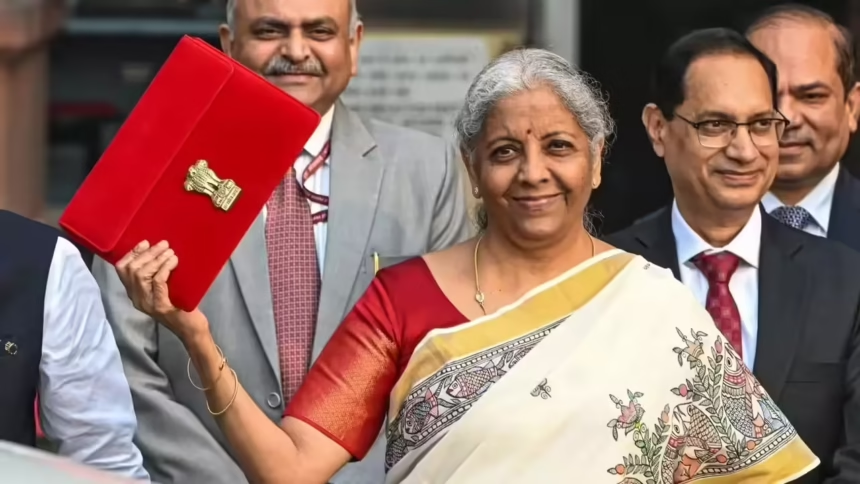
The Parliament session kicked off with Budget 2026 expectations dominating debate, as lawmakers, industry bodies, and markets look for clarity on tax reform and MSME support. The session sets the policy tone ahead of a crucial budget framed against slowing growth signals and fiscal discipline pressures.
As the session of the Parliament of India begins, attention is firmly on what Budget 2026 may deliver for businesses, taxpayers, and small enterprises. The government enters the session facing demands to revive consumption, ease compliance, and support job creation while staying within fiscal limits.
Budget 2026 Takes Centre Stage Early
Budget 2026 expectations surfaced immediately as parliamentary discussions opened, with multiple parties and industry representatives flagging economic priorities. Tax reform, MSME relief, and capital expenditure continuity emerged as recurring themes.
Lawmakers are pressing for rationalisation of personal income tax slabs to boost disposable income and revive consumption. Corporate tax stability is also under focus, with industry seeking policy continuity rather than new incentives. The absence of major tax shocks is seen as critical for maintaining investor confidence.
The government is expected to use the session to outline its broad fiscal philosophy ahead of the budget presentation, signaling whether growth support or consolidation will take precedence.
Tax Reform Demands Gain Momentum
Tax reform remains one of the most discussed Budget 2026 expectations. Calls for simplifying the tax structure have intensified, particularly around easing compliance for individuals and small businesses.
Middle income taxpayers are seeking relief through higher exemption limits and streamlined deductions. At the same time, policymakers are cautious about revenue implications, especially given ongoing welfare and infrastructure commitments.
On the indirect tax front, GST rationalisation continues to feature in discussions. Businesses are urging rate simplification and faster refunds to improve cash flows. While major structural changes appear unlikely, incremental adjustments could be on the table.
The government’s challenge lies in balancing relief measures without widening the fiscal deficit, especially as global economic uncertainty persists.
MSME Sector Pushes for Targeted Support
MSME pleas dominate the agenda as small and medium enterprises seek stronger policy backing in Budget 2026. These businesses continue to face credit access issues, delayed payments, and rising compliance costs.
Industry associations are demanding enhanced credit guarantee schemes, lower interest burdens, and faster implementation of payment protection mechanisms. There is also pressure to extend tax holidays and simplify regulatory filings for smaller firms.
The MSME sector plays a critical role in employment generation and exports. Any targeted support announced during the budget could have a multiplier effect on jobs and local economies.
Parliamentary debates are expected to focus on whether existing schemes are delivering results or need recalibration to address ground level challenges.
Fiscal Discipline Versus Growth Support
A recurring tension during the opening of the Parliament session is the balance between fiscal discipline and growth support. While revenue collections have remained stable, expenditure pressures continue due to infrastructure projects and social spending.
Opposition voices are urging the government to prioritise growth and employment, even if it means slower deficit reduction. The ruling side is expected to defend its fiscal roadmap, arguing that stability is essential for long term economic health.
Markets are closely watching these signals. Budget 2026 expectations are already influencing bond yields and equity sentiment, with investors sensitive to any hint of fiscal slippage or aggressive taxation.
Policy Signals Beyond the Budget
Beyond Budget 2026, the Parliament session is also expected to address broader economic legislation. These may include updates on labour reforms, ease of doing business measures, and sector specific policy adjustments.
While major legislative overhauls are unlikely in this session, incremental reforms and policy clarifications could shape the business environment over the next year.
For investors and businesses, the tone of debate and government responses will offer clues on policy continuity, reform intent, and economic priorities.
What This Session Means for Markets and Businesses
The start of the Parliament session serves as a soft preview of Budget 2026. Strong emphasis on tax reform and MSME support suggests that the government is aware of growth headwinds and sentiment risks.
If discussions point towards moderate relief measures and sustained capital expenditure, markets may respond positively. However, any indication of populist spending or abrupt tax changes could increase volatility.
Businesses are likely to remain cautious until concrete budget announcements are made, but early signals from the session will shape expectations and planning.
Takeaways
- Budget 2026 expectations dominate the opening of the Parliament session
- Tax reform and MSME support are key demands from lawmakers and industry
- Balancing growth support with fiscal discipline remains a central challenge
- Policy signals from the session will influence market and business sentiment
FAQs
Why is Budget 2026 already a focus in the Parliament session?
The session sets the policy tone and highlights priorities that may shape the upcoming budget.
What tax reforms are being discussed most actively?
Simplification of personal income tax and GST rationalisation are key areas of focus.
Why are MSMEs central to the budget debate?
MSMEs are critical for jobs and growth and continue to face credit and compliance challenges.
Will major reforms be announced during this session?
Major changes are unlikely, but policy signals and incremental measures may be indicated.