
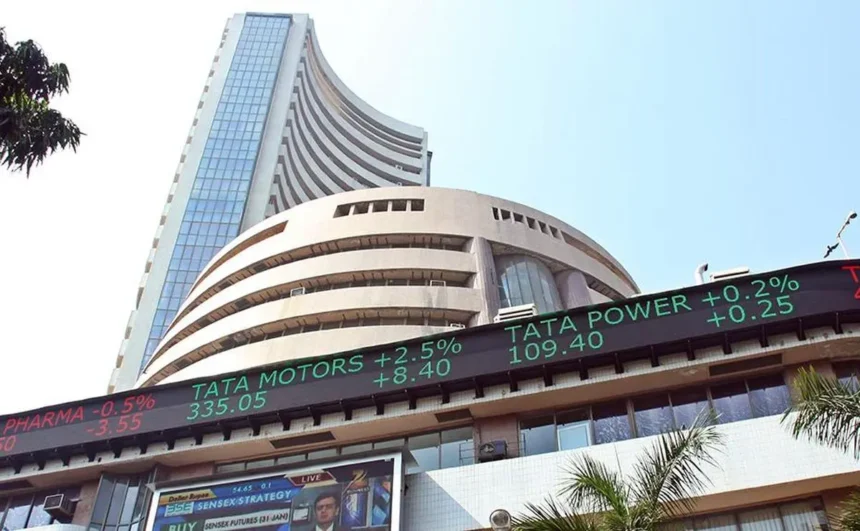
The Indian stock market opened on a mixed note today as tariff-related global trade concerns clashed with early earnings expectations. With the Nifty hovering near the 25,700 mark, sectoral divergence defined the session, reflecting caution rather than broad-based conviction among investors.
The domestic equity market started the day without a clear direction, mirroring overnight global cues and fresh uncertainty around international trade tariffs. While headline indices showed limited movement, internal churn across sectors highlighted the push and pull between macro risks and company-level triggers.
Market Opens Flat as Global Trade Worries Resurface
Indian equities opened with muted momentum as tariff fears resurfaced in global markets. Renewed discussions around protectionist measures in key economies raised concerns over export demand, currency stability, and supply chain costs. These external pressures kept benchmark indices range-bound during early trade.
The Nifty traded close to the 25,700 level, reflecting indecision rather than panic. Investors appeared unwilling to take aggressive positions ahead of clearer signals from global trade policy developments. The Sensex followed a similar trajectory, oscillating within a narrow band as buying and selling interest remained evenly matched.
Market breadth was mixed, with advances and declines largely balanced, indicating selective participation rather than a broad risk-on or risk-off mood.
Earnings Season Drives Stock Specific Action
The ongoing earnings season acted as a counterweight to global uncertainty. Several frontline companies are scheduled to report quarterly results over the coming days, keeping stock-specific action in focus. Investors selectively accumulated shares of companies expected to deliver stable margins and revenue growth despite a challenging macro environment.
Mid-cap and large-cap stocks with strong balance sheets saw cautious buying, while companies with exposure to global trade faced pressure. Earnings visibility, cost control, and management guidance emerged as key near-term drivers, especially in capital-intensive and export-linked sectors.
This earnings catalyst helped prevent a deeper market slide, even as broader sentiment remained cautious.
Banking Stocks Trade Narrow as Rate Outlook Stays Unchanged
Banking stocks traded in a narrow range during early hours. With no immediate change in domestic interest rate expectations, lenders lacked a strong directional trigger. Private sector banks showed mild resilience, supported by stable credit growth outlooks and manageable asset quality concerns.
Public sector banks were mixed, reflecting stock-specific positioning rather than sector-wide momentum. Investors appeared to be waiting for more clarity on loan growth trends, deposit costs, and net interest margins before taking decisive bets.
Overall, the banking sector acted as a stabiliser rather than a driver for the indices.
Oil and Energy Shares Under Pressure
Oil and energy stocks underperformed as crude price volatility and global demand concerns weighed on sentiment. Fears that trade restrictions could dampen industrial activity led to selling pressure in upstream and downstream energy names.
Higher input cost uncertainty and currency fluctuations added to the cautious tone. Energy stocks, which had previously supported market rallies, turned into a drag during today’s session, contributing to the mixed market outcome.
Technology Stocks Diverge on Global Demand Signals
Technology stocks showed a split trend, reflecting uncertainty around overseas demand. Large IT exporters faced mild pressure due to concerns that tariffs and trade disruptions could delay client spending decisions in key markets.
At the same time, selective buying was visible in companies with strong order books and diversified revenue streams. Investors focused on firms less dependent on discretionary global tech spending, leading to divergence within the sector.
Investor Strategy Remains Defensive but Selective
Overall, today’s market action highlighted a defensive yet selective investor approach. The absence of panic selling suggests confidence in India’s medium-term fundamentals, but near-term caution remains evident.
With tariff risks on one side and earnings catalysts on the other, traders are likely to stick to short-term strategies, while long-term investors may continue gradual accumulation in fundamentally strong stocks.
As the day progresses, volatility could increase based on earnings announcements and global market movements, keeping Dalal Street alert and reactive.
Takeaways
- Indian stock markets opened mixed with Nifty trading near 25,700.
- Global tariff concerns clashed with domestic earnings season optimism.
- Banking stocks remained range-bound while oil and energy stocks lagged.
- Technology shares diverged based on exposure to global demand.
FAQs
Why did the Indian stock market open mixed today?
The market opened mixed due to conflicting factors such as global tariff-related trade concerns and optimism around upcoming corporate earnings.
What is influencing investor sentiment the most right now?
Investors are balancing global trade risks against company-level earnings visibility, leading to cautious and selective trading.
Which sectors showed weakness in early trade?
Oil and energy stocks underperformed, while technology stocks showed divergence and banking stocks traded flat.
Is this market movement short term or structural?
The current movement appears short term, driven by news flow and earnings, rather than any major structural shift.


