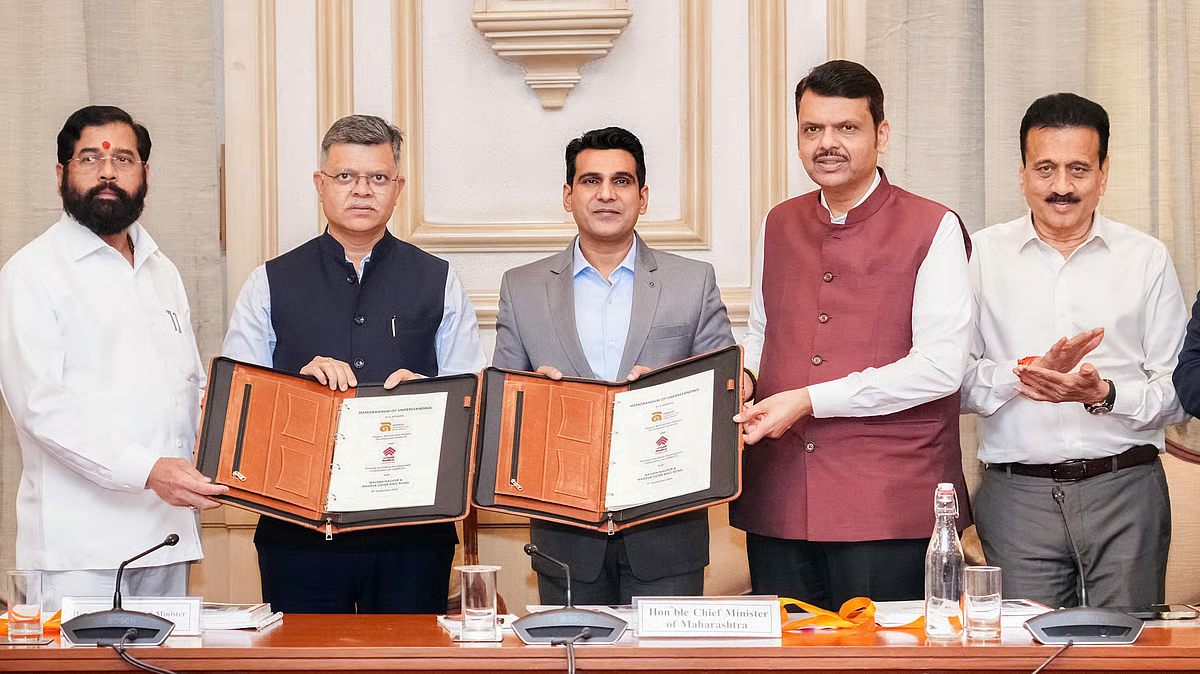
Semiconductor Mission 2.0 to catalyse India’s chip ecosystem has moved from intent to execution as policy focus sharpens on manufacturing depth and supply chain resilience. The initiative signals India’s bid to become a meaningful node in the global semiconductor supply chain at a critical moment.
Semiconductor Mission 2.0 Signals Shift From Catch Up to Scale
Semiconductor Mission 2.0 to catalyse India’s chip ecosystem is a time sensitive policy move shaped by current global supply chain dynamics. Unlike the first phase, which focused on establishing baseline capabilities, the second phase is designed to accelerate scale, reliability, and ecosystem integration.
The government is positioning this mission as a response to persistent global chip supply vulnerabilities exposed over recent years. For India, the objective is not self sufficiency across all chip categories. It is targeted relevance. That means focusing on select nodes where India can build capacity faster and integrate into global value chains.
This shift matters because global semiconductor players are no longer looking for low cost locations alone. They want predictable policy, stable incentives, and partners capable of long term execution. Mission 2.0 is structured to address these expectations directly.
What Is Different in Semiconductor Mission 2.0
The defining difference in Semiconductor Mission 2.0 is emphasis on ecosystem depth rather than standalone fabs. Earlier efforts were centred on attracting marquee fabrication plants. While fabs remain important, the second phase expands focus to packaging, testing, design enablement, materials, and equipment support.
Advanced packaging and assembly have emerged as critical bottlenecks globally. By prioritising these segments, India can enter the supply chain faster without competing head on with established leaders in cutting edge fabrication.
The mission also aims to streamline incentive structures and reduce approval complexity. Faster clearances, clearer subsidy timelines, and improved coordination between central and state agencies are central to the plan. For investors, reduced execution friction is often more valuable than incremental fiscal incentives.
Global Supply Chain Stakes Are Rising
The global semiconductor supply chain is undergoing structural realignment. Geopolitical tensions, trade controls, and concentration risks have pushed companies to diversify manufacturing and sourcing footprints.
India’s value proposition lies in being a neutral, scalable, and policy stable destination. Semiconductor Mission 2.0 positions the country as a complementary hub rather than a disruptive competitor. This approach lowers resistance from global incumbents while aligning with their risk mitigation strategies.
For multinational chipmakers, supplier diversification is now a board level priority. India’s entry into packaging, testing, and mature node manufacturing addresses this need directly. The stakes are high because countries that secure even partial integration into chip supply chains gain long term strategic leverage across electronics, automotive, and defence sectors.
Industry Response and Early Signals
Early industry response suggests cautious optimism. Global firms are engaging in discussions, site evaluations, and partnership models rather than rushing into headline investments. This is typical for semiconductor projects where planning cycles span years.
Domestic companies are expected to play a larger role in Mission 2.0 compared to earlier phases. Local conglomerates and electronics manufacturers are increasingly seen as anchor partners who can absorb technology, manage execution, and align with policy objectives.
Design led startups and chip design services firms also stand to benefit. Strengthening domestic design capability improves India’s bargaining position within global supply chains and reduces dependence on imported intellectual property.
However, industry feedback continues to highlight the importance of infrastructure readiness, particularly power reliability, water availability, and logistics efficiency. Semiconductor manufacturing is unforgiving of inconsistency, and execution quality will be closely scrutinised.
Challenges That Could Limit Impact
Despite the momentum, Semiconductor Mission 2.0 faces several structural challenges. Talent availability remains a constraint. While India has a large engineering base, semiconductor manufacturing requires specialised skills that take time to develop.
Supply chain localisation is another hurdle. Many critical materials and equipment components are still imported. Building domestic supplier capacity will require sustained incentives and demand assurance.
There is also the risk of overextension. Attempting to cover too many segments simultaneously could dilute impact. Focused execution on a few high probability segments is more likely to deliver credibility and follow on investment.
Finally, global demand cycles matter. Semiconductor markets are cyclical, and capacity additions during downcycles require patient capital and policy consistency. Any perception of wavering support could stall momentum.
What Success Would Look Like for Mission 2.0
Success for Semiconductor Mission 2.0 will not be measured by announcements alone. Tangible outcomes will define credibility. These include operational facilities, integration with global supply chains, and repeat investments by existing players.
Another indicator will be the emergence of domestic champions across packaging, testing, and design. A growing pipeline of skilled technicians and engineers would signal ecosystem maturity.
From a strategic perspective, success would mean India becoming a reliable secondary hub for global semiconductor firms. Not dominant, but indispensable. That positioning creates resilience, leverage, and long term industrial depth.
The next three to five years will determine whether Mission 2.0 delivers on its promise or remains a well framed policy ambition.
Takeaways
- Semiconductor Mission 2.0 shifts focus from intent to ecosystem scale
- India targets packaging, testing, and mature nodes to enter global supply chains
- Global firms see India as a diversification partner, not a direct rival
- Execution quality will determine whether policy intent converts into capacity
FAQs
What is the main objective of Semiconductor Mission 2.0?
The mission aims to deepen India’s semiconductor ecosystem by focusing on scalable segments such as packaging, testing, and design integration.
How is Mission 2.0 different from earlier semiconductor initiatives?
It prioritises ecosystem depth, faster approvals, and targeted supply chain integration rather than only attracting large fabrication plants.
Why is global interest in India’s chip ecosystem rising now?
Global companies are diversifying supply chains due to geopolitical risks and want stable alternative manufacturing and assembly locations.
What are the biggest risks to the mission’s success?
Talent shortages, infrastructure readiness, supply chain localisation, and inconsistent execution could limit impact.