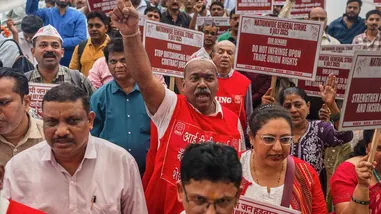
Bharat Bandh has disrupted services, logistics operations, and labour markets across multiple states, affecting transport networks, supply chains, and daily wage workers as trade unions and worker groups pressed their demands through a coordinated nationwide strike.
The Bharat Bandh strike has led to partial shutdowns in several regions, with public transport interruptions, delayed goods movement, and temporary business closures reported in key urban and industrial centres. While essential services remained operational in many areas, economic activity slowed significantly during peak hours.
Services Sector Faces Operational Slowdown
The Bharat Bandh impact was visible across banking services, public transport systems, and state run enterprises in several states. Participation levels varied regionally, but sectors dependent on physical presence experienced immediate strain.
In cities where transport unions supported the strike, bus and taxi operations were limited. This affected office attendance, retail footfall, and small business operations. Informal sector workers, including street vendors and delivery personnel, faced reduced income opportunities during the disruption window.
Private sector offices largely remained open, but absenteeism increased in regions where public transport availability was constrained. Educational institutions and local markets in certain districts also reported temporary closures as a precautionary measure.
Logistics and Supply Chain Disruptions Intensify
Logistics networks were among the most affected segments during the Bharat Bandh. Truck operators in some states either joined the strike or operated at reduced capacity, slowing inter state cargo movement.
Supply chain delays were particularly noticeable in sectors such as agriculture produce distribution, manufacturing inputs, and fast moving consumer goods. Warehousing hubs reported slower dispatch cycles due to limited workforce availability and transportation bottlenecks.
E commerce deliveries faced short term delays in selected regions where last mile connectivity depended on local transport unions. However, companies with diversified logistics partnerships were able to mitigate some of the disruption by rerouting shipments.
For export oriented industries, even short disruptions can increase turnaround times at ports and inland container depots. While large scale port shutdowns were avoided, truck movement constraints added to logistical inefficiencies.
Labour Market Impact and Wage Concerns
The Bharat Bandh strike brought labour market concerns to the forefront, particularly in manufacturing clusters and construction sites. Daily wage workers and contract labourers faced income losses for the day, highlighting the vulnerability of informal employment segments.
Trade unions supporting the strike have cited concerns related to labour codes, wage security, social protection, and privatization policies. Such nationwide actions typically aim to influence policy dialogue by demonstrating collective worker participation.
In industrial corridors, partial plant operations were reported where workforce turnout was lower than normal. However, many large manufacturing units activated contingency staffing plans to maintain minimum operational levels.
The immediate economic loss from a one day strike is generally limited in macro terms, but repeated disruptions can affect investor sentiment and production schedules.
Regional Variation in Participation Levels
Participation in the Bharat Bandh varied significantly across states. In some regions, public transport was largely operational and markets functioned normally, while in others commercial establishments downed shutters temporarily.
State governments adopted different approaches depending on local law and order assessments. In most cases, essential services such as healthcare, emergency response, and utilities were maintained to prevent humanitarian disruption.
Urban centres with diversified economic structures managed the strike impact more effectively compared to smaller towns heavily dependent on transport and daily trade flows.
Financial markets remained largely stable, with trading operations unaffected at the national level. However, local business associations expressed concern over repeated shutdown calls affecting small traders.
Economic and Policy Implications
Nationwide strikes like Bharat Bandh often trigger renewed discussions between government authorities and worker representatives. Policymakers typically assess the scale of participation before initiating dialogue or clarifying reform positions.
From a macroeconomic perspective, a single day disruption has limited impact on quarterly GDP figures. However, logistics slowdowns and reduced consumer spending during strike periods can temporarily affect retail sales and supply side efficiency.
Investors monitor such events for signals about labour relations stability and reform momentum. Frequent industrial action may influence perceptions about ease of doing business, particularly in labour intensive sectors.
As the strike concludes, attention shifts to whether negotiations will follow or if further industrial action is planned.
Takeaways
- Bharat Bandh disrupted transport, logistics, and local business operations in several states
- Supply chains experienced short term delays due to reduced truck movement
- Daily wage workers and informal labour segments faced income losses
- Economic impact at national level remains limited if disruption is short term
FAQs
What is Bharat Bandh?
Bharat Bandh is a nationwide strike call usually organized by trade unions or worker groups to protest policy decisions or demand reforms.
Which sectors were most affected?
Transport, logistics, small retail businesses, and informal labour markets experienced the most visible disruption.
Did essential services shut down?
In most regions, essential services such as healthcare and emergency operations continued functioning.
Will this impact GDP growth?
A single day strike has limited macroeconomic impact, but repeated disruptions could affect production and investor sentiment.