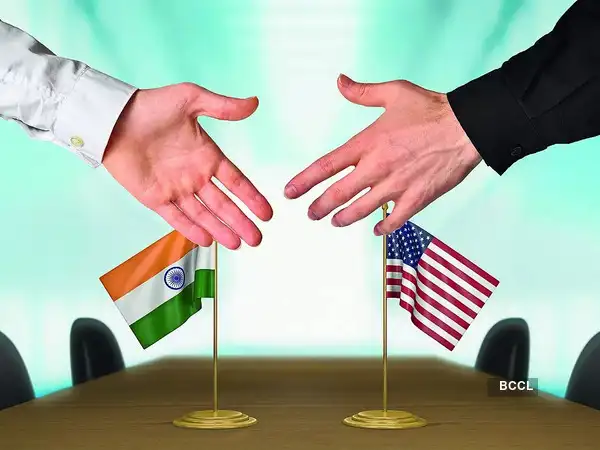
India delays US trade delegation plans as tariff policy chaos in Washington clouds the outlook for a potential trade pact. The pause has slowed momentum in bilateral negotiations and injected fresh uncertainty into export focused sectors watching market access developments.
India delays US trade delegation engagement at a time when tariff policy shifts in the United States have created legal and administrative uncertainty. The postponement comes amid ongoing reassessment of tariff measures and related trade authority questions in the US. For businesses tracking a possible bilateral trade pact, the delay signals a cooling of immediate momentum rather than a collapse of long term engagement.
The bilateral trade relationship between India and the United States is significant, with goods and services trade running into hundreds of billions of dollars annually. Negotiations in recent years have focused on market access, tariff reductions, digital trade norms, and regulatory alignment. A delay in high level delegation meetings therefore carries symbolic and practical weight.
Tariff Policy Chaos and Its Ripple Effect
The current uncertainty stems from evolving tariff frameworks and legal scrutiny around executive trade powers in the US. When tariff structures are under review or subject to court decisions, negotiating partners often reassess timing. Entering detailed talks without clarity on applicable duties can weaken negotiating positions.
For India, sectors such as textiles, pharmaceuticals, steel, and agricultural products are sensitive to US tariff policies. If duties are under reconsideration or implementation timelines remain unclear, trade negotiators may prefer to wait for a stable policy baseline.
Businesses on both sides rely on predictable tariff regimes to plan supply chains and pricing. Temporary chaos in policy formulation can therefore spill over into diplomatic scheduling.
Impact on Trade Pact Momentum
India and the US have periodically explored the possibility of a limited trade agreement or phased pact focusing on specific sectors. While a comprehensive free trade agreement remains complex, incremental deals on tariff concessions and market access have been on the table.
The delay in delegation talks suggests that near term breakthroughs may be deferred. Trade pact momentum often depends on sustained engagement at ministerial and technical levels. Postponements can push timelines further into the future, especially if domestic political considerations intervene.
However, delays are not uncommon in trade diplomacy. Complex negotiations require alignment across multiple ministries and stakeholder groups. A temporary pause does not automatically signal strategic divergence.
Sectoral Implications for Indian Exporters
Indian exporters closely monitor developments in US trade policy because the US remains one of India’s largest export destinations. Sectors such as information technology services, pharmaceuticals, engineering goods, and apparel have strong exposure.
Tariff unpredictability affects competitiveness calculations. If US duties on certain imports are revised downward, Indian exporters could benefit. Conversely, prolonged uncertainty may delay new orders or expansion plans.
Exporters in sensitive categories may hedge by diversifying markets. Over the past decade, Indian firms have increased outreach to Europe, Southeast Asia, and the Middle East to reduce reliance on a single geography.
Strategic Considerations for India
From India’s perspective, trade negotiations with the US must align with domestic industrial policy and regulatory frameworks. Market access discussions often involve reciprocal concessions. Sensitive areas such as agriculture, digital data regulation, and intellectual property can complicate talks.
A delay allows Indian negotiators to reassess priorities and evaluate global trade dynamics. With supply chains undergoing diversification and geopolitical realignment, timing of trade agreements can influence long term positioning.
India has also been pursuing bilateral and regional trade agreements with other partners. Balancing multiple negotiation tracks requires careful sequencing.
US Domestic Context and Trade Outlook
In the US, trade policy is shaped by a mix of executive authority, congressional oversight, and judicial interpretation. When tariff measures face legal scrutiny or political debate, clarity can take time to emerge.
This domestic complexity affects external partners. Negotiators from other countries often wait for internal US policy consolidation before committing to detailed concessions. Businesses similarly adopt a wait and watch stance during periods of policy flux.
Over the medium term, structural drivers such as supply chain resilience, technology collaboration, and energy trade will continue to anchor India US economic engagement.
What Happens Next
The key variable is stabilization of US tariff policy. Once clarity is restored regarding applicable duties and legal authority, diplomatic engagement is likely to resume. Trade officials on both sides maintain working level channels even when high profile visits are postponed.
Investors and exporters will monitor official statements, trade data trends, and sector specific signals. Any rescheduling of delegation talks could quickly revive momentum.
For now, the delay underscores how closely trade diplomacy is linked to domestic policy stability. Businesses seeking certainty must factor geopolitical and legal variables into planning.
Takeaways
• India has postponed US trade delegation engagement amid tariff uncertainty
• Ongoing US tariff policy debates have slowed trade pact momentum
• Export oriented sectors are closely tracking developments
• Long term India US economic ties remain structurally strong
FAQs
Why did India delay the US trade delegation
The delay is linked to uncertainty surrounding US tariff policy and the need for clarity before advancing negotiations.
Does this mean trade talks have collapsed
No. Delays are common in trade diplomacy and do not necessarily signal a breakdown in long term engagement.
Which sectors are most affected
Textiles, pharmaceuticals, engineering goods, and agriculture are among sectors sensitive to US tariff changes.
When could talks resume
Once US tariff policies stabilize and legal uncertainties are resolved, delegation level discussions are likely to be rescheduled.