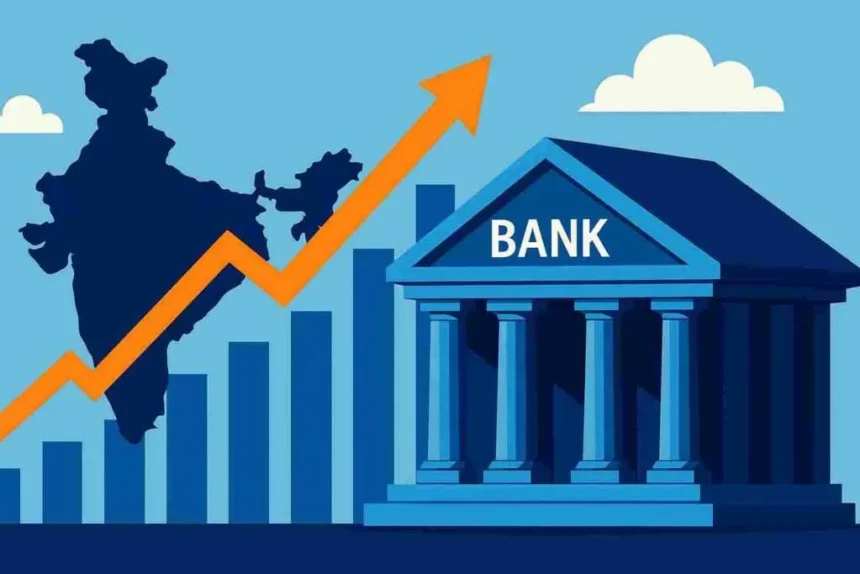
RBI rejects PSU bank mergers roadmap, prompting a high level panel to revisit the next phase of banking sector reforms. The move signals caution on consolidation and shifts focus toward governance, capital strength, and operational efficiency in public sector banks.
RBI rejects PSU bank mergers roadmap at a time when consolidation in the public banking space had been widely anticipated. The decision effectively pauses any immediate large scale merger exercise among public sector banks and redirects attention toward structural reforms. A high level panel is now expected to rework banking reforms with emphasis on governance standards, capital adequacy, risk controls, and technology modernization.
The development comes after several rounds of consolidation over the past decade that significantly reduced the number of public sector banks. Policymakers appear to be signaling that further mergers require deeper groundwork rather than administrative acceleration.
Background of PSU Bank Consolidation
Public sector bank consolidation has been a recurring reform theme. Over recent years, multiple banks were merged to create larger entities with stronger balance sheets and national reach. The objective was to improve efficiency, reduce duplication of operations, and enhance lending capacity.
While consolidation strengthened capital positions for some institutions, integration challenges also emerged. Merging different technology platforms, aligning human resource policies, and managing legacy stressed assets required significant time and effort. Operational synergies often took longer to materialize than initially projected.
By rejecting the current PSU bank mergers roadmap, the central bank appears to be prioritizing stability over scale. The message is clear. Bigger does not automatically mean stronger unless internal systems are robust.
Shift Toward Governance and Risk Reforms
The decision to rework banking reforms through a high level panel signals a shift from structural consolidation to governance reform. Public sector banks continue to play a dominant role in credit distribution, especially to infrastructure, agriculture, and small businesses. Strengthening internal risk management systems is critical to maintaining financial stability.
Capital adequacy remains a key metric. Although recapitalization efforts in recent years improved balance sheets, rising credit demand and global uncertainties require sustained vigilance. The regulator’s stance suggests that capital buffers, asset quality monitoring, and board level accountability must take precedence before any further mergers are considered.
Technology modernization is another focal point. Digital banking adoption has accelerated across India, and public sector banks must keep pace with private competitors. Streamlined systems and improved cyber resilience are integral to reform discussions.
Impact on Public Sector Banks
For public sector banks, the immediate impact of RBI rejecting the mergers roadmap is operational continuity. Existing banks can focus on organic growth strategies rather than integration exercises. This may support better customer service and faster credit processing.
Share prices of select PSU banks may react to the news depending on market expectations around consolidation benefits. In past consolidation cycles, merger announcements triggered both optimism about synergies and concern about execution risks.
The high level panel is expected to evaluate performance metrics such as return on assets, non performing asset ratios, and cost to income ratios. Recommendations could include governance restructuring, incentive alignment, or revised performance benchmarks.
Banking Sector Reform in a Broader Context
Banking reforms in India have historically evolved in phases. From nationalization to recapitalization and consolidation, each stage addressed specific systemic issues. The current phase appears focused on strengthening fundamentals rather than expanding scale.
Global financial conditions also influence domestic decisions. Higher global interest rates, fluctuating capital flows, and economic uncertainties require resilient banking institutions. A cautious approach toward mergers aligns with a stability first framework.
Public sector banks have shown improvement in asset quality in recent years, with gross non performing assets declining from earlier peaks. However, credit cycles can reverse quickly if risk controls are diluted. Regulatory prudence remains central.
Policy and Economic Implications
The rejection of the PSU bank mergers roadmap carries broader policy implications. It signals that reform is not synonymous with consolidation. Structural efficiency must be matched with governance discipline.
From an economic perspective, stable and well capitalized banks are essential for sustaining credit growth. Infrastructure financing, MSME lending, and retail credit expansion depend on strong public sector institutions.
If the high level panel delivers actionable reforms focused on accountability, digital transformation, and capital management, the banking sector could emerge stronger without immediate consolidation. The approach may also reassure global investors about regulatory oversight.
Outlook for Future Consolidation
This decision does not eliminate the possibility of future mergers. Instead, it postpones them until preconditions are met. The regulator may seek measurable improvements in operational metrics before revisiting consolidation proposals.
Banks that demonstrate sustained profitability, efficient cost management, and improved asset quality will be better positioned in any future restructuring scenario. The emphasis is on readiness rather than speed.
RBI rejecting the PSU bank mergers roadmap underscores a calibrated reform strategy. Stability, governance, and capital strength are currently prioritized over rapid structural change.
Takeaways
• RBI has rejected the current PSU bank mergers roadmap and paused further consolidation
• A high level panel will rework banking reforms focusing on governance and capital strength
• Public sector banks will emphasize operational efficiency and digital modernization
• Future mergers may depend on measurable improvements in financial performance
FAQs
Q1. Why did RBI reject the PSU bank mergers roadmap?
The regulator appears to favor strengthening governance, risk management, and capital adequacy before considering further consolidation.
Q2. Does this mean no more bank mergers will happen?
Not necessarily. Future mergers may occur once structural and operational benchmarks are met.
Q3. How does this affect public sector banks?
Banks can focus on organic growth, asset quality improvement, and technology upgrades without immediate merger integration pressures.
Q4. What role will the high level panel play?
The panel is expected to review reform priorities and recommend measures to enhance efficiency, governance, and long term stability.