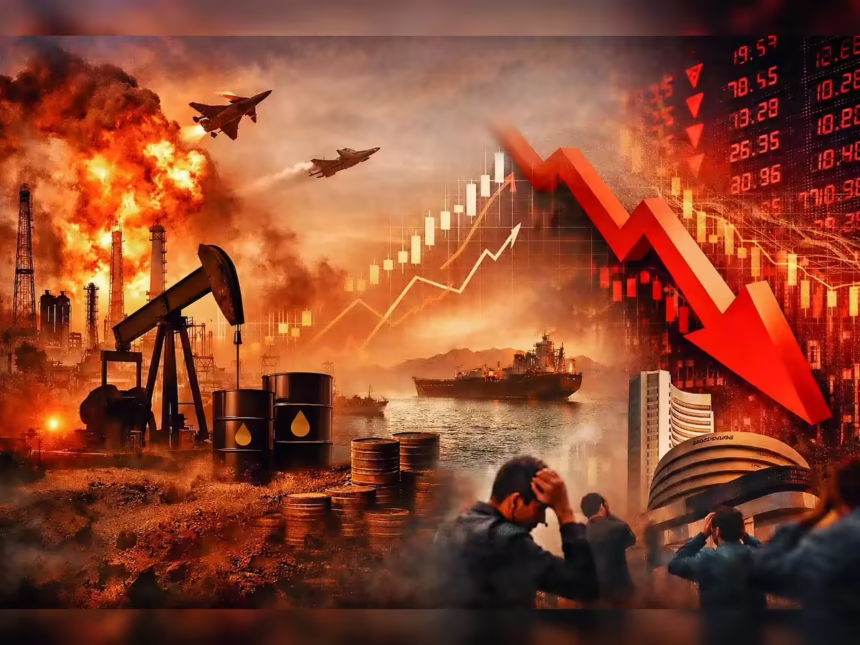
Investors across global markets are preparing for a potential oil price shock as geopolitical tensions intensify in key energy producing regions. Rising uncertainty is influencing financial markets, commodity trading, and economic forecasts as energy supply risks return to the spotlight.
Investors Brace for Oil Shock as Global Markets React
Investors brace for oil shock as geopolitical tensions ripple through global financial markets, raising concerns about energy supply disruptions and price volatility. Financial markets are reacting cautiously as developments in key oil producing regions create uncertainty around future supply conditions.
Oil prices are highly sensitive to geopolitical events because energy production and transportation depend heavily on stable political environments. When tensions escalate in regions that play a major role in global oil supply, traders and investors often anticipate potential disruptions.
Even the possibility of reduced supply can trigger sharp price movements in oil futures markets. These fluctuations then spread across equity markets, currency markets, and commodity exchanges as investors reassess economic risks.
Energy costs have a direct influence on inflation and economic growth, which is why oil price volatility often affects investor sentiment across multiple asset classes.
Geopolitical Risks and Energy Supply Concerns
Geopolitical tensions in major oil producing regions are one of the most significant drivers of energy market volatility. Several countries in West Asia and other energy producing regions account for a substantial share of global oil production.
Political instability, regional conflicts, or threats to transportation infrastructure can disrupt production or shipping routes. These developments create immediate concerns among energy traders and governments that depend on stable supply chains.
Key maritime routes such as the Strait of Hormuz play a crucial role in transporting oil from producers to international markets. A large portion of global oil exports passes through this narrow passage each day.
If shipping through these routes becomes uncertain, energy markets tend to react quickly. Traders often build risk premiums into oil prices, reflecting the possibility of supply shortages or logistical disruptions.
The result can be sudden spikes in oil prices that affect industries and economies worldwide.
Financial Markets Respond to Oil Price Volatility
Global financial markets closely monitor energy prices because oil is deeply connected to economic activity. When investors brace for an oil shock, market volatility tends to increase across multiple sectors.
Equity markets often react negatively to rising oil prices because higher energy costs increase expenses for companies. Industries such as transportation, manufacturing, and logistics are particularly sensitive to fuel price fluctuations.
At the same time, energy companies and oil producers may benefit from rising crude prices. Stocks in the energy sector sometimes outperform broader markets during periods of oil price increases.
Currency markets also respond to energy developments. Countries that export large volumes of oil can experience stronger currencies when prices rise, while oil importing nations may face higher trade deficits.
Bond markets are also affected because oil driven inflation can influence central bank interest rate decisions. Higher inflation expectations may push yields upward as investors adjust to potential monetary policy changes.
Inflation and Economic Impact of Oil Price Shocks
Oil price shocks have historically played a significant role in shaping global economic conditions. When oil prices rise rapidly, transportation costs, manufacturing expenses, and consumer prices often increase.
Energy costs influence almost every sector of the economy because fuel is required for logistics, electricity generation, and industrial production. As a result, rising oil prices can contribute to broader inflationary pressures.
Central banks closely monitor energy price movements when evaluating monetary policy decisions. Persistent increases in oil prices may lead policymakers to maintain higher interest rates in order to control inflation.
For consumers, higher fuel prices can reduce disposable income and weaken spending patterns. Businesses may also delay investments if operating costs rise unexpectedly.
These economic effects explain why investors pay close attention to geopolitical developments that could trigger oil market disruptions.
How Investors Are Preparing for Market Uncertainty
Investors often adjust their portfolios when geopolitical risks increase in energy markets. Some market participants shift toward defensive assets such as government bonds, gold, or stable currencies during periods of uncertainty.
Others may increase exposure to energy related stocks and commodities that benefit from rising oil prices. Portfolio diversification becomes particularly important when market conditions become unpredictable.
Institutional investors, including hedge funds and asset managers, also analyze geopolitical developments to identify potential risks to global supply chains and economic growth.
Financial analysts emphasize that oil markets are influenced by multiple factors, including production decisions by major exporting countries, global demand trends, and inventory levels.
While geopolitical tensions can trigger sudden price movements, long term oil price trends depend on a broader set of economic conditions.
For now, global markets remain attentive to developments in key regions that influence energy production and transportation routes. The possibility of an oil shock continues to shape investor strategies and economic forecasts.
Takeaways
• Investors are preparing for potential oil price shocks due to geopolitical tensions
• Energy supply routes and production regions are key sources of market uncertainty
• Rising oil prices can affect inflation, interest rates, and economic growth
• Financial markets across equities, currencies, and commodities are reacting to energy risks
FAQ
What is an oil shock in financial markets?
An oil shock occurs when oil prices rise rapidly due to supply disruptions, geopolitical tensions, or sudden changes in global demand.
Why do geopolitical tensions affect oil prices?
Many of the world’s largest oil producing regions are located in geopolitically sensitive areas. Political instability or conflict can threaten production or transportation routes.
How do rising oil prices affect the global economy?
Higher oil prices increase transportation and manufacturing costs, which can contribute to inflation and slow economic growth.
Which sectors benefit from rising oil prices?
Energy companies, oil producers, and certain commodity related industries may benefit when crude oil prices increase significantly.