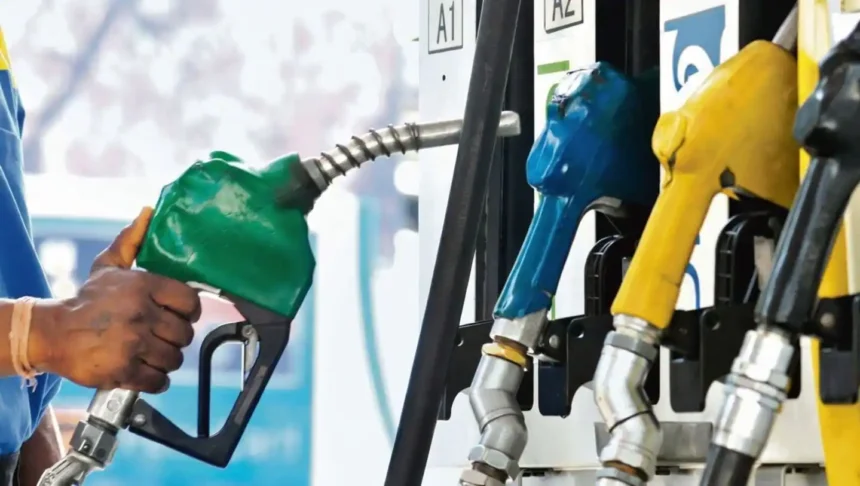
Fuel prices hold steady in India even as global oil markets witness sharp volatility, highlighting the role of domestic pricing mechanisms and policy buffers. The stability comes at a time when international crude prices are reacting to geopolitical and supply concerns.
Fuel prices hold steady despite global oil volatility, reflecting a controlled domestic pricing environment. While crude oil fluctuations continue to influence global markets, India’s retail fuel prices have remained largely unchanged due to a mix of policy decisions, tax structures, and oil marketing strategies.
Global Oil Volatility Fails to Immediately Impact Retail Prices
Global crude oil prices have been experiencing fluctuations due to geopolitical tensions, supply disruptions, and shifting demand patterns. Typically, such volatility translates into changes in retail fuel prices in import dependent countries like India.
However, the current situation shows a disconnect between global oil movements and domestic fuel pricing. This is largely due to the way fuel prices are managed within the country.
Oil marketing companies adjust prices based on a combination of international benchmarks, currency exchange rates, and government guidance. This allows for short term insulation from sharp global price swings.
As a result, even though crude prices have shown upward movement recently, retail petrol and diesel prices have not been revised immediately.
Role of Government Policy and Tax Structure
Government policy plays a critical role in stabilizing fuel prices. Central and state taxes form a significant portion of retail fuel prices in India. These taxes can be adjusted to manage price volatility.
In periods of rising crude prices, the government may choose to absorb some of the impact through tax adjustments or by delaying price revisions. This helps prevent sudden increases in fuel costs for consumers.
Additionally, strategic decisions such as maintaining price stability during sensitive economic periods can influence pricing behavior. Stable fuel prices help control inflation and support consumer spending.
This approach reflects a balance between market linked pricing and economic management.
Oil Marketing Companies Manage Pricing Strategy
Oil marketing companies are responsible for implementing fuel pricing decisions. They operate within a framework that considers both global price trends and domestic economic conditions.
In times of volatility, these companies may absorb short term fluctuations instead of passing them on immediately to consumers. This can impact their margins but helps maintain price stability.
The pricing strategy also depends on inventory levels and procurement costs. Companies may use previously purchased crude at lower prices to offset current increases, delaying the need for price hikes.
However, prolonged periods of high crude prices can eventually lead to adjustments, as sustained losses are not viable.
Impact on Inflation and Consumer Sentiment
Stable fuel prices have a direct impact on inflation and consumer sentiment. Fuel costs influence transportation, logistics, and production expenses across multiple sectors.
When fuel prices remain steady, it helps contain inflationary pressures. This supports household budgets and business operations, especially in sectors sensitive to input costs.
For consumers, stable fuel prices provide predictability and confidence in spending. This can have a positive effect on overall economic activity.
In contrast, sudden increases in fuel prices can lead to immediate cost escalation across the economy. The current stability is therefore seen as a supportive factor for growth.
Risks of Delayed Price Adjustments
While holding fuel prices steady offers short term benefits, it also carries risks. If global oil prices remain elevated for an extended period, the gap between international costs and domestic prices can widen.
This may lead to financial pressure on oil marketing companies. Eventually, this pressure could result in sharper price adjustments in the future.
Additionally, currency depreciation can amplify the impact of higher crude prices. Since oil is traded in dollars, a weaker rupee increases import costs.
Managing this balance between stability and financial sustainability is a key challenge for policymakers and companies.
Outlook for Fuel Prices in Coming Weeks
The future direction of fuel prices will depend on global crude trends, geopolitical developments, and domestic policy decisions. If oil prices stabilize, the current steady pricing may continue.
However, any significant or sustained increase in crude prices could lead to gradual revisions in retail fuel rates. Market participants are closely monitoring these factors.
Consumers and businesses should be prepared for potential changes, even though the current trend suggests stability.
The situation highlights the complexity of fuel pricing in an interconnected global and domestic economic environment.
Takeaways
• Fuel prices in India remain stable despite global oil market volatility
• Government policy and tax structure help manage price fluctuations
• Oil marketing companies are absorbing short term cost pressures
• Prolonged high crude prices may lead to future price adjustments
FAQs
Why are fuel prices stable despite rising oil prices?
Domestic pricing mechanisms and government policies help delay or absorb global price fluctuations.
Do global oil prices always affect Indian fuel prices?
Yes, but the impact is not always immediate due to pricing strategies and policy interventions.
Can fuel prices increase in the near future?
If global crude prices remain high for a sustained period, price revisions are likely.
How do stable fuel prices benefit the economy?
They help control inflation, support consumer spending, and reduce cost pressures on businesses.