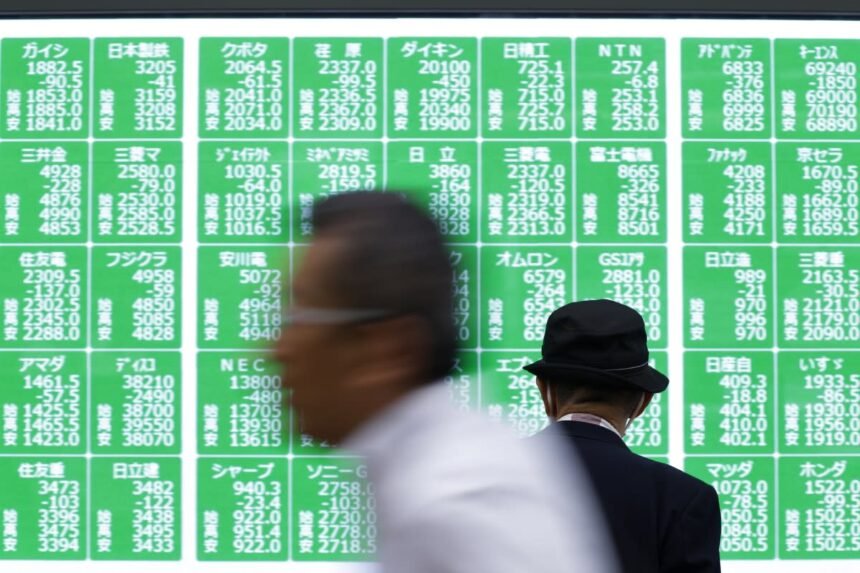
Asian equities climbed as retreating oil prices helped offset investor concerns about escalating Middle East geopolitical risks. Market sentiment improved across major regional indices, reflecting optimism that cooling energy costs could support inflation outlooks and stabilize economic growth expectations.
The Asian equities rally linked to oil retreat has become a significant development in regional financial markets, as investors balance geopolitical uncertainty with improving commodity price trends. Equity indices across key Asian economies posted gains amid cautious optimism over global economic stability.
Oil price movement shapes regional equity market sentiment
Oil retreat has provided relief to Asian markets where energy imports form a substantial portion of national expenditure. Lower crude prices can ease inflationary pressure, improve corporate margins and support consumer demand, particularly in energy dependent economies such as India, Japan and South Korea.
Market participants often interpret falling oil prices as a signal of potential stabilization in input costs for manufacturing and transportation sectors. This dynamic can lead to improved earnings expectations and support equity valuations. However, investors remain attentive to geopolitical developments that could quickly reverse commodity price trends.
Middle East tensions continue to influence risk appetite
Despite the positive impact of oil retreat, geopolitical tensions in the Middle East remain a key source of market volatility. Conflicts or disruptions in energy producing regions can affect trade routes, supply chains and currency stability across Asia.
Financial markets tend to react to geopolitical developments through risk premium adjustments, which influence capital flows and asset allocation decisions. Investors are closely monitoring diplomatic developments and security assessments to gauge potential implications for global economic conditions.
Asian equities performance often reflects this balancing act between risk perception and macroeconomic fundamentals. While short term rallies can occur due to favorable commodity trends, sustained gains depend on broader economic resilience.
Sectoral trends and investor positioning across Asian markets
The recent climb in Asian equities has been supported by sector specific gains in technology, manufacturing and financial services. Export oriented companies have particularly benefited from expectations of stable input costs and potential currency advantages.
Institutional investors are adjusting portfolios to capture opportunities in sectors likely to benefit from improved macroeconomic outlook. However, cautious positioning remains evident as geopolitical risks and interest rate trajectories continue to shape investment strategies.
Market breadth has also improved in several Asian exchanges, suggesting that gains are not limited to a narrow set of large cap stocks. Broader participation can signal strengthening investor confidence, though volatility risks persist.
Global macroeconomic factors intersect with regional market dynamics
Asian equity markets operate within a complex global macroeconomic environment where central bank policies, trade trends and commodity cycles interact. The retreat in oil prices may support inflation moderation, potentially influencing monetary policy decisions in major economies.
A stable or accommodative global interest rate outlook can further encourage capital inflows into emerging Asian markets. However, unexpected geopolitical escalations or economic data surprises could alter the trajectory of equity performance.
Investors and policymakers alike are assessing how energy market developments intersect with regional growth prospects. Sustainable equity market gains will likely depend on continued economic expansion, policy coordination and supply chain stability.
Outlook for Asian equities amid evolving geopolitical landscape
The near term outlook for Asian equities remains cautiously optimistic as markets respond to easing oil price pressures. Nevertheless, geopolitical developments continue to pose downside risks that could influence investor sentiment and capital flows.
Analysts emphasize the importance of diversified investment strategies and focus on fundamentally strong sectors. Long term market performance will depend on structural economic factors, technological innovation and regional trade integration.
Takeaways
• Asian equities gained as oil retreat improved inflation and earnings outlook
• Middle East geopolitical risks continue to influence market volatility
• Sectoral participation in technology and manufacturing supported gains
• Sustainable equity growth depends on macroeconomic and geopolitical stability
FAQ
Q1. Why did Asian equities rise recently
Falling oil prices reduced inflation concerns and improved corporate profitability expectations, boosting investor confidence.
Q2. How do Middle East tensions affect Asian markets
Geopolitical risks can disrupt energy supply chains and increase market volatility, influencing capital flows and investor sentiment.
Q3. Which sectors benefit most from lower oil prices
Manufacturing, transportation, aviation and consumer sectors often benefit due to reduced input costs.
Q4. Is the current rally in Asian equities likely to continue
Future performance depends on geopolitical developments, global monetary policy trends and regional economic growth.