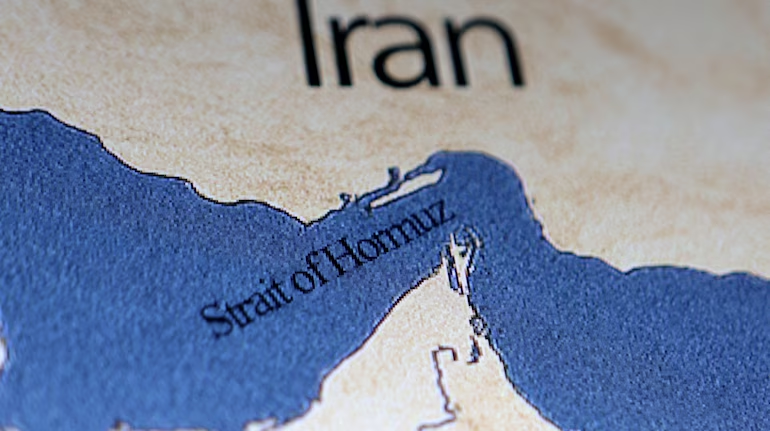
Disruption risks in the Strait of Hormuz have heightened uncertainty across global energy markets, keeping traders and policymakers on edge. The strategic maritime corridor handles a significant share of global oil shipments, making any instability a critical concern for supply chains and pricing.
The Strait of Hormuz disruption narrative has intensified market attention as geopolitical tensions threaten one of the world’s most important energy transit routes. Energy traders are closely monitoring developments due to potential impacts on crude oil supply, freight costs and global inflation expectations.
Strategic importance of Strait of Hormuz in global energy trade
The Strait of Hormuz serves as a vital chokepoint connecting major oil producing nations in the Gulf region with international markets. A substantial proportion of seaborne crude oil and liquefied natural gas exports transit through this narrow passage, making it a cornerstone of global energy logistics.
Energy market stability depends heavily on uninterrupted passage through this corridor. Even limited disruption can trigger supply fears and price volatility, as traders factor in risk premiums related to potential shipment delays or route diversions. Governments and international maritime authorities maintain close surveillance of the region to ensure navigational security.
Geopolitical tensions amplify energy market volatility
Rising geopolitical tensions surrounding the Strait of Hormuz have amplified uncertainty across commodity markets. Conflicts, diplomatic standoffs or security incidents in the region can affect shipping insurance costs, tanker availability and trade route planning.
Energy traders often respond to such developments by adjusting hedging strategies and inventory positions. Futures markets may experience increased volatility as participants attempt to price in geopolitical risk. This dynamic can influence broader financial markets, including equities, currencies and bond yields.
Market participants also consider the potential ripple effects on energy dependent economies. Countries heavily reliant on imported oil may face inflationary pressure and fiscal challenges if disruptions lead to sustained price increases.
Shipping logistics and energy supply chain resilience considerations
Disruptions in key maritime routes highlight the importance of supply chain resilience within the global energy sector. Shipping companies and energy firms are increasingly investing in contingency planning, diversified sourcing and storage capacity to mitigate risk exposure.
Alternative routes or increased reliance on strategic reserves may be explored during periods of instability. However, logistical constraints and cost implications often limit the effectiveness of short term adjustments. As a result, insurance mechanisms and security coordination remain central to maintaining trade continuity.
Energy infrastructure investments and technological advancements are also shaping long term resilience strategies. Digital tracking systems and risk analytics tools are being deployed to enhance operational transparency and crisis response capability.
Macroeconomic implications for inflation, trade and financial markets
Energy price fluctuations resulting from Strait of Hormuz disruptions can have far reaching macroeconomic implications. Rising oil prices tend to increase transportation and production costs, contributing to inflationary trends across multiple economies.
Financial markets react to energy price shocks through shifts in investor sentiment and asset allocation patterns. Emerging markets, in particular, may experience currency pressure and capital flow volatility during periods of sustained energy market stress.
Policymakers must balance energy security priorities with economic stability considerations. Strategic coordination between energy producers, importers and international institutions plays a crucial role in mitigating systemic risk.
Outlook for energy markets amid evolving geopolitical landscape
The global energy market outlook remains sensitive to developments in the Strait of Hormuz. Traders and policymakers are likely to maintain a cautious stance as geopolitical uncertainties continue to influence supply dynamics.
Long term stability will depend on diplomatic engagement, infrastructure diversification and energy transition progress. While renewable energy expansion may reduce dependence on specific transit routes over time, hydrocarbons will remain central to global energy systems in the near term.
Takeaways
• Strait of Hormuz disruption risks are elevating global energy market uncertainty
• Geopolitical tensions can trigger oil price volatility and supply chain challenges
• Shipping logistics and insurance frameworks are critical for trade continuity
• Energy market shocks may influence inflation and financial market stability
FAQ
Q1. Why is the Strait of Hormuz strategically important
It is a major transit route for global oil and gas shipments, making it essential for energy trade and supply chain stability.
Q2. How do disruptions affect global energy prices
Supply risk perceptions can lead to higher oil prices and increased market volatility.
Q3. What measures can mitigate disruption risks
Strategic reserves, diversified supply routes and enhanced maritime security coordination can help reduce risk exposure.
Q4. Are financial markets affected by energy transit disruptions
Yes, energy price shocks can influence inflation expectations, currency movements and investor sentiment.