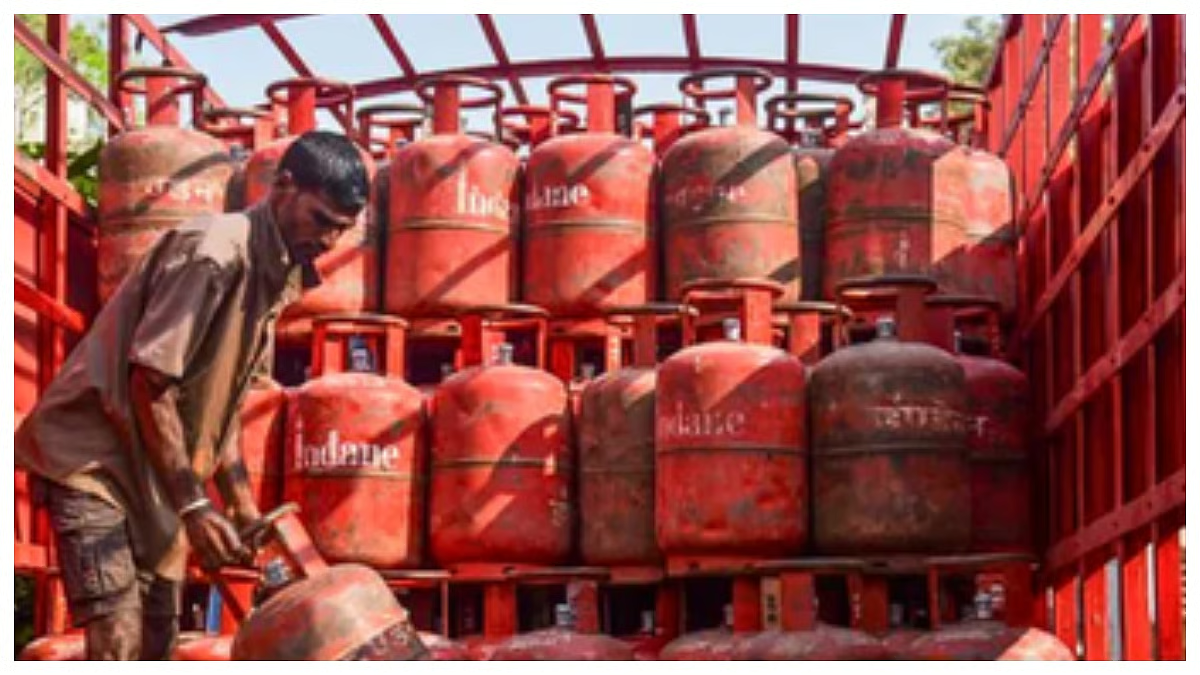
India flags West Asia energy attacks as a serious concern as global oil supply risks deepen, pushing crude prices higher and increasing pressure on importing economies. The development has triggered market volatility and raised fresh questions about energy security and inflation outlook.
The India flags West Asia energy attacks development reflects growing geopolitical tensions that are directly impacting global energy markets. As one of the world’s largest oil importers, India is closely monitoring the situation due to its potential impact on supply chains, pricing, and domestic economic stability.
Rising Geopolitical Tensions Disrupt Global Oil Supply
The recent attacks targeting energy infrastructure and shipping routes in West Asia have heightened fears of supply disruptions. This region plays a critical role in global oil production and transportation, making it highly sensitive to conflict.
Any disruption in key transit routes can immediately affect oil availability and prices. Tanker movement risks and security threats have increased insurance costs and slowed shipments, adding to supply-side constraints.
For global markets, even the perception of risk is enough to trigger price spikes. Oil prices tend to react sharply to geopolitical instability, reflecting concerns over potential shortages.
India Energy Security Strategy Faces Fresh Challenges
India energy security has come under renewed focus as the country depends heavily on imported crude oil. A significant portion of these imports originates from West Asia, making the region strategically important.
The government has been diversifying its sourcing strategy by increasing imports from countries like Russia and the United States. However, logistical challenges and pricing dynamics limit the extent of this diversification.
Strategic petroleum reserves offer some buffer, but they are designed for short-term emergencies. Prolonged disruptions could strain supply chains and increase costs for refiners and consumers.
Crude Oil Prices Impact Inflation and Economy
The rise in crude oil prices has a direct impact on inflation, particularly in a country like India where fuel costs influence transportation and production expenses. Higher fuel prices can lead to increased costs across sectors, including logistics, manufacturing, and agriculture.
This situation complicates monetary policy decisions. Central banks may face pressure to balance inflation control with growth support. A sustained increase in oil prices can also widen the current account deficit, affecting currency stability.
Businesses are likely to pass on higher costs to consumers, leading to broader price increases. This creates a ripple effect across the economy.
Global Markets React to Energy Supply Uncertainty
Global financial markets have shown increased volatility following the escalation in West Asia. Energy stocks have gained due to higher price expectations, while sectors sensitive to fuel costs have come under pressure.
Airlines, logistics companies, and manufacturing firms are among the most affected. Rising input costs reduce margins and impact profitability projections.
Investor sentiment has turned cautious, with markets closely tracking geopolitical developments. Emerging markets are particularly vulnerable due to their reliance on imports and exposure to currency fluctuations.
Policy and Strategic Responses in Focus
Governments worldwide are exploring measures to stabilize energy markets. These include releasing strategic reserves, negotiating alternative supply routes, and enhancing energy diplomacy.
India has been actively engaging with multiple oil-producing nations to secure stable supply lines. At the same time, there is renewed emphasis on accelerating the transition to renewable energy sources.
Energy diversification, both in terms of suppliers and sources, is becoming a key policy priority. Investments in solar, wind, and electric mobility are expected to gain momentum as part of long-term risk mitigation.
What Lies Ahead for Oil Markets and India
The near-term outlook remains uncertain as geopolitical tensions continue to evolve. Any escalation could lead to further supply disruptions and price increases.
For India, managing this situation will require a combination of strategic sourcing, policy intervention, and demand management. The ability to adapt quickly to changing conditions will be critical.
Markets are expected to remain volatile, with oil prices acting as a key driver of economic sentiment. Businesses and investors will need to factor in these risks while making decisions.
Despite current challenges, the situation also reinforces the importance of long-term energy transition strategies. Reducing dependence on volatile regions can enhance economic resilience over time.
Takeaways
• West Asia energy attacks have increased global oil supply risks
• India’s heavy reliance on imports makes it vulnerable to disruptions
• Rising crude prices can drive inflation and impact economic stability
• Energy diversification and renewables are gaining strategic importance
FAQs
Q1. Why are West Asia energy attacks significant for India?
They threaten oil supply routes that India depends on, potentially increasing costs and disrupting availability.
Q2. How do rising oil prices affect the economy?
They increase transportation and production costs, leading to higher inflation and reduced consumer spending.
Q3. Can India reduce its dependence on West Asia?
India is diversifying suppliers and investing in renewables, but complete independence is not feasible in the short term.
Q4. What should investors watch in this situation?
Investors should monitor oil price trends, geopolitical developments, and policy responses.