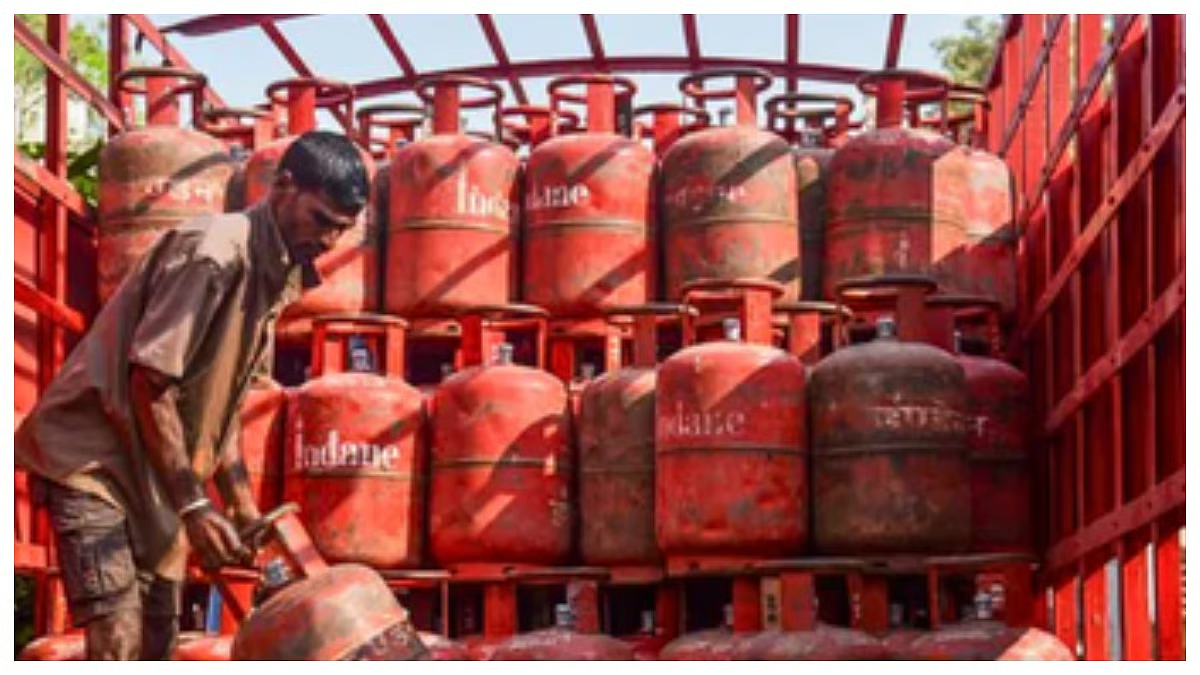
The LPG supply crunch in India is intensifying as Middle East tensions disrupt import flows, impacting household availability and pricing. The situation is raising concerns over energy security, supply chain resilience, and the immediate burden on consumers dependent on cooking gas.
The LPG supply crunch has emerged as a critical issue for Indian households, especially as import disruptions linked to Middle East tensions begin to affect distribution networks. With India relying heavily on imports to meet domestic LPG demand, any disturbance in global supply chains quickly translates into local shortages and pricing pressure.
Import Dependency Exposes Supply Chain Vulnerability
India imports a significant portion of its LPG requirements, with a large share sourced from West Asian countries. This dependency makes the country vulnerable to geopolitical disruptions affecting production or transportation routes.
Recent tensions in the Middle East have impacted shipping logistics, leading to delays in LPG cargo deliveries. Increased risks in key maritime routes have also driven up freight and insurance costs, adding pressure to the supply chain.
Domestic production is insufficient to fully offset these disruptions. As a result, supply gaps are beginning to appear, particularly in regions with high consumption demand.
Household Impact and Rising Energy Costs
The LPG supply crunch is directly affecting households, especially those relying on subsidized cooking gas under government schemes. Delays in cylinder deliveries and limited availability are becoming more frequent in certain areas.
Rising global prices are also pushing up domestic LPG costs. While subsidies provide some relief, fluctuations in international markets eventually influence retail pricing.
For lower and middle-income households, LPG remains a primary cooking fuel. Any disruption or price increase impacts daily expenses and forces some households to consider alternative fuels, which may not be as clean or convenient.
Distribution Networks Under Pressure
India’s LPG distribution network is extensive, but it is highly sensitive to supply consistency. Oil marketing companies are working to manage inventory levels and ensure equitable distribution across regions.
However, logistical challenges are becoming more evident. Delayed shipments create bottlenecks at storage and bottling plants, slowing down the overall supply chain.
Rural areas are particularly vulnerable, as they depend on regular supply cycles. Any disruption can lead to longer waiting periods and limited access to cylinders.
Authorities are monitoring the situation closely to prevent panic buying and hoarding, which could worsen shortages.
Government Response and Energy Policy Focus
The government is exploring multiple measures to address the LPG supply crunch. These include securing alternative import sources, optimizing domestic production, and utilizing strategic reserves where possible.
There is also renewed emphasis on diversifying energy sources and reducing dependence on a single region. Long-term policy discussions are focusing on strengthening supply resilience and improving storage capacity.
Subsidy mechanisms may be adjusted to protect vulnerable households from sudden price increases. At the same time, authorities are balancing fiscal constraints with consumer support.
Global Factors Continue to Influence Domestic Supply
The LPG market is closely tied to global energy dynamics. Crude oil prices, refinery output, and geopolitical developments all influence LPG availability and pricing.
As tensions in the Middle East persist, uncertainty in supply chains is expected to continue. Even minor disruptions can have amplified effects due to high demand and tight supply conditions.
India is not alone in facing these challenges. Several importing nations are competing for limited supplies, which can further drive up prices and complicate procurement.
What Lies Ahead for LPG Availability in India
The near-term outlook suggests continued pressure on LPG supply until global conditions stabilize. Oil marketing companies are likely to prioritize essential distribution while managing limited inventories.
Households may need to adapt to temporary delays or price fluctuations. Awareness around efficient usage and conservation could help mitigate the impact at an individual level.
In the long term, the current situation highlights the need for stronger energy diversification strategies. Expanding domestic production, investing in alternative fuels, and enhancing storage infrastructure will be key to reducing vulnerability.
The LPG supply crunch serves as a reminder of how global geopolitical events can directly affect everyday life, reinforcing the importance of resilient energy systems.
Takeaways
• LPG supply crunch is driven by import disruptions linked to Middle East tensions
• Indian households are facing delivery delays and rising cooking gas costs
• Distribution networks are under strain due to logistical challenges
• Energy diversification and policy measures are critical for long-term stability
FAQs
Q1. Why is there an LPG supply crunch in India?
The crunch is mainly due to import disruptions caused by geopolitical tensions affecting supply routes from the Middle East.
Q2. Will LPG prices increase further?
Prices may remain volatile depending on global energy markets and supply conditions.
Q3. Are all regions equally affected?
No, rural and high-demand areas are more likely to face delays and shortages.
Q4. What steps is the government taking?
The government is working on securing alternative supplies, managing distribution, and supporting consumers through subsidies.