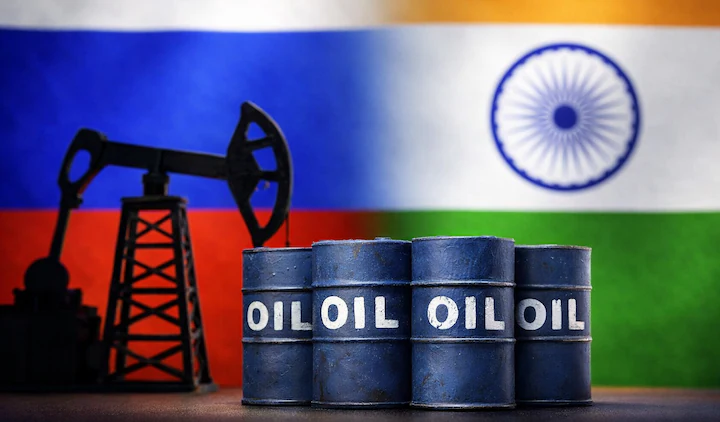
Russian oil imports to India have surged nearly 50 percent as uncertainty around the Strait of Hormuz intensifies, reshaping trade flows and energy strategies. The shift reflects India’s push to secure stable supplies while global shipping risks disrupt traditional sourcing patterns.
The Russian oil imports to India surge highlights a strategic shift in the country’s energy procurement approach as geopolitical risks in the Strait of Hormuz create uncertainty. With global oil supply chains under pressure, India is increasing reliance on alternative sources to ensure continuity and cost efficiency.
Hormuz Route Risks Disrupt Traditional Oil Supply Chains
The Strait of Hormuz is one of the most critical oil transit routes globally, handling a significant portion of the world’s crude shipments. Any threat to this corridor immediately raises concerns over supply disruptions and price volatility.
Recent tensions and security threats in the region have increased risks for oil tankers, leading to higher insurance costs and logistical challenges. Shipping companies are becoming cautious, and delays in transit are becoming more frequent.
For India, which traditionally sources a large share of crude from the Middle East, these risks are significant. The need to reduce dependency on vulnerable routes has become more urgent.
Surge in Russian Oil Imports Reshapes Energy Strategy
The increase in Russian oil imports reflects India’s pragmatic approach to energy security. Since global supply chains became volatile, India has steadily expanded its sourcing from Russia, taking advantage of competitive pricing and flexible logistics.
Russian crude is often available at discounted rates compared to other benchmarks, making it attractive for Indian refiners. The recent surge indicates a deeper shift rather than a temporary adjustment.
Indian refiners are adapting to process different grades of crude, allowing greater flexibility in sourcing. This diversification reduces reliance on any single region and enhances resilience against geopolitical disruptions.
Cost Advantage Drives Import Decisions
One of the key factors behind the surge in Russian oil imports is the cost advantage. Lower-priced crude helps Indian refiners maintain margins even when global oil prices are elevated.
This pricing benefit also has a broader economic impact. It helps moderate domestic fuel price pressures and supports inflation management to some extent.
However, logistical complexities such as longer shipping distances and payment mechanisms need to be managed carefully. Despite these challenges, the cost-benefit equation remains favorable.
Global Market Implications and Trade Realignment
The shift in India’s import pattern is part of a larger global realignment in energy trade. Countries are increasingly adjusting sourcing strategies based on geopolitical risks and economic considerations.
As India increases imports from Russia, traditional suppliers may redirect shipments to other markets. This redistribution is reshaping global oil flows and pricing dynamics.
Energy markets are becoming more fragmented, with regional trade patterns replacing earlier global integration. This trend is likely to continue as geopolitical uncertainties persist.
Strategic and Policy Considerations for India
India’s approach to managing energy security now involves a mix of diversification, strategic reserves, and diplomatic engagement. Increasing imports from Russia is one part of this broader strategy.
At the same time, India continues to maintain relationships with Middle Eastern suppliers to ensure balance. Energy diplomacy remains critical in navigating complex geopolitical landscapes.
Policy focus is also shifting toward long-term solutions such as renewable energy expansion and reducing dependence on imported fossil fuels. However, in the short term, crude oil remains essential for economic activity.
What Lies Ahead for Oil Imports and Markets
The near-term outlook suggests continued volatility in oil markets due to geopolitical risks. If tensions around the Strait of Hormuz escalate further, supply disruptions could intensify.
India is expected to continue leveraging diversified sourcing to mitigate risks. The share of Russian oil in India’s import basket may remain elevated if current conditions persist.
For global markets, the ongoing shifts indicate a move toward more regionally driven trade dynamics. Investors and policymakers will need to closely monitor these changes.
The surge in Russian oil imports underscores how quickly energy strategies can evolve in response to geopolitical pressures. Flexibility and adaptability are becoming key factors in managing energy security.
Takeaways
• Russian oil imports to India have surged due to Hormuz route uncertainty
• Geopolitical risks are disrupting traditional Middle East supply chains
• Cost advantages make Russian crude attractive for Indian refiners
• Global oil trade patterns are shifting toward diversified sourcing
FAQs
Q1. Why are Russian oil imports to India increasing?
India is increasing imports due to lower prices and the need to reduce reliance on risk-prone supply routes like the Strait of Hormuz.
Q2. What is the significance of the Strait of Hormuz?
It is a key global oil transit route, and disruptions there can impact supply and prices worldwide.
Q3. Does this shift affect global oil markets?
Yes, it contributes to a realignment of trade flows and changes in pricing dynamics.
Q4. Will India continue importing more Russian oil?
It is likely as long as geopolitical risks persist and cost advantages remain.