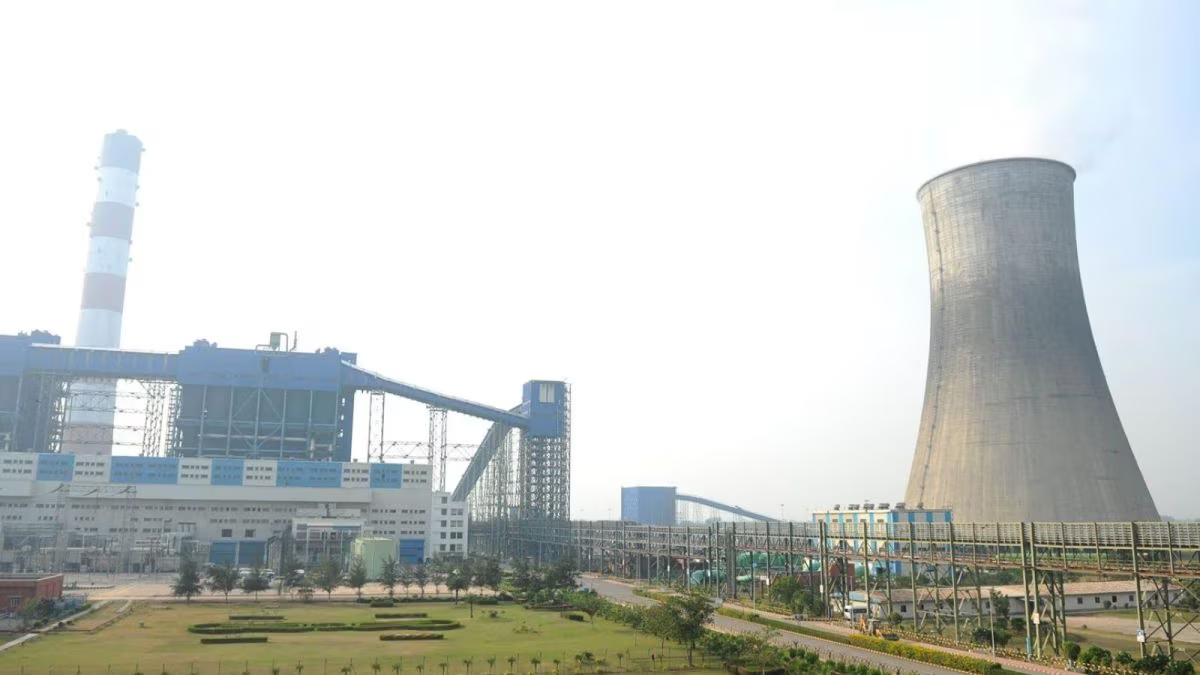
The government has directed coal-based power plants to operate at full capacity ahead of peak summer demand, aiming to prevent electricity shortages. The move comes as rising temperatures and industrial activity are expected to drive a sharp increase in power consumption.
The government pushing coal plants to full capacity signals a proactive step to manage India’s peak summer power demand. With electricity consumption typically surging between April and June, authorities are prioritizing supply stability to avoid disruptions across households and industries.
Rising summer power demand drives coal plant utilization
India’s peak power demand has consistently hit new highs during summer months, driven by increased use of air conditioning, cooling appliances, and irrigation systems. This year is expected to follow a similar trend, with demand projections already indicating potential record consumption levels.
Coal-based power plants remain the backbone of India’s electricity generation, contributing the majority share of total output. Ensuring these plants operate at full capacity is critical to maintaining grid stability during high-demand periods.
The directive aims to avoid the supply-demand gaps seen in previous years when sudden demand spikes led to localized outages and emergency measures.
Coal supply and logistics under close monitoring
Alongside increasing plant capacity utilization, the government is also focusing on coal supply chain efficiency. Adequate stock levels at thermal power plants are essential to sustain uninterrupted operations.
Coal India and other suppliers have been instructed to ramp up production and ensure timely deliveries. Rail logistics is being closely coordinated to prevent bottlenecks, as transportation delays can directly impact power generation.
In recent years, coal shortages at power plants have emerged as a recurring challenge during peak demand periods. The current push reflects lessons learned from past disruptions.
Balancing energy security with environmental concerns
While maximizing coal-based power generation ensures immediate energy security, it also raises environmental considerations. Coal remains a carbon-intensive energy source, and increased usage can impact emission targets.
India continues to expand its renewable energy capacity, including solar and wind. However, renewables alone are not yet sufficient to meet peak demand due to their intermittent nature.
This creates a balancing act where coal plants serve as a reliable base load source while renewable capacity gradually scales up. The current directive underscores the continued reliance on coal in the short to medium term.
Impact on industries and economic activity
Reliable power supply is crucial for industrial operations, particularly in sectors such as manufacturing, infrastructure, and services. Any disruption during peak summer months can affect productivity and economic output.
By ensuring coal plants operate at full capacity, the government aims to support uninterrupted industrial activity. This is especially important as India continues to position itself as a manufacturing hub.
For businesses, stable electricity supply reduces dependence on costly backup options such as diesel generators, improving overall cost efficiency.
Long term outlook for India’s power sector
The current move highlights the structural realities of India’s energy mix. While renewable energy is expanding rapidly, coal continues to play a dominant role in meeting base load demand.
Future strategies are likely to focus on improving coal plant efficiency, reducing emissions, and integrating renewable sources more effectively into the grid.
Energy storage solutions and grid modernization will also be key to reducing dependence on coal over time. However, in the immediate term, coal remains central to ensuring reliable power supply during peak demand cycles.
Takeaways
Government has directed coal plants to run at full capacity for summer demand
Coal remains the primary source for meeting India’s peak electricity needs
Improved coal supply and logistics are critical to avoid power shortages
Balancing energy security with environmental goals remains a key challenge
FAQs
Why is the government increasing coal plant capacity?
To ensure uninterrupted electricity supply during peak summer demand when consumption rises sharply.
Will this lead to more pollution?
Higher coal usage can increase emissions, but it is currently necessary to maintain energy security.
Are renewable sources not sufficient?
Renewables are growing but cannot fully meet peak demand due to intermittency.
How does this impact businesses?
Stable power supply helps industries maintain productivity and reduces reliance on expensive backup power.