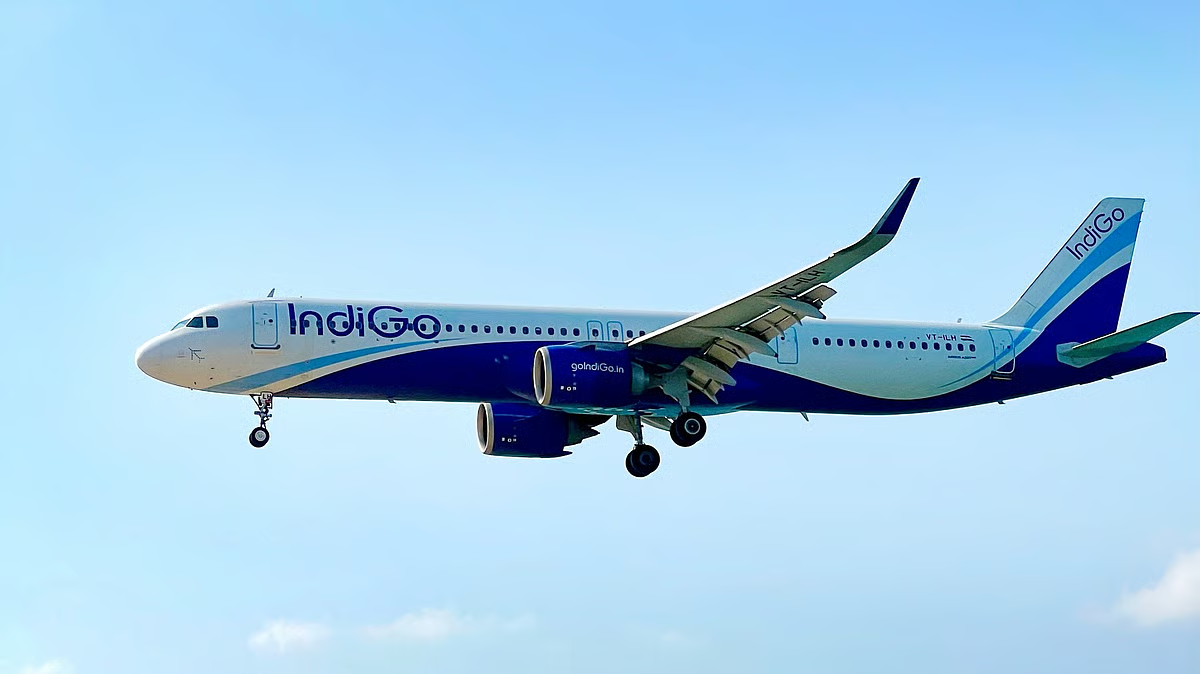
IndiGo and Air India have issued fresh advisories as West Asia flight schedules undergo changes due to evolving regional conditions. The adjustments are impacting routes, timings, and passenger planning across key international corridors.
IndiGo and Air India advisory updates have come into focus as West Asia flight schedules shift, reflecting operational adjustments by Indian carriers in response to changing regional airspace conditions. Airlines are proactively informing passengers to manage disruptions and maintain service continuity.
West Asia airspace changes disrupt flight schedules
The latest airline advisories are linked to evolving conditions in West Asia that are affecting airspace usage and flight routes. Airlines often reroute or reschedule flights when certain air corridors face restrictions or heightened monitoring.
For Indian carriers, West Asia is a critical transit and destination region, connecting passengers to Europe, Africa, and beyond. Any disruption in this zone has a cascading effect on long-haul and connecting flights.
As a result, airlines are adjusting departure times, increasing buffer durations, and in some cases modifying routes to ensure passenger safety and operational efficiency.
IndiGo and Air India issue passenger travel advisories
IndiGo and Air India have both issued advisories urging passengers to check flight status before departure. These advisories typically include updates on revised timings, potential delays, and guidance on airport reporting.
Passengers traveling to or via West Asian destinations are being advised to allow additional time for travel and stay updated through official airline communication channels.
Such advisories are standard practice during periods of operational uncertainty, allowing airlines to manage expectations and reduce last-minute disruptions at airports.
Operational impact on airlines and costs
Flight schedule changes in international aviation often lead to increased operational costs. Rerouting flights can result in longer flying times, higher fuel consumption, and crew scheduling adjustments.
For airlines already operating in a competitive environment, these additional costs can impact margins. However, safety and regulatory compliance remain the top priorities.
Airlines may also face logistical challenges in managing aircraft rotations and maintaining on-time performance across their network.
Passenger impact and travel planning considerations
For passengers, the immediate impact includes potential delays, rescheduled departures, and longer travel durations. Connecting flights may also be affected, particularly for travelers using West Asia as a transit hub.
Travelers are being encouraged to monitor updates closely, especially if they have tight connections or time-sensitive plans. Flexible booking options and customer support services are being utilized to assist affected passengers.
Corporate travelers and logistics operators are also adjusting schedules to account for possible disruptions in cargo and passenger movement.
Broader implications for aviation sector
The situation highlights how geopolitical and regional factors continue to influence global aviation. Airspace restrictions and route changes are not uncommon, but their impact has become more visible with increased global connectivity.
For Indian aviation, maintaining reliability in international routes is crucial for competitiveness. Airlines are expected to continue adapting quickly to external changes while ensuring minimal disruption to passengers.
This episode also underscores the importance of diversified routing strategies and real-time operational planning in modern aviation.
Takeaways
IndiGo and Air India issued advisories due to West Asia flight schedule changes
Airspace conditions are causing route adjustments and timing revisions
Passengers may face delays and are advised to check flight status regularly
Airlines are balancing operational costs with safety and compliance requirements
FAQs
Why are West Asia flight schedules changing?
Changes are due to evolving airspace conditions and operational adjustments for safety and efficiency.
What should passengers do before traveling?
Passengers should check flight status, allow extra time, and follow airline advisories.
Are these disruptions temporary?
Such changes are usually temporary but depend on how regional conditions evolve.
Will ticket prices increase due to these changes?
Operational costs may rise, but fare changes depend on airline pricing strategies and demand.