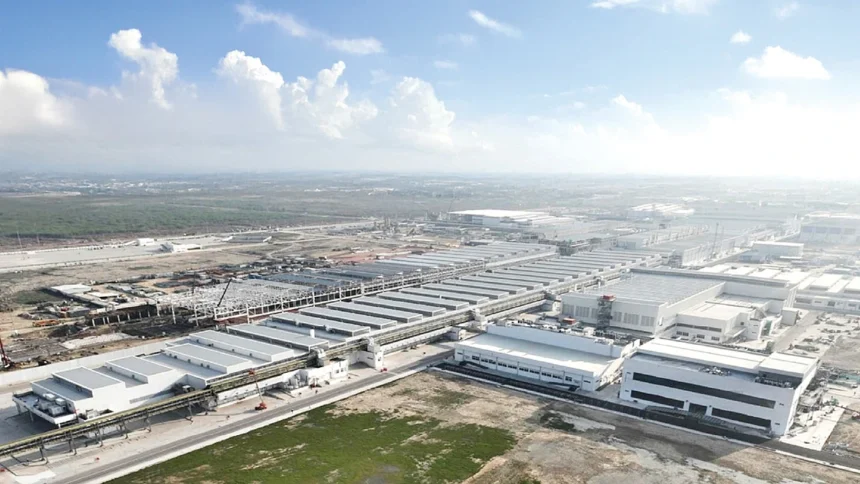
Maruti Suzuki is preparing a ₹10,000 crore investment for a new manufacturing plant in Gujarat, reinforcing its long-term production strategy. The move aligns with rising domestic demand and export ambitions in India’s fast-evolving automotive sector.
Maruti ₹10,000 crore Gujarat plant investment marks a significant step in India’s automotive expansion story, as the country’s largest carmaker strengthens its production capacity. The development is time sensitive and reflects ongoing capital expenditure trends in the auto industry.
Maruti expands manufacturing capacity to meet rising demand
Maruti Suzuki’s decision to invest ₹10,000 crore in a Gujarat manufacturing plant comes amid steady growth in passenger vehicle demand. India’s car market has seen consistent recovery post-pandemic, with both urban and semi-urban demand contributing to higher volumes.
The company has been operating near optimal capacity at several facilities, prompting the need for expansion. A new plant will help address demand backlogs and reduce waiting periods for popular models.
This move also supports Maruti’s strategy to maintain its dominant market share while preparing for future demand cycles.
Gujarat emerges as key auto manufacturing hub
The choice of Gujarat for this investment highlights the state’s growing importance in India’s automotive ecosystem. Gujarat offers strong infrastructure, port connectivity, and a business-friendly environment, making it attractive for large-scale manufacturing projects.
Maruti already has an established presence in the state, which allows it to leverage existing supply chain networks and vendor ecosystems. This reduces setup time and improves operational efficiency.
The expansion is expected to generate employment opportunities and boost ancillary industries, further strengthening the region’s industrial base.
Focus on exports and global market positioning
A significant portion of production from the new Gujarat plant is likely to be directed toward exports. Maruti Suzuki has been steadily increasing its role as a global manufacturing base for its parent company’s international markets.
India’s cost competitiveness and improving quality standards make it an attractive export hub. The new facility could enhance Maruti’s ability to serve markets in Africa, Latin America, and parts of Asia.
Export growth also helps diversify revenue streams and reduces dependence on domestic market fluctuations.
Investment aligns with evolving auto industry trends
The ₹10,000 crore investment reflects broader trends in the automotive sector, including capacity expansion, localization, and technology integration. Automakers are investing not only in volume but also in efficiency and future-ready production systems.
There is also a growing focus on flexible manufacturing lines that can accommodate multiple models and fuel types, including hybrid and alternative fuel vehicles.
While electric vehicle adoption is still evolving in India, investments in manufacturing infrastructure today are being designed to support future transitions.
Economic and supply chain impact of the project
Large-scale manufacturing investments have a multiplier effect on the economy. The new plant is expected to create direct and indirect employment, support supplier networks, and stimulate local economic activity.
Component manufacturers, logistics providers, and service industries are likely to benefit from increased demand linked to the plant’s operations.
Such investments also reinforce investor confidence in India’s manufacturing sector, aligning with broader initiatives aimed at boosting domestic production.
Competitive positioning in the Indian auto market
Maruti Suzuki’s expansion comes at a time when competition in the passenger vehicle segment is intensifying. New entrants, evolving consumer preferences, and technological shifts are reshaping the market landscape.
By expanding capacity and strengthening its production base, Maruti aims to retain its leadership position while responding to changing market dynamics.
The Gujarat plant will play a key role in supporting new product launches and maintaining supply consistency across its portfolio.
Takeaways
Maruti is investing ₹10,000 crore in a new Gujarat manufacturing plant
The expansion aims to meet rising domestic demand and reduce supply constraints
Gujarat continues to grow as a major automotive manufacturing hub
The plant will support exports and strengthen Maruti’s global positioning
FAQs
Why is Maruti investing in a new plant in Gujarat?
To increase production capacity, meet rising demand, and support export growth.
How will this impact the local economy?
It will create jobs, boost supplier industries, and drive regional economic activity.
Will the plant focus on electric vehicles?
While EV plans are evolving, the facility is expected to support flexible manufacturing for future needs.
What does this mean for car buyers?
It could reduce waiting periods and improve availability of popular models.