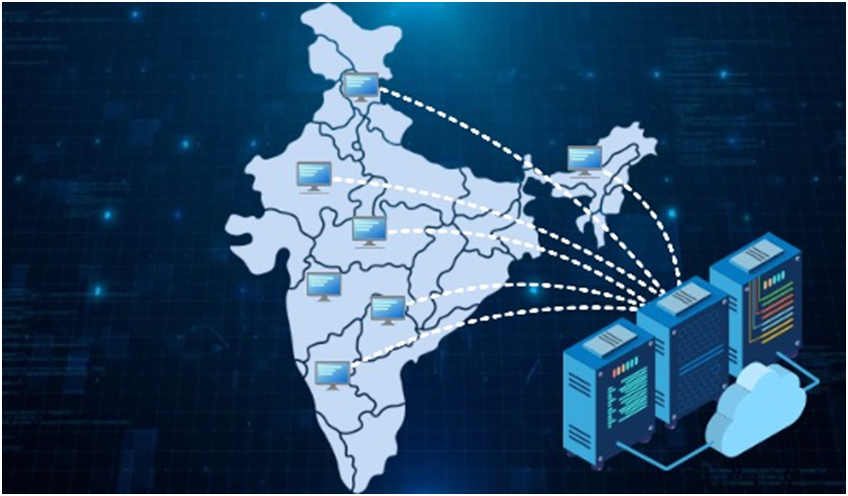
India is tightening its stance on data localization for AI firms as compliance concerns grow. The move reflects rising regulatory focus on data security, digital sovereignty, and the expanding role of artificial intelligence in sensitive sectors like finance, healthcare, and governance.
India’s new data localization push for AI firms signals a shift toward stricter regulatory control over how data is stored, processed, and transferred. As AI adoption accelerates across industries, policymakers are moving quickly to ensure that critical data remains within national borders and under domestic jurisdiction.
Regulatory Shift Targets AI Data Storage Practices
India’s regulatory approach to AI is evolving alongside its broader digital policy framework. Authorities are increasingly emphasizing that datasets used to train and operate AI systems must be stored locally, especially when they involve sensitive or personal information.
This shift aligns with ongoing enforcement trends seen under India’s digital data protection framework. Regulators are concerned that offshore data storage creates legal blind spots, especially in cases involving data breaches or misuse. By mandating local storage, enforcement agencies gain clearer jurisdiction and faster access.
For AI firms, this introduces a new layer of operational complexity. Companies relying on global cloud infrastructure may now need to restructure how they handle Indian user data. This includes setting up local servers, revising data pipelines, and ensuring compliance with emerging audit requirements.
Rising Compliance Pressure on Startups and Big Tech
The compliance burden is not uniform across the ecosystem. Large technology companies with existing infrastructure in India are better positioned to adapt. However, startups and mid-sized AI firms face higher friction due to limited resources and dependence on global cloud providers.
Compliance costs are expected to rise as firms invest in localized infrastructure, legal advisory, and data governance systems. This comes at a time when many startups are already navigating funding constraints and profitability pressures.
At the same time, regulators are signaling stricter enforcement. Companies that fail to comply with localization norms could face penalties, restrictions, or operational limitations. This is pushing firms to proactively audit their data practices rather than wait for formal mandates.
Strategic Push for Digital Sovereignty and AI Governance
India’s data localization push is not just about compliance. It is part of a broader strategy to strengthen digital sovereignty and build a controlled AI ecosystem within the country.
By keeping data within national borders, India aims to reduce reliance on foreign infrastructure and increase control over emerging technologies. This also supports the government’s ambition to position India as a global AI hub with strong regulatory foundations.
Additionally, localized data can fuel domestic innovation. When data remains accessible within the country, it becomes easier for local companies and research institutions to develop AI models tailored to Indian markets and languages.
This approach mirrors global trends, where countries are increasingly asserting control over data flows. The European Union and China have already implemented strict data governance frameworks, and India is now moving in a similar direction with its own policy priorities.
Industry Response and Operational Adjustments
Industry reactions have been mixed. While some firms acknowledge the need for stronger data protection, others warn that excessive localization requirements could slow innovation and increase costs.
Cloud providers are likely to play a critical role in this transition. Many are expected to expand their data center presence in India to support clients navigating compliance. Partnerships between AI firms and local infrastructure providers may also increase.
Operationally, companies are beginning to redesign their data architectures. This includes segregating Indian user data, implementing region-specific storage solutions, and enhancing transparency around data usage.
For global AI companies, India’s policy shift may require a market-specific strategy. Instead of a unified global model, firms may need to tailor their systems to comply with local regulations in each region.
What Comes Next for AI Regulation in India
India’s data localization push is likely just the beginning of a broader regulatory roadmap for AI. Future policies may address algorithmic transparency, ethical AI usage, and accountability mechanisms.
Regulators are expected to continue engaging with industry stakeholders to refine these rules. However, the direction is clear. Compliance, data control, and national interest will remain central to India’s AI strategy.
For businesses, the key will be early adaptation. Firms that invest in compliant infrastructure and transparent data practices will be better positioned to navigate the evolving landscape and maintain trust with users and regulators alike.
Takeaways
India is increasing regulatory control over AI data storage and processing
Data localization will raise operational and compliance costs for firms
Startups may face greater challenges compared to large tech companies
The move supports India’s broader digital sovereignty and AI ambitions
FAQs
What is data localization in the context of AI?
Data localization refers to storing and processing data within a country’s borders instead of transferring it overseas, especially for sensitive or personal data used in AI systems.
Why is India pushing for data localization for AI firms?
The government aims to improve data security, strengthen legal oversight, and ensure that critical data remains accessible under Indian jurisdiction.
How will this impact AI startups in India?
Startups may face higher costs due to infrastructure changes and compliance requirements, but it could also create opportunities for local innovation.
Will global AI companies be affected?
Yes, global firms operating in India may need to redesign their data systems and establish local storage solutions to meet regulatory requirements.