Flipkart supply chain restructuring is underway as the company prepares for India’s upcoming festive shopping season. The e-commerce giant is optimizing logistics, warehousing, and last-mile delivery to handle expected demand spikes and improve delivery efficiency across key markets.
Flipkart Supply Chain Restructuring Signals Festive Readiness
Flipkart supply chain restructuring comes at a critical time when e-commerce platforms begin preparing months in advance for India’s high-volume festive season. Events like Big Billion Days drive massive order volumes, requiring robust backend operations.
The company is reportedly strengthening its logistics network to ensure faster deliveries and fewer disruptions. This includes expanding warehousing capacity and improving inventory placement strategies.
Festive seasons typically account for a significant portion of annual sales for e-commerce players. Any inefficiency during this period can directly impact revenue and customer experience.
By restructuring early, Flipkart aims to handle peak demand more effectively while maintaining service quality.
Warehousing Expansion and Inventory Optimization Strategy
A key component of Flipkart supply chain restructuring is the expansion of its warehousing footprint. The company is increasing storage capacity across multiple regions to bring inventory closer to customers.
This approach reduces delivery times and helps manage high order volumes during peak sales. Regional fulfillment centers are being optimized to handle specific product categories based on demand patterns.
Flipkart is also using data analytics to improve inventory allocation. By predicting demand at a granular level, the company can stock products more efficiently and avoid stockouts or overstocking.
This level of planning is essential for categories such as electronics, fashion, and home appliances, which see sharp demand spikes during festive sales.
Last Mile Delivery Strengthened for Faster Turnaround
Last mile delivery remains one of the most critical aspects of Flipkart supply chain restructuring. The company is investing in expanding its delivery partner network and improving route optimization.
Faster delivery timelines have become a key differentiator in e-commerce. Customers now expect same-day or next-day deliveries, especially in urban and semi-urban areas.
Flipkart is also focusing on enhancing delivery capabilities in Tier-2 and Tier-3 cities, where demand is growing rapidly. Strengthening last mile operations in these regions is essential for capturing new customers.
Technology-driven solutions, including real-time tracking and automated routing, are being deployed to improve efficiency and reduce delays.
Competition Intensifies Ahead of Festive Season
Flipkart’s supply chain overhaul comes amid intense competition from other e-commerce platforms. Rival companies are also investing heavily in logistics and customer experience ahead of the festive season.
The ability to deliver products quickly and reliably during peak demand periods can significantly influence market share. Supply chain efficiency has become as important as pricing and product assortment.
Flipkart supply chain restructuring is aimed at maintaining its competitive position while improving operational resilience.
The festive season often sets the tone for annual performance, making it a high-stakes period for all players in the industry.
Technology Integration Enhances Operational Efficiency
Technology plays a central role in Flipkart supply chain restructuring. The company is leveraging artificial intelligence and machine learning to forecast demand, optimize routes, and manage inventory.
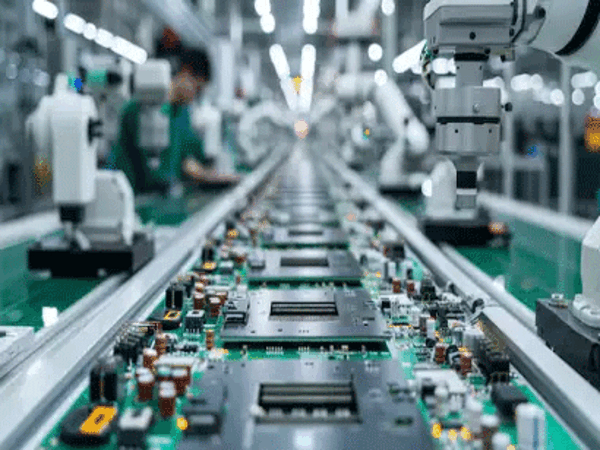
Automation in warehouses is also being increased to handle higher volumes with greater accuracy. This includes the use of robotics and advanced sorting systems.
These improvements help reduce operational costs while improving speed and reliability. As order volumes scale, manual processes become less efficient, making automation a necessity.
Flipkart’s focus on technology integration aligns with broader industry trends where data-driven logistics is becoming the standard.
What This Means for Consumers and Sellers
Flipkart supply chain restructuring is expected to benefit both consumers and sellers. Customers can expect faster deliveries, better product availability, and fewer order cancellations during peak periods.
For sellers, improved logistics means better inventory turnover and increased sales opportunities. Efficient fulfillment systems also reduce operational challenges for businesses relying on the platform.
The restructuring also reflects the growing maturity of India’s e-commerce ecosystem. As competition increases, companies are investing more in backend capabilities to support front-end growth.
The festive season will serve as a key test of how effectively these changes translate into real-world performance.
Takeaways
Flipkart is restructuring its supply chain ahead of festive demand surge
Warehousing expansion and inventory optimization are key focus areas
Last mile delivery improvements aim to reduce delivery timelines
Technology integration is driving efficiency across logistics operations
FAQs
Why is Flipkart restructuring its supply chain?
The company is preparing for the festive season, which brings a significant increase in order volumes and requires efficient logistics management.
How will this impact delivery times?
Customers are likely to see faster and more reliable deliveries due to improved logistics and inventory placement.
What role does technology play in this restructuring?
AI, machine learning, and automation are being used to optimize demand forecasting, routing, and warehouse operations.
Will sellers benefit from these changes?
Yes, improved logistics can lead to better inventory management, higher sales, and reduced operational challenges for sellers.