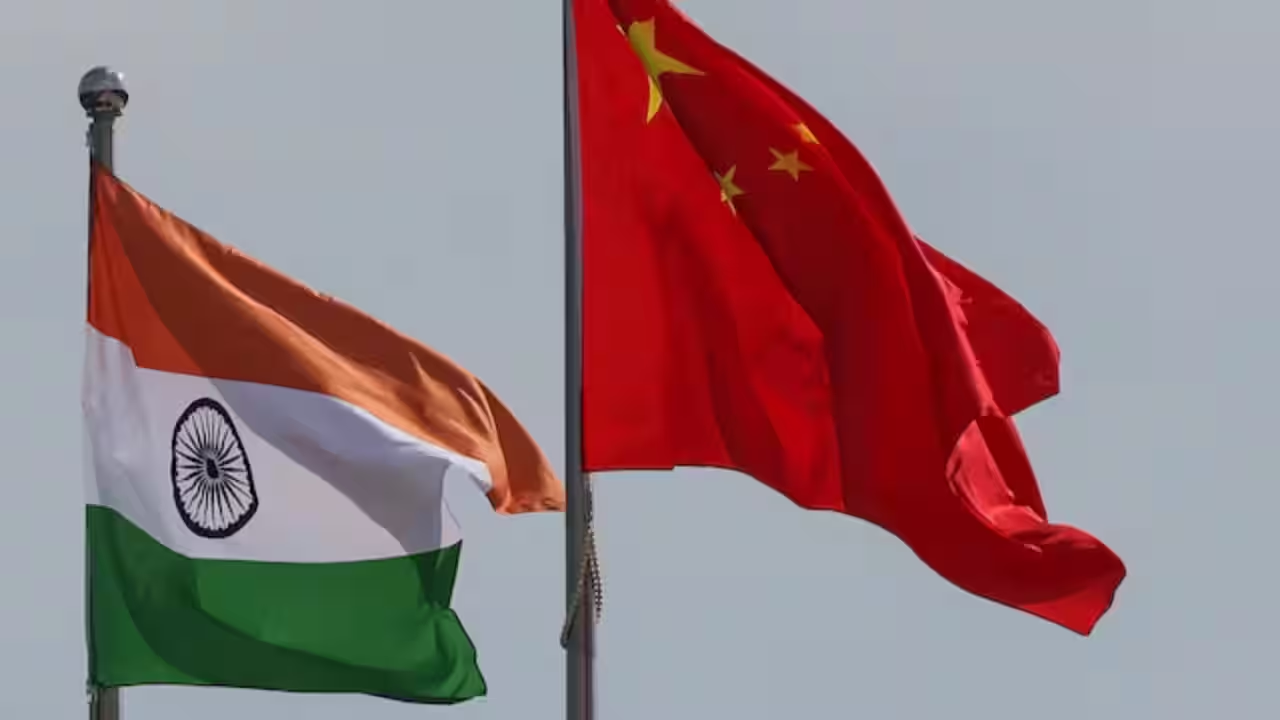
India is indicating a possible shift in its stance on the WTO e-commerce tariff moratorium just as global trade negotiations reach a critical deadline. The move could reshape digital trade rules and impact how cross-border digital goods are taxed.
India’s position on the WTO e-commerce tariff moratorium is drawing global attention as the deadline for consensus approaches. The moratorium, which prevents countries from imposing customs duties on electronic transmissions, has been in place since 1998 under the World Trade Organization. Now, India appears to be recalibrating its strategy amid growing concerns over revenue loss and digital sovereignty.
India’s evolving stance on digital trade rules
India has long expressed reservations about extending the moratorium indefinitely. Policymakers argue that the current framework disproportionately benefits developed economies and large tech exporters while limiting developing countries’ ability to generate tariff revenue from digital goods.
Recent signals suggest India may soften its rigid opposition, possibly opening the door for a conditional extension. This shift is not a full reversal but rather a tactical adjustment aimed at gaining leverage in broader trade negotiations. Officials are reportedly exploring middle-ground options that could balance revenue concerns with global trade commitments.
This comes at a time when digital trade has expanded significantly, covering everything from software downloads to streaming services and 3D printable designs. India’s concern is that the scope of “electronic transmissions” remains vaguely defined, creating long-term fiscal uncertainty.
Why the WTO moratorium matters now
The WTO e-commerce tariff moratorium has become a contentious issue as member nations debate its future relevance. Developed countries, including the United States and members of the European Union, strongly support its continuation, arguing that it fosters innovation and reduces trade barriers.
India, along with several other developing nations, has highlighted potential revenue losses due to the inability to tax digital imports. Studies by international organizations have estimated that developing countries could be losing billions in potential tariff income annually.
The current deadline adds urgency. If member countries fail to reach consensus, the moratorium could lapse, allowing nations to impose tariffs on digital transmissions for the first time in decades. That would mark a major shift in global trade dynamics.
Domestic pressures shaping India’s approach
India’s recalibration is also driven by internal economic priorities. With a rapidly growing digital economy, the government is under pressure to protect domestic industries while ensuring fair taxation frameworks.
There is also a strategic angle. India has been actively positioning itself as a key player in global digital governance. Taking a more flexible stance at the WTO could strengthen its negotiating power in parallel discussions on data flows, localization, and digital services taxation.
At the same time, industry stakeholders within India have mixed views. Tech companies and startups generally favor the continuation of the moratorium, as it keeps cross-border digital trade frictionless. On the other hand, policymakers focused on fiscal policy are more cautious.
Global implications of a potential shift
India’s move is being closely watched because it could influence other developing economies. If India signals openness to compromise, it may pave the way for a broader agreement at the WTO.
Conversely, if negotiations fail, it could trigger fragmentation in global digital trade rules. Countries may begin imposing unilateral tariffs, leading to increased costs for businesses and consumers worldwide.
Such an outcome could also complicate international supply chains, particularly in sectors that rely heavily on digital delivery models. From cloud computing to online education and gaming, multiple industries could feel the ripple effects.
What happens next at the WTO talks
The coming days are critical. WTO members are engaged in intense negotiations to reach a consensus before the deadline. India’s nuanced position could act as a bridge between opposing camps.
However, key sticking points remain unresolved, including the definition of electronic transmissions and the duration of any extension. Whether India’s shift leads to a breakthrough or simply prolongs the debate will depend on how negotiations unfold.
For now, the signal is clear. India is not stepping away from its core concerns, but it is willing to engage more flexibly in shaping the future of global digital trade rules.
Takeaways
- India is reconsidering its stance on the WTO e-commerce tariff moratorium ahead of a key deadline
- The moratorium prevents customs duties on digital transmissions like software and streaming
- Developing countries, including India, are concerned about long-term revenue losses
- A consensus or breakdown could significantly impact global digital trade frameworks
FAQs
What is the WTO e-commerce tariff moratorium?
It is an agreement among WTO members not to impose customs duties on electronic transmissions such as digital downloads, software, and online services.
Why does India oppose the moratorium?
India argues that it limits its ability to generate tariff revenue and favors developed countries with strong digital export sectors.
What happens if the moratorium ends?
Countries could start imposing tariffs on digital goods, potentially increasing costs and disrupting global digital trade.
Is India fully reversing its position?
No, India appears to be adopting a more flexible approach rather than completely changing its stance.