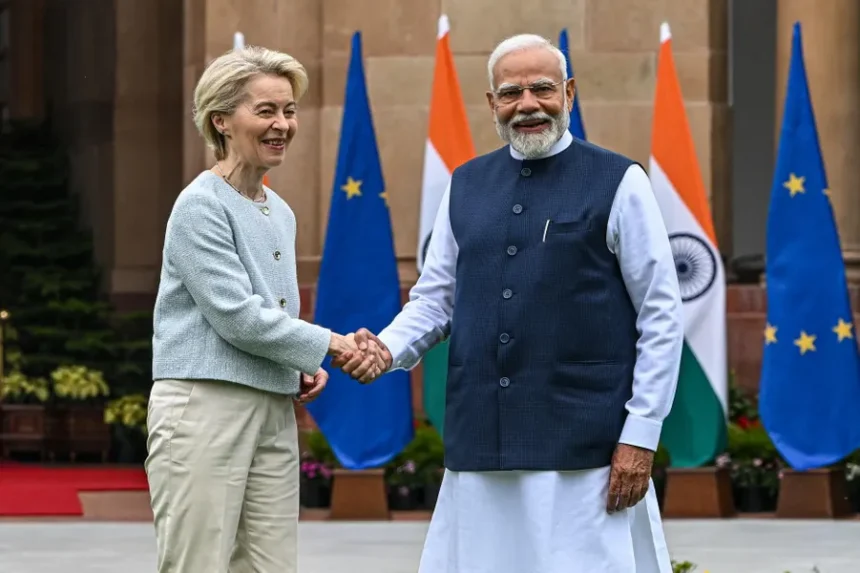
India EU trade momentum builds as Prime Minister Narendra Modi prepares for back-to-back visits to Europe, signaling renewed urgency in bilateral negotiations. The developments highlight efforts to accelerate a long-pending free trade agreement amid shifting global economic alignments.
India–EU trade momentum builds as PM Modi lines up back-to-back Europe visits, marking a significant phase in economic diplomacy. With negotiations for a comprehensive trade agreement ongoing, both sides are seeking to strengthen ties in areas such as market access, technology, and supply chain resilience.
Renewed push for India EU free trade agreement
India and the European Union have been negotiating a free trade agreement for over a decade, with talks restarting in recent years after a prolonged pause. The current momentum suggests that both sides are keen to finalize a deal that could unlock significant economic benefits.
The European Union, represented by the European Commission, is one of India’s largest trading partners. Bilateral trade in goods and services has been steadily increasing, but both sides believe there is untapped potential.
Key areas of negotiation include tariff reductions, intellectual property rights, and regulatory standards. India is seeking better access for its services sector, while the EU is pushing for lower tariffs on automobiles, wines, and agricultural products.
The upcoming visits by Narendra Modi are expected to provide political momentum to these discussions, helping bridge gaps that have stalled progress in the past.
Strategic importance of Europe in India’s trade policy
Europe holds strategic importance in India’s broader trade and foreign policy framework. As global supply chains undergo restructuring, India is looking to diversify its trade partnerships beyond traditional markets.
Strengthening ties with European economies aligns with India’s goal of reducing dependence on specific regions while enhancing economic resilience. The EU also offers access to advanced technology, investment, and high-value markets.
For Europe, India represents a large and growing consumer base, as well as a potential partner in addressing global challenges such as climate change and digital governance.
This mutual interest is driving both sides to re-engage with greater urgency, especially in the context of evolving geopolitical dynamics.
Focus on digital trade, sustainability, and supply chains
One of the defining features of current India EU trade discussions is the emphasis on emerging areas such as digital trade and sustainability. Both sides are exploring frameworks for data flows, privacy standards, and digital services.
Sustainability has also become a central theme, with the EU advocating for environmental standards and carbon-related regulations. India, while supportive of climate goals, is cautious about measures that could impact its industries.
Supply chain resilience is another priority. The disruptions seen in recent years have prompted countries to rethink their dependence on single sources. India and the EU are looking to collaborate in building more diversified and reliable supply networks.
These areas add complexity to negotiations but also create opportunities for long-term cooperation.
Challenges that could shape the final agreement
Despite the positive momentum, several challenges remain. Differences over tariffs, regulatory alignment, and labor standards have historically slowed progress.
India has been protective of certain sectors, particularly agriculture and small-scale industries. On the other hand, the EU has stringent regulatory requirements that Indian exporters must meet.
Data protection and digital regulations are also sensitive topics. Aligning policies in these areas will require careful negotiation to balance economic interests with domestic priorities.
The success of the talks will depend on both sides’ willingness to make compromises while safeguarding their core interests.
Economic impact of stronger India EU trade ties
A successful trade agreement between India and the EU could significantly boost bilateral trade and investment. It would open new opportunities for businesses across sectors, including manufacturing, services, and technology.
Indian exporters could gain improved access to European markets, while European companies could benefit from reduced barriers in India. Increased investment flows could also support infrastructure development and job creation.
For consumers, the agreement could lead to greater product variety and competitive pricing. However, certain sectors may face increased competition, requiring policy support and adaptation.
Overall, stronger trade ties have the potential to enhance economic growth and deepen strategic cooperation between the two regions.
Outlook as diplomatic engagements intensify
The upcoming Europe visits by Prime Minister Modi are expected to play a crucial role in advancing negotiations. High-level political engagement often helps resolve sticking points and build consensus.
While it is unlikely that a final agreement will be concluded immediately, the current momentum indicates a clear intent to move forward. Both sides appear committed to strengthening their partnership in a rapidly changing global landscape.
As discussions progress, businesses and policymakers will closely watch developments that could shape the future of India EU economic relations.
Takeaways
- India EU trade talks are gaining momentum ahead of key diplomatic visits
- A free trade agreement could significantly boost bilateral trade and investment
- Digital trade, sustainability, and supply chains are key focus areas
- Challenges remain around tariffs, regulations, and policy alignment
FAQs
What is the India EU trade agreement?
It is a proposed free trade agreement aimed at reducing tariffs and improving market access between India and the European Union.
Why are Modi’s Europe visits important?
They provide political momentum to negotiations and help address key issues at the leadership level.
What sectors will benefit from the agreement?
Manufacturing, services, technology, and exports are expected to benefit significantly.
What are the main challenges in the talks?
Differences over tariffs, regulatory standards, and digital policies remain key hurdles.