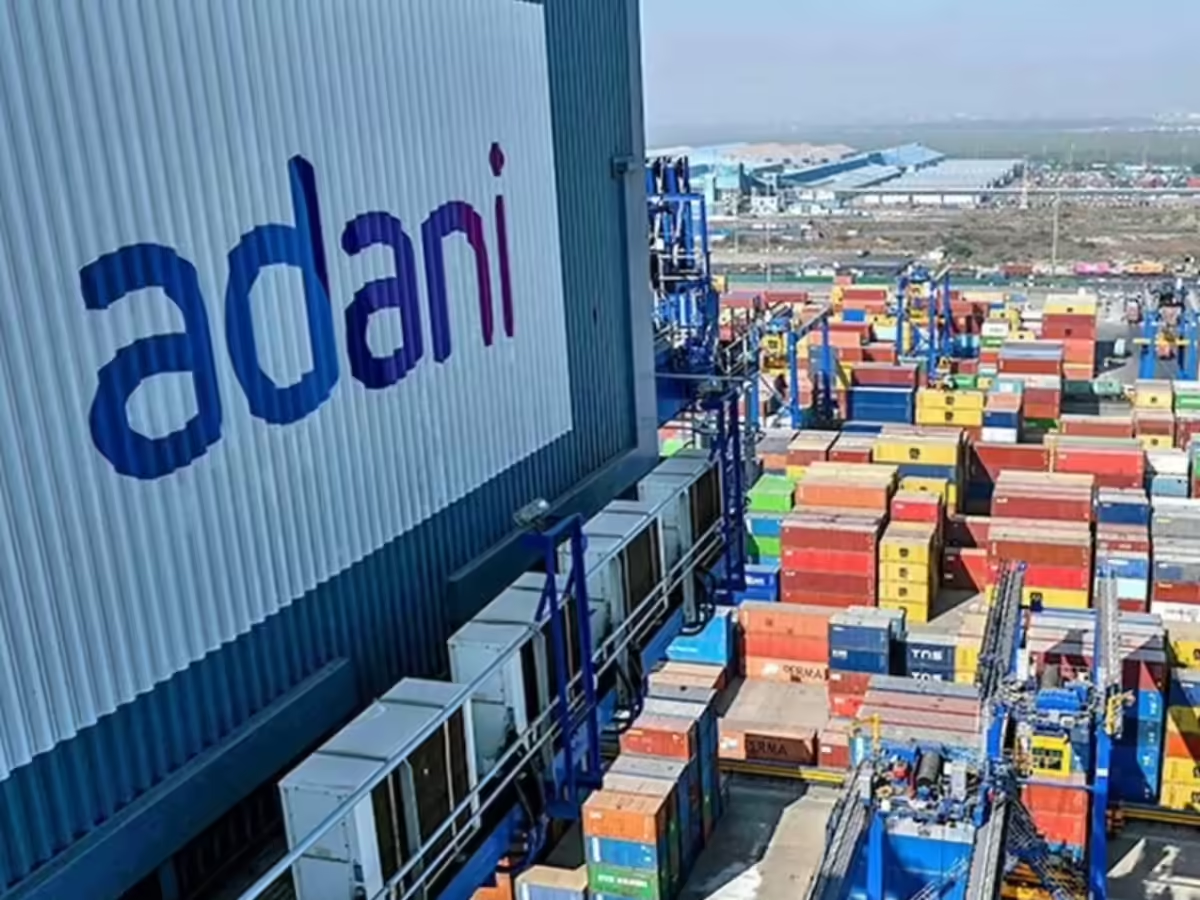
Adani Ports has reported a sharp rise in cargo volumes, indicating strong operational performance heading into the final quarter. The growth comes despite ongoing global trade uncertainties, positioning the company for a robust Q4 outcome.
Adani Ports sees cargo surge, signaling a strong Q4 despite global trade uncertainty. The increase in volumes reflects resilient demand across key segments and highlights the company’s ability to maintain growth momentum even as global shipping and trade conditions remain volatile.
Cargo Volume Growth Reflects Strong Operational Momentum
Adani Ports and Special Economic Zone has recorded a notable increase in cargo handling volumes across its network. This growth is driven by higher throughput in containers, bulk cargo, and liquid segments.
The company operates India’s largest commercial port network, giving it a strategic advantage in capturing both domestic and international trade flows. Increased industrial activity and stable import demand have supported cargo movement during the period.
Monthly operational updates indicate consistent volume growth, suggesting that the company is on track to deliver strong quarterly performance. The ability to handle diverse cargo types has helped mitigate risks associated with fluctuations in specific segments.
Global Trade Uncertainty Continues to Shape Market Conditions
Despite the positive performance, global trade conditions remain uncertain. Factors such as geopolitical tensions, fluctuating commodity prices, and supply chain disruptions continue to influence shipping volumes worldwide.
Shipping routes have also been impacted by regional disruptions, leading to increased freight costs and longer transit times. These challenges have created volatility in global trade flows.
However, India’s relatively stable domestic demand has provided a buffer for port operators. Import driven cargo, particularly in energy and raw materials, continues to support throughput levels.
Adani Ports’ diversified cargo mix and geographic spread have helped it navigate these uncertainties more effectively than smaller operators.
Infrastructure Expansion Strengthens Competitive Position
Adani Ports has been investing heavily in expanding its infrastructure and capacity. New terminals, enhanced logistics capabilities, and improved connectivity have increased operational efficiency.
The company’s integrated logistics model, which includes ports, rail, and inland transport, allows it to offer end to end solutions. This integration improves turnaround times and attracts more cargo volumes.
Strategic acquisitions and partnerships have also played a role in expanding its footprint. By strengthening its presence across multiple locations, the company reduces dependency on any single port or region.
These investments are beginning to reflect in higher cargo handling capacity and improved utilization rates.
Financial Outlook Points to Strong Q4 Performance
The surge in cargo volumes is a leading indicator of revenue growth for port operators. Higher throughput typically translates into increased port charges, logistics revenue, and overall profitability.
Analysts expect Adani Ports to report a strong Q4, supported by volume growth and operational efficiency. Cost management and improved asset utilization are likely to further enhance margins.
The company has also focused on reducing debt and strengthening its balance sheet, which could improve investor confidence. Stable cash flows from port operations provide a solid financial foundation.
While global uncertainties persist, the company’s performance suggests resilience and adaptability in a challenging environment.
Role in India’s Trade and Logistics Ecosystem
Adani Ports plays a critical role in India’s trade infrastructure. Efficient port operations are essential for supporting exports, imports, and overall economic activity.
As India continues to expand its manufacturing and industrial base, demand for port services is expected to grow. Government initiatives focused on logistics efficiency and infrastructure development further support this trend.
The company’s scale and capabilities position it as a key player in enabling India’s trade ambitions. Its performance is often seen as a proxy for broader trade activity in the country.
What to Watch in the Coming Months
Going forward, several factors will influence Adani Ports’ performance. Global trade trends, commodity demand, and shipping route stability will remain key variables.
Domestic factors such as industrial output, infrastructure projects, and energy demand will also impact cargo volumes. Continued investment in capacity expansion will be crucial for sustaining growth.
Market participants will closely watch quarterly earnings for confirmation of the strong operational trends indicated by recent data.
If current momentum continues, Adani Ports could further consolidate its leadership position in India’s port and logistics sector.
Takeaways
– Adani Ports has reported a surge in cargo volumes ahead of Q4 results
– Strong domestic demand is offsetting global trade uncertainties
– Infrastructure investments are boosting capacity and efficiency
– The company is positioned for a potentially strong quarterly performance
FAQs
Q1: What is driving the cargo surge at Adani Ports?
Higher industrial activity, stable import demand, and diversified cargo handling have contributed to increased volumes.
Q2: How does global trade uncertainty affect port operations?
It can impact shipping volumes, freight costs, and supply chain efficiency, leading to fluctuations in cargo throughput.
Q3: Why is Q4 expected to be strong for Adani Ports?
Rising cargo volumes, operational efficiency, and stable demand are likely to support revenue and profitability.
Q4: What role does Adani Ports play in India’s economy?
It is a key player in trade infrastructure, facilitating imports and exports and supporting economic growth.