ONDC has reported record monthly order volumes, signaling a major shift in India’s digital commerce landscape. The government-backed network is increasingly positioning itself as a viable alternative to dominant players in the food delivery space.
ONDC record orders are reshaping India’s online food delivery market, challenging the long-standing dominance of private aggregators. The Open Network for Digital Commerce, backed by the government, is witnessing rapid growth in transaction volumes, indicating rising adoption among both consumers and sellers.
ONDC Growth Signals Shift in Digital Commerce Model
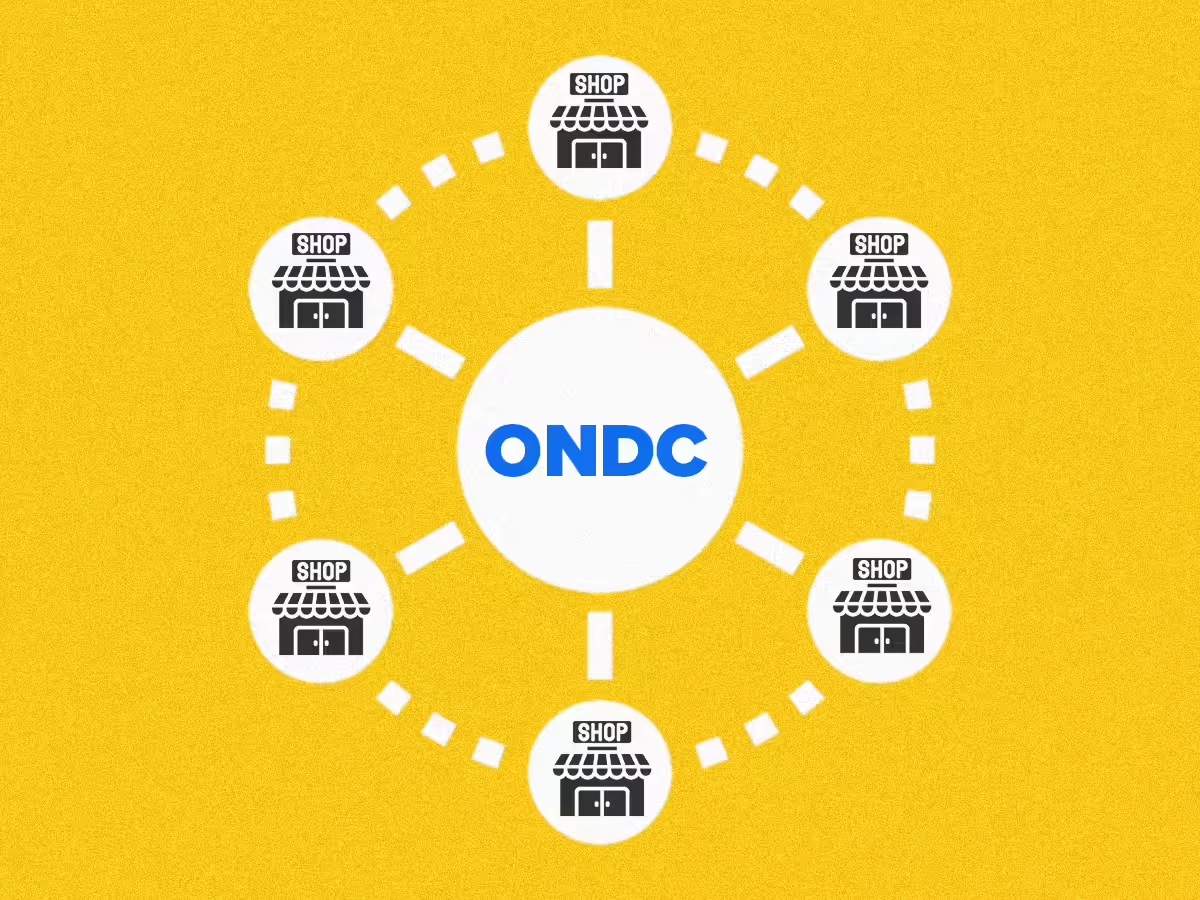
The surge in ONDC record orders reflects growing traction for an open network model that aims to decentralize digital commerce. Unlike platform-based systems, ONDC connects buyers and sellers through interoperable networks, reducing dependency on a single app.
This model allows restaurants and small businesses to onboard without paying high commissions typically associated with aggregator platforms. It also enables consumers to access multiple sellers across different apps integrated with the network.
Organizations like Open Network for Digital Commerce have been actively expanding partnerships with logistics providers, seller apps, and buyer platforms to strengthen ecosystem participation.
Pressure Mounts on Zomato and Swiggy Business Models
The rapid rise in ONDC record orders is putting pressure on established players like Zomato and Swiggy. These companies have long dominated the food delivery segment with centralized platforms and commission-driven revenue models.
ONDC’s lower commission structure is attracting restaurants looking to improve margins. Many sellers are experimenting with ONDC alongside existing platforms to diversify their revenue streams.
For incumbents, this creates a competitive challenge. To retain restaurants and users, they may need to adjust pricing strategies, reduce commissions, or enhance value-added services.
Restaurant Participation and Cost Advantage Drive Adoption
A key factor behind ONDC’s growth is increasing participation from restaurants, particularly small and mid-sized outlets. Lower onboarding costs and reduced commissions make the platform attractive for businesses operating on tight margins.
Restaurants are also gaining more control over pricing and customer relationships. Unlike traditional platforms where visibility is often influenced by paid promotions, ONDC aims to offer a more level playing field.
This cost advantage is gradually translating into competitive pricing for consumers. In many cases, users are finding lower prices on ONDC-enabled platforms compared to traditional apps.
Consumer Experience and Operational Challenges Remain
Despite strong growth in ONDC record orders, challenges remain in terms of user experience and operational consistency. Delivery timelines, interface standardization, and dispute resolution processes are still evolving.
Unlike centralized platforms, ONDC operates through multiple interconnected players, which can sometimes lead to inconsistencies in service quality. Ensuring a seamless experience across different apps and logistics providers is critical for sustained adoption.
The network is actively working on improving these aspects by onboarding more reliable partners and refining operational protocols.
Policy Backing and Long Term Market Impact
ONDC’s growth is supported by strong policy backing aimed at promoting competition and reducing monopolistic tendencies in digital commerce. The initiative aligns with broader government efforts to empower small businesses and create a more inclusive digital economy.
If the current growth trajectory continues, ONDC could significantly alter market dynamics in the food delivery sector. It may lead to more competitive pricing, better margins for sellers, and increased innovation across platforms.
At the same time, the long-term success of ONDC will depend on its ability to scale efficiently while maintaining service quality.
What Lies Ahead for India’s Food Delivery Market
The rise of ONDC marks a turning point in India’s food delivery ecosystem. While Zomato and Swiggy continue to hold strong market positions, the emergence of a viable alternative is reshaping competitive dynamics.
In the coming months, the focus will be on user retention, service quality, and ecosystem expansion. Both ONDC and incumbent players are likely to invest heavily in improving their offerings.
The market is entering a phase where differentiation will depend not just on pricing, but also on reliability, speed, and overall customer experience.
Takeaways
• ONDC has recorded significant growth in monthly order volumes
• The network is challenging the dominance of Zomato and Swiggy
• Lower commissions are attracting restaurants and small businesses
• Operational consistency remains a key challenge for long-term success
FAQs
What is ONDC?
It is a government-backed open network designed to decentralize digital commerce and reduce platform dependency.
How is ONDC different from Zomato and Swiggy?
ONDC operates as an open network with lower commissions, while others are centralized platforms.
Why are restaurants joining ONDC?
They benefit from lower costs and greater control over pricing and customer relationships.
Is ONDC cheaper for consumers?
In many cases, it offers competitive pricing due to lower platform commissions.