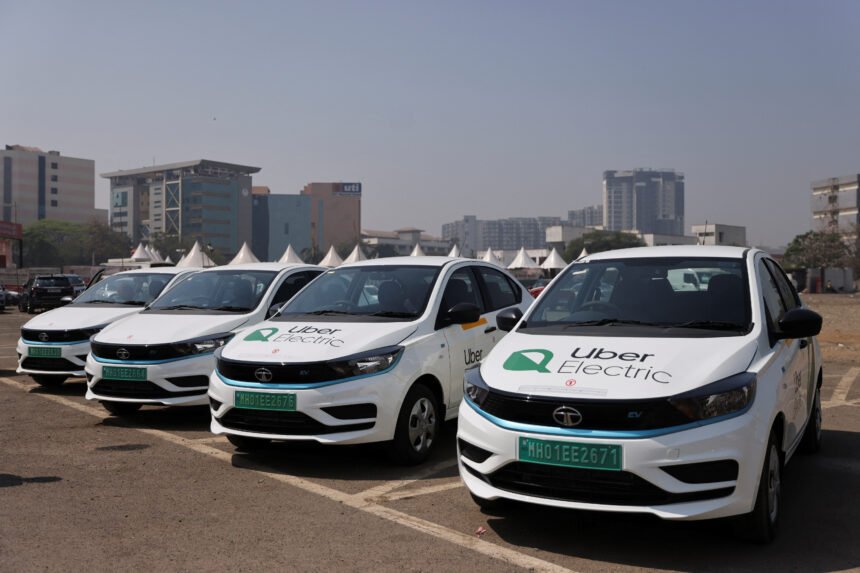
India’s EV policy push is accelerating fresh investments across the automotive sector as manufacturers race to secure early advantage. With government incentives, localization mandates, and rising demand, both domestic and global players are recalibrating strategies to capture the next phase of electric mobility growth.
India’s EV policy push is no longer just a regulatory signal. It has become a capital trigger. Over the past few weeks, multiple automakers and suppliers have either announced or fast-tracked investment plans tied directly to evolving government incentives and production-linked schemes.
Policy Momentum Drives Strategic Capital Allocation
The central government’s focus on electric mobility through schemes like FAME and the Production Linked Incentive program is pushing companies to commit long-term capital. Recent policy clarity around battery manufacturing, import duties, and localization requirements has reduced uncertainty for investors.
Auto giants are now aligning their capital expenditure cycles with policy timelines. This includes investments in battery plants, EV platforms, and supply chain partnerships. The emphasis is shifting from pilot projects to scale execution.
Domestic leaders like Tata Motors and Mahindra & Mahindra are doubling down on EV portfolios. At the same time, global players are evaluating India as a manufacturing hub, not just a consumption market.
Competition Intensifies Across EV Segments
The investment race is not limited to passenger vehicles. Two-wheelers, commercial fleets, and last-mile delivery EVs are seeing aggressive expansion plans. This broad-based competition is reshaping the entire automotive value chain.
Startups and legacy players are now competing for battery sourcing, charging infrastructure partnerships, and software integration capabilities. Companies like Ola Electric are pushing scale in two-wheelers, while traditional OEMs are entering the same space with upgraded models.
This multi-segment competition is forcing faster innovation cycles. Product launches are becoming more frequent, and pricing strategies are being recalibrated to balance adoption and margins.
Global Players Reposition Supply Chains
India’s EV policy push is also influencing global supply chain decisions. With geopolitical risks and rising costs in traditional manufacturing hubs, automakers are diversifying production bases.
Companies such as Tesla and Hyundai are actively exploring deeper market entry strategies. This includes local assembly, joint ventures, and supplier ecosystem development.
Battery manufacturing is emerging as the most critical investment area. The government’s incentives for advanced chemistry cells are attracting both domestic conglomerates and international technology partners.
This shift is expected to reduce import dependency over time while strengthening India’s position in the global EV supply chain.
Profitability Pressures and Long-Term Bets
Despite the surge in investments, profitability remains a near-term challenge. High upfront costs, evolving infrastructure, and price-sensitive consumers are forcing companies to take a long-term view.
Many players are prioritizing market share over immediate returns. This is evident in aggressive pricing, financing schemes, and subscription-based ownership models.
At the same time, ancillary industries such as battery recycling, charging networks, and EV financing are gaining traction. These segments are becoming critical to the overall ecosystem and are attracting separate investment flows.
The policy push is effectively creating a layered opportunity beyond just vehicle manufacturing.
Market Outlook and Strategic Implications
India’s EV market is entering a decisive phase where policy, capital, and competition are converging. The next 12 to 24 months will likely determine market leaders across different segments.
Automakers that can localize supply chains, control costs, and scale production efficiently will have a clear advantage. Meanwhile, policy consistency will remain key to sustaining investor confidence.
The current investment race is less about immediate sales and more about securing long-term positioning in one of the world’s fastest-growing EV markets.
Takeaways
Policy clarity is accelerating large-scale EV investments across India
Competition is intensifying across passenger, two-wheeler, and commercial EV segments
Global automakers are actively restructuring supply chains to include India
Profitability remains a challenge but long-term market positioning is driving decisions
FAQs
What is driving the recent EV investment surge in India?
Government incentives, localization policies, and rising demand are pushing automakers to invest aggressively in EV infrastructure and production.
Which companies are leading India’s EV push?
Domestic players like Tata Motors and Mahindra & Mahindra, along with startups like Ola Electric, are leading the current wave.
Are global automakers investing in India’s EV market?
Yes, companies like Tesla and Hyundai are exploring manufacturing and supply chain opportunities in India.
Is the EV market in India profitable right now?
Profitability is still evolving. Most companies are focusing on long-term growth rather than short-term margins.