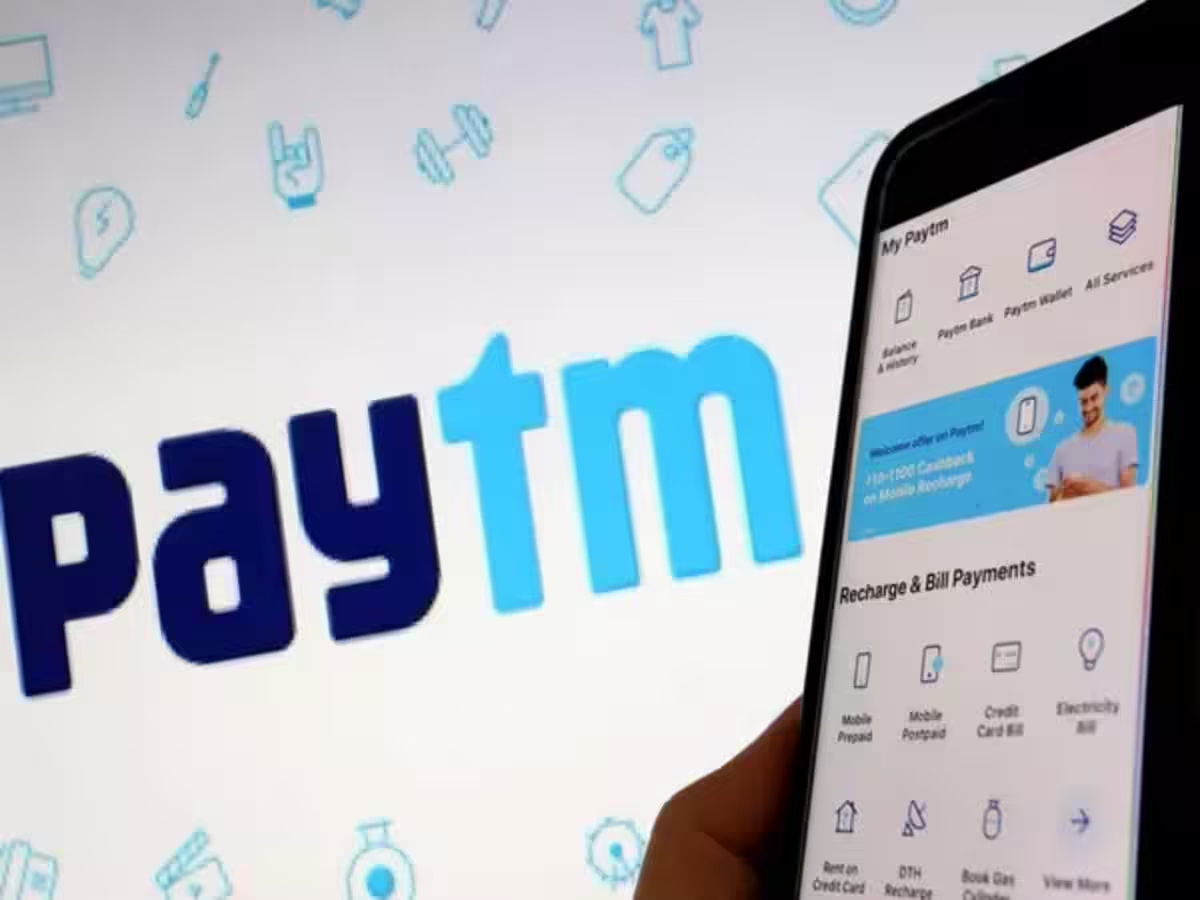
Paytm shifts focus to profitability after regulatory setbacks, marking a strategic pivot for the fintech major. Following compliance challenges and business disruptions, the company is prioritizing cost control, core revenue streams, and sustainable growth over aggressive expansion.
Paytm shifts focus to profitability after regulatory setbacks at a time when India’s fintech sector is facing tighter oversight. The company is recalibrating its business model to stabilize operations and rebuild investor confidence after recent regulatory actions impacted its payments ecosystem.
Regulatory Actions Force Strategic Reset
Paytm faced significant disruption after regulatory restrictions on its associate entity, Reserve Bank of India tightened compliance requirements around payments operations. These actions affected wallet services, banking partnerships, and user onboarding.
The regulatory intervention highlighted concerns around governance, data handling, and operational compliance. As a result, Paytm had to restructure parts of its payments business and strengthen oversight mechanisms.
This forced reset has pushed the company to move away from rapid expansion and focus on building a more compliant and resilient operating model. Regulatory alignment is now central to its strategy.
Profitability Becomes Immediate Priority
Paytm is now prioritizing profitability across its core segments including payments, financial services, and merchant solutions. The company has already taken steps to reduce cash burn and optimize operational costs.
Earlier, Paytm focused heavily on user acquisition through incentives and cashback offers. That approach is now being scaled back in favor of improving margins and monetization.
Revenue streams such as merchant subscriptions, loan distribution, and payment processing fees are becoming more important. These segments offer more predictable income compared to incentive-driven growth models.
The shift reflects a broader trend in the startup ecosystem where investors are demanding clearer paths to profitability.
Payments Business Faces Structural Changes
The payments segment, once Paytm’s primary growth driver, is undergoing structural adjustments. Changes in wallet operations and partnerships are impacting transaction volumes in the short term.
However, the company is working to stabilize this segment by strengthening ties with banking partners and improving compliance frameworks. The goal is to ensure uninterrupted service while aligning with regulatory expectations.
Digital payments in India continue to grow, driven by UPI adoption and increased digital penetration. Paytm remains a key player in this ecosystem but must adapt to a more regulated environment.
The company’s ability to retain users while adjusting its business model will be critical.
Financial Services Drive Revenue Diversification
Paytm is increasingly focusing on financial services as a major growth driver. This includes lending partnerships, insurance distribution, and wealth management products.
By leveraging its large user base, Paytm can cross-sell financial products with higher margins. Loan distribution, in particular, has emerged as a strong revenue contributor.
This diversification helps reduce dependence on low-margin payments business. It also aligns with the broader fintech trend of moving toward full-stack financial services platforms.
Execution in this segment will play a key role in achieving profitability targets.
Investor Sentiment and Market Response
Investor sentiment toward Paytm has been cautious following regulatory setbacks. The company’s stock performance has reflected concerns around growth visibility and compliance risks.
However, the renewed focus on profitability and governance improvements is seen as a positive step. Investors are likely to monitor quarterly performance closely to assess progress.
The fintech sector in India is evolving, with increased regulatory scrutiny becoming the norm. Companies that can adapt quickly while maintaining growth will have a competitive advantage.
Paytm’s ability to execute its new strategy will determine how investor confidence evolves in the coming quarters.
Long-Term Outlook for Paytm Strategy
The current phase represents a transition from growth at any cost to disciplined expansion. Paytm is likely to continue focusing on efficiency, compliance, and sustainable revenue streams.
The company still benefits from strong brand recognition and a large user base. These factors provide a foundation for recovery and long-term growth.
However, competition in the fintech space remains intense, with players across payments, lending, and digital banking vying for market share.
Paytm’s future success will depend on how effectively it balances regulatory compliance with innovation and customer engagement.
Takeaways
Paytm is shifting from aggressive growth to profitability focus
Regulatory actions have forced restructuring of its payments business
Financial services are emerging as key revenue drivers
Investor confidence depends on execution and compliance improvements
FAQs
Why did Paytm change its strategy?
Regulatory actions disrupted its operations, prompting a shift toward profitability and compliance.
What are Paytm’s main revenue sources now?
Merchant services, loan distribution, and financial products are becoming key contributors.
Is Paytm still a major player in digital payments?
Yes, but it is adapting to regulatory changes and evolving competition.
Will Paytm become profitable soon?
The company is working toward profitability, but timelines depend on execution and market conditions.