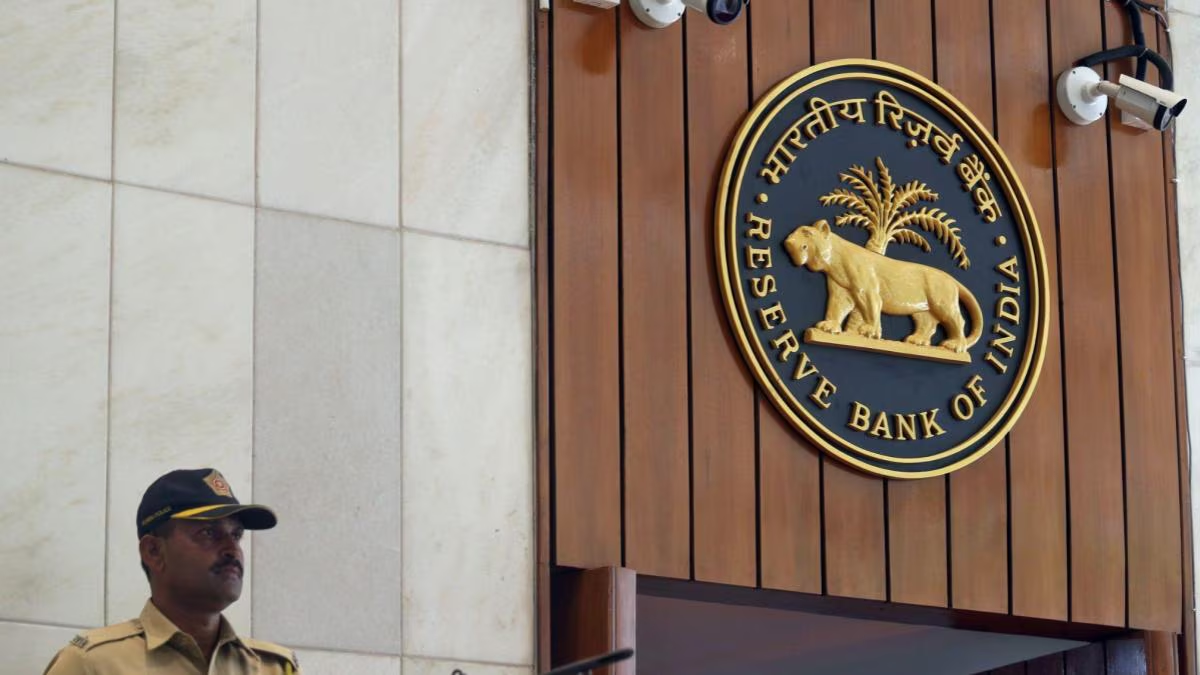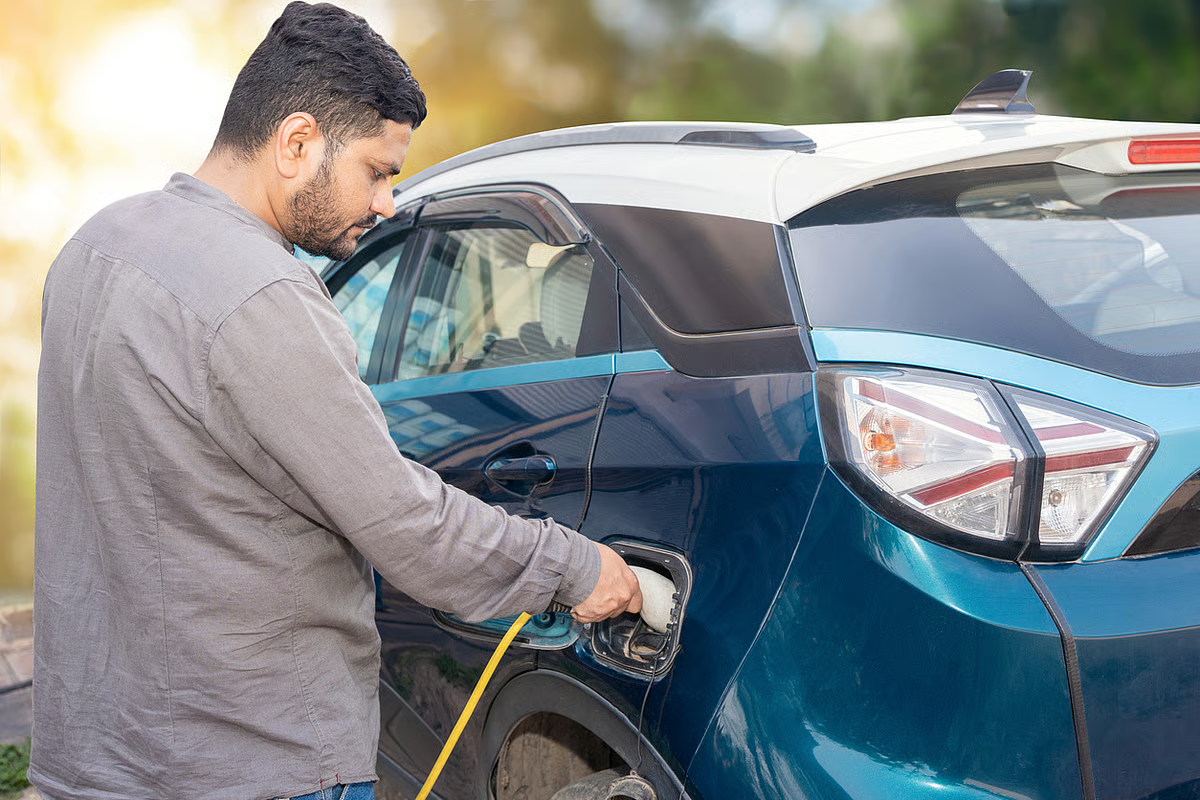
India’s EV subsidy framework is under review as fiscal constraints tighten and adoption scales unevenly across segments. Policymakers are reassessing incentive structures to balance growth, local manufacturing, and long-term sustainability of public spending.
India’s EV subsidy framework faces a reset as the government evaluates the financial burden of incentives against actual adoption outcomes. With electric vehicle penetration rising but uneven across categories, authorities are signaling a recalibration of subsidy schemes to ensure efficient allocation of resources while sustaining momentum.
Budget Pressure Forces Rework of EV Incentive Strategy
The current subsidy structure under schemes like FAME II has played a key role in driving early adoption, especially in two-wheelers and public transport segments. However, the scheme has also led to rising fiscal commitments as demand accelerated faster than initial projections.
Government data shows that a significant portion of allocated funds has already been utilized, prompting concerns over long-term sustainability. Subsidies for electric two-wheelers were revised downward in 2023 after a surge in claims, signaling the beginning of tighter control.
Officials are now assessing whether blanket subsidies should continue or shift toward more targeted incentives. The focus is gradually moving from demand-side incentives to supply-side support such as battery manufacturing and charging infrastructure.
This transition reflects a broader intent to reduce dependence on subsidies while building a self-sustaining EV ecosystem.
EV Adoption Trends Highlight Structural Imbalance
India’s EV growth story has been led primarily by electric scooters and three-wheelers, while passenger car adoption remains relatively slow. This imbalance is shaping policy thinking around subsidy allocation.
Two-wheelers account for a majority of EV sales due to lower upfront costs and strong urban demand. In contrast, electric cars still face challenges such as high prices, limited charging infrastructure, and range anxiety.
The government is likely to prioritize segments that deliver higher economic and environmental returns per rupee spent. Public transport electrification, including buses, is expected to remain a key focus area.
At the same time, policymakers are evaluating whether continued subsidies for certain segments are distorting market dynamics rather than enabling organic growth.
Shift Toward Local Manufacturing and PLI Schemes
As part of the reset, the government is aligning EV incentives with its broader manufacturing agenda. Programs like the Production Linked Incentive Scheme are being leveraged to boost domestic production of batteries and key components.
Reducing import dependence, particularly on lithium-ion cells, is a strategic priority. India currently relies heavily on imports for battery materials, which exposes the sector to global supply chain risks.
By incentivizing local manufacturing, the government aims to bring down costs over time without relying heavily on consumer subsidies. This approach also supports job creation and strengthens India’s position in the global EV value chain.
Industry players have welcomed this shift but have also cautioned that a sudden withdrawal of demand incentives could slow adoption in the short term.
Industry and Market Response to Policy Reset
Automakers and startups are closely tracking policy signals as they plan future investments. Companies like Tata Motors and Ola Electric have already scaled production based on existing subsidy frameworks.
A reduction or restructuring of subsidies could impact pricing strategies and demand forecasts. Manufacturers may need to absorb part of the cost or pass it on to consumers, potentially affecting affordability.
Investors are also watching for clarity on long-term policy direction. A stable and predictable framework is critical for sustaining capital inflows into the EV sector.
Despite near-term uncertainty, most industry stakeholders agree that a phased and well-communicated transition will be key to maintaining growth momentum.
What the EV Policy Reset Means Going Forward
The reset of India’s EV subsidy framework does not signal a rollback of electrification goals. Instead, it marks a shift toward a more mature phase of policy design where efficiency and sustainability take precedence.
Future policies are expected to be more targeted, data-driven, and aligned with broader industrial strategy. Incentives may increasingly favor innovation, localization, and infrastructure development over direct consumer subsidies.
For consumers, this could mean fewer upfront discounts but better product availability and improved ecosystem support over time.
For the government, the challenge will be to balance fiscal discipline with the need to accelerate clean mobility adoption.
Takeaways
• India is reassessing EV subsidies due to rising fiscal pressure
• Focus is shifting from demand incentives to manufacturing support
• EV adoption remains uneven across vehicle segments
• Policy clarity will be critical for sustaining industry growth
FAQs
Why is India revising its EV subsidy framework?
Rising subsidy costs and uneven adoption have prompted the government to reassess how incentives are allocated.
Will EV prices increase if subsidies are reduced?
Prices could rise in the short term, depending on how manufacturers adjust their pricing strategies.
Which segments will benefit most from future policies?
Public transport, battery manufacturing, and domestic production are likely to receive more focus.
Is India slowing down its EV transition?
No, the transition continues, but with a stronger emphasis on sustainability and long-term viability.