Early stage funding in India is rising even as late stage deals collapse, highlighting a sharp divergence in the startup investment landscape. The trend reflects shifting investor priorities toward lower risk entry points and long term value creation.
Early stage funding gains momentum amid market correction
Early stage funding rises even as late stage deals collapse in India, making this a time sensitive development tied to current venture capital trends. Investors are actively backing seed and pre Series A startups while pulling back from large ticket investments.
This shift comes as the broader funding environment remains cautious. Startups at early stages offer lower entry valuations and higher upside potential, which makes them attractive during periods of uncertainty.
Many venture capital firms are reallocating capital toward early stage deals to build future pipelines. This allows them to invest in innovation while avoiding the risks associated with inflated valuations seen in late stage funding.
The result is a steady increase in deal activity at the early stage level, even as overall funding volumes remain under pressure.
Late stage funding collapse driven by weak exit environment
The decline in late stage deals is closely linked to the slowdown in IPO activity and limited exit opportunities. Investors typically rely on public listings or acquisitions to realize returns, and the current market conditions have delayed these pathways.
Late stage startups, which require large capital infusions, are facing longer fundraising cycles and stricter due diligence. Many companies are being forced to accept lower valuations or postpone funding rounds altogether.
This has created a funding gap for growth stage companies that were previously scaling rapidly. Without access to large investments, these startups are focusing on cost control and operational efficiency.
The collapse in late stage funding is not a sign of declining interest in innovation but rather a recalibration of risk and return expectations.
Venture capital strategy shifts toward long term bets
The divergence between early and late stage funding reflects a broader shift in venture capital strategy. Investors are increasingly focused on long term bets rather than short term gains.
Early stage investments allow funds to enter at lower valuations and support startups through their growth journey. This approach aligns with the current environment where quick exits are less certain.
At the same time, investors are being more selective about the sectors they back. Areas such as artificial intelligence, fintech, and enterprise software continue to attract early stage funding due to their scalability and market demand.
This strategic shift is reshaping how capital is deployed across the startup ecosystem.
Impact on startups across different growth stages
The changing funding dynamics are having different impacts on startups depending on their stage of growth. Early stage startups are benefiting from increased investor interest and relatively stable funding availability.
In contrast, late stage startups are facing significant challenges. Companies that previously relied on frequent large funding rounds are now being forced to adjust their strategies.
Many are cutting costs, optimizing operations, and focusing on profitability to extend their runway. Expansion plans are being delayed, and hiring is becoming more conservative.
This divergence is creating a more balanced ecosystem where growth is driven by fundamentals rather than excessive capital inflows.
Sector trends highlight resilience in technology driven startups
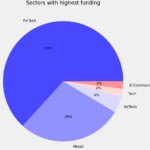
Despite the overall funding slowdown, certain sectors continue to show resilience. Technology driven startups, particularly in artificial intelligence and fintech, are attracting early stage investments.
These sectors offer strong growth potential and align with global trends in digital transformation. Investors are prioritizing startups that can leverage technology to create scalable and efficient business models.
On the other hand, sectors that rely heavily on consumer spending or high marketing costs are facing tighter funding conditions. This reflects a broader shift toward sustainable and capital efficient businesses.
The focus on technology driven sectors is likely to continue as investors seek long term growth opportunities.
What this funding split means for the future
The rise in early stage funding alongside the collapse of late stage deals signals a transition in the startup ecosystem. The focus is shifting from rapid scaling to building strong foundations.
For investors, this environment offers opportunities to back innovative startups at early stages. For founders, it emphasizes the importance of creating sustainable business models from the beginning.
Over time, this shift could lead to a healthier ecosystem with fewer but stronger companies reaching maturity. It also encourages discipline in capital allocation and business strategy.
While the current phase presents challenges, it also sets the stage for more stable and sustainable growth in the future.
Takeaways
- Early stage funding in India is rising despite an overall funding slowdown
- Late stage deals have declined due to weak IPO markets and limited exits
- Investors are shifting focus toward long term bets and lower entry valuations
- Startups are adapting by prioritizing efficiency and profitability
FAQs
Q1. Why is early stage funding increasing in India?
Investors prefer early stage deals due to lower valuations and higher long term growth potential.
Q2. Why are late stage deals collapsing?
The slowdown in IPO markets and limited exit opportunities have reduced investor confidence in large investments.
Q3. Which sectors are attracting early stage funding?
Sectors like artificial intelligence, fintech, and enterprise software are leading due to scalability and demand.
Q4. How are startups responding to these changes?
Startups are focusing on cost control, profitability, and sustainable growth strategies.