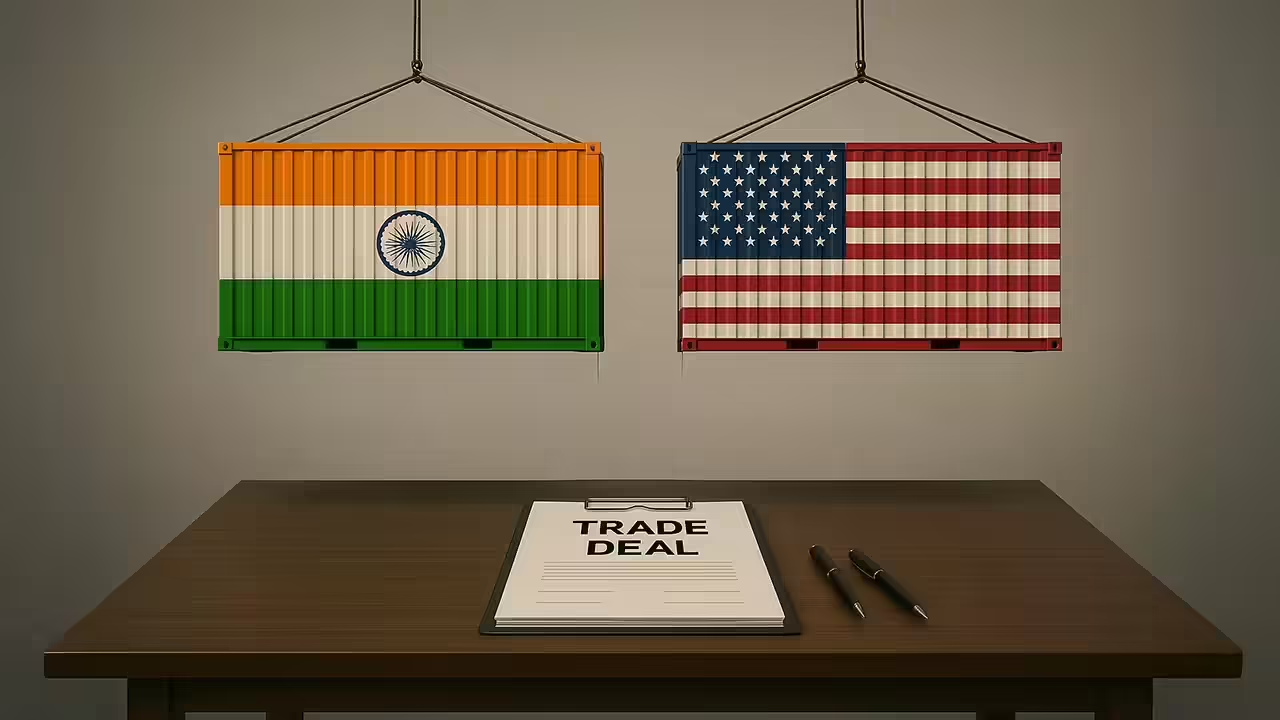
India-US trade talks have resumed in New Delhi as senior officials from both countries begin a fresh round of negotiations aimed at finalizing an interim trade agreement. The discussions come at a critical time, with tariff uncertainty, market access demands, and broader economic cooperation shaping the agenda for both sides.
The four-day meeting, which began on June 1, is expected to focus on resolving pending trade issues while laying the groundwork for a larger Bilateral Trade Agreement (BTA) between India and the United States.
India and US Restart High-Level Trade Negotiations
The latest round of India-US trade talks is taking place in New Delhi between June 1 and June 4. The US delegation is being led by chief negotiator Brendan Lynch, while India’s team is headed by Darpan Jain, Additional Secretary in the Department of Commerce.
Both countries are attempting to finalize the details of an interim trade pact that was originally outlined earlier this year. Officials are also expected to continue discussions on the broader trade agreement that could eventually cover goods, services, investments, technology cooperation, and supply chain partnerships.
The talks are significant because the United States remains one of India’s largest trading partners, while India continues to be a key strategic and economic partner for Washington in the Indo-Pacific region.
Tariff Uncertainty Becomes the Biggest Challenge
One of the biggest issues facing negotiators is the rapidly changing tariff environment in the United States.
Earlier in 2026, both countries agreed on a framework that proposed lowering certain US tariffs on Indian products while providing greater access to American industrial and agricultural exports. However, subsequent legal developments in the United States altered the tariff landscape, forcing both sides to revisit parts of the original understanding.
India is seeking greater clarity on the tariff treatment that competing exporting nations may receive before committing to revised arrangements. Businesses on both sides are closely watching the outcome because tariff structures directly affect manufacturing competitiveness, export profitability, and supply chain planning.
The uncertainty has created urgency around the current negotiations, especially as temporary tariff measures in the United States approach future review deadlines.
Market Access and Investment Promotion in Focus
Apart from tariffs, negotiators are discussing market access, customs procedures, trade facilitation, non-tariff barriers, investment promotion, and economic security cooperation. These areas have increasingly become central to modern trade agreements.
American companies continue to seek easier access to Indian markets across sectors such as agriculture, technology, medical devices, and industrial goods. Meanwhile, India wants better access for its exports, including pharmaceuticals, textiles, engineering products, chemicals, and technology services.
Investment flows are another major focus area. Policymakers in both countries view stronger investment ties as a way to deepen economic cooperation beyond traditional trade. Improved investment conditions could encourage multinational firms to expand manufacturing and sourcing operations across both economies.
Strategic Partnership Extends Beyond Trade
The India-US trade negotiations are not taking place in isolation. They are part of a broader strategic relationship that includes technology cooperation, energy partnerships, supply chain resilience, and economic security alignment.
Over the past few years, both governments have emphasized reducing dependence on concentrated supply chains and strengthening manufacturing ecosystems. This has become especially important as geopolitical tensions and global disruptions continue to reshape international trade patterns.
The proposed trade arrangement is also being viewed as a step toward creating stronger economic alternatives in key sectors such as semiconductors, clean energy, advanced manufacturing, and critical technologies.
Trade experts believe that even if a comprehensive agreement takes longer to negotiate, a successful interim deal could create momentum for broader economic cooperation.
Why Businesses Are Watching the Outcome Closely
The outcome of the current talks could influence multiple sectors across India and the United States.
Export-oriented industries such as pharmaceuticals, engineering goods, textiles, chemicals, and technology services could benefit from greater market access and reduced trade barriers. At the same time, American exporters are seeking improved opportunities in agriculture, industrial equipment, energy, and technology products.
Investors are also paying attention because trade agreements often influence business sentiment, investment decisions, and long-term growth expectations.
While major differences remain on several issues, the willingness of both governments to continue negotiations signals a shared interest in expanding economic engagement despite global trade challenges.
Key Takeaways
- India and the US began a fresh round of trade negotiations in New Delhi on June 1.
- Both countries are working to finalize an interim trade agreement before broader BTA discussions continue.
- Tariff uncertainty remains one of the biggest issues in the negotiations.
- Market access, investment promotion, customs facilitation, and economic security are key discussion areas.
FAQ
Why are India and the US holding new trade talks?
The talks aim to finalize an interim trade agreement and advance negotiations toward a larger Bilateral Trade Agreement covering trade, investment, and economic cooperation.
When are the trade talks taking place?
The current round of negotiations is being held in New Delhi from June 1 to June 4, 2026.
What sectors could benefit from a trade deal?
Pharmaceuticals, engineering goods, technology services, agriculture, manufacturing, energy, and industrial products are among the sectors likely to be affected.
Why are tariffs such an important issue?
Tariffs directly impact export costs, market competitiveness, and trade volumes. Recent changes in US tariff policies have made tariff negotiations a central part of the discussions.