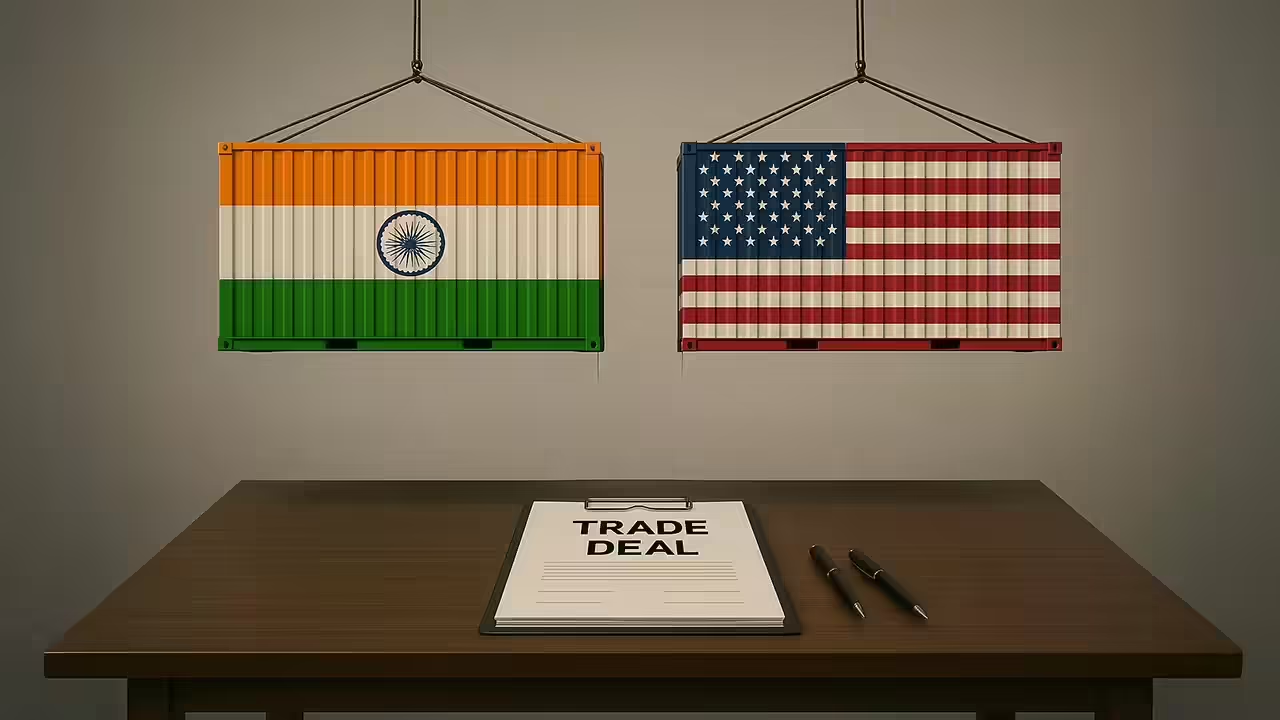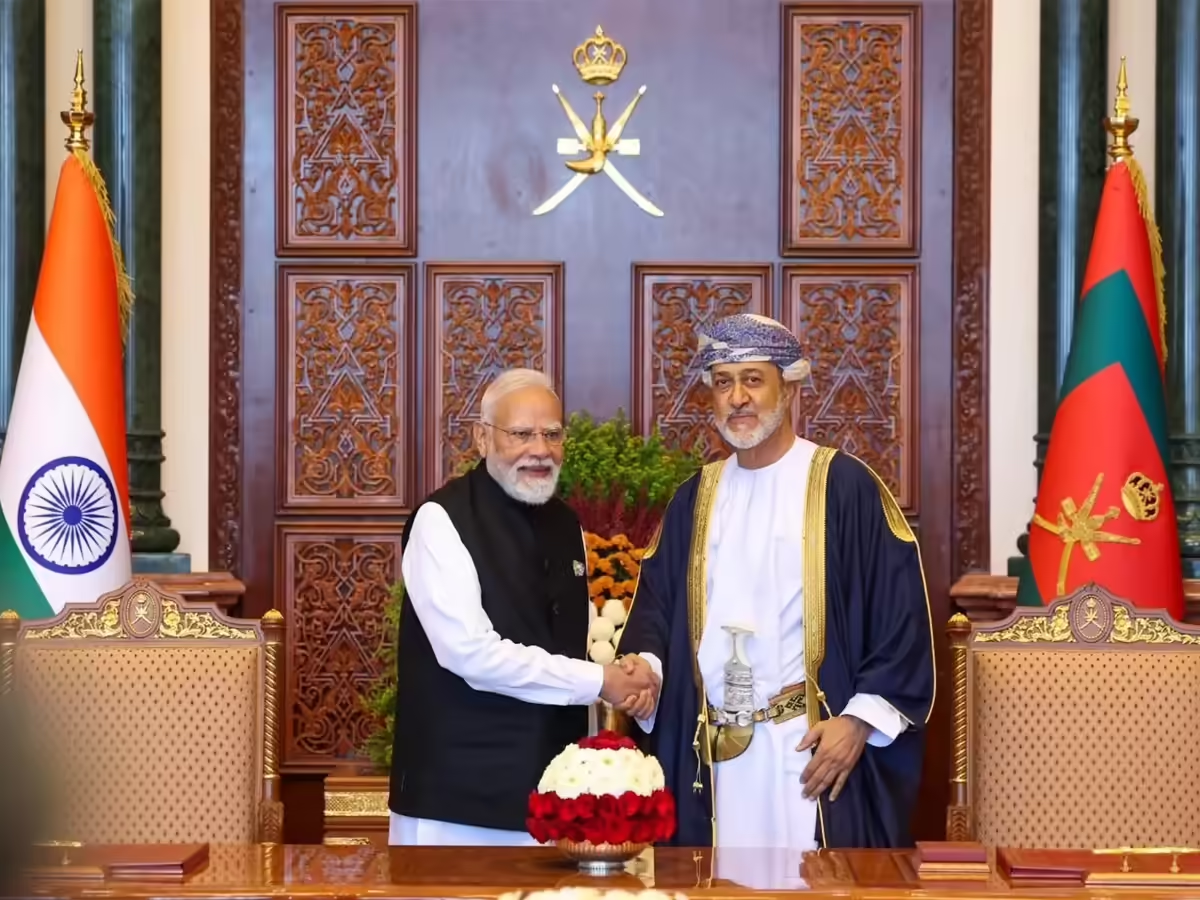
The India-Oman Comprehensive Economic Partnership Agreement (CEPA) has come into effect, marking a significant step in economic relations between the two countries. The agreement is expected to boost bilateral trade, improve market access, and create new opportunities for businesses and service providers looking to expand across Gulf markets.
India-Oman CEPA Officially Comes Into Force
The India-Oman CEPA has officially commenced, opening a new chapter in trade and investment cooperation between India and Oman. The agreement is designed to reduce trade barriers, simplify market access, and strengthen economic engagement between one of India’s key Gulf partners and the world’s fifth-largest economy.
India and Oman have maintained strong commercial ties for decades, supported by geographical proximity, maritime connectivity, and a large Indian diaspora in Oman. With the CEPA now operational, businesses in both countries are expected to benefit from lower tariffs, streamlined customs procedures, and improved regulatory cooperation.
The agreement arrives at a time when India is actively pursuing deeper economic partnerships with countries across the Gulf region. Policymakers view the Gulf as a critical market for exports, investments, energy security, and services expansion.
Trade Growth Expected Across Key Sectors
One of the primary objectives of the India-Oman CEPA is to increase bilateral trade volumes by making products more competitive in each other’s markets.
Indian exporters are expected to gain better access for goods such as engineering products, pharmaceuticals, textiles, chemicals, food products, gems and jewellery, and consumer goods. Reduced tariffs and improved market conditions could help Indian companies expand their presence in Oman while also using the country as a gateway to wider Gulf markets.
For Oman, the agreement offers greater opportunities to export petrochemical products, minerals, industrial materials, and other goods into the rapidly growing Indian market.
Trade experts believe that the agreement could encourage greater diversification of trade beyond traditional sectors. As businesses become more familiar with the benefits of the CEPA, new areas of cooperation are likely to emerge, including advanced manufacturing, logistics, and value-added exports.
Services Sector Gains New Momentum
A major highlight of the India-Oman CEPA is the focus on services trade. This area has become increasingly important as economies move beyond traditional goods-based commerce.
Indian companies operating in information technology, financial services, consulting, healthcare, education, engineering, and professional services could benefit from improved market access and business opportunities in Oman.
The Gulf region continues to invest heavily in economic diversification, digital transformation, infrastructure projects, and knowledge-based industries. These developments create significant demand for skilled professionals and service providers.
For Indian businesses, Oman can serve as a strategic hub for expanding operations across the Gulf Cooperation Council region. Improved business conditions under the CEPA may encourage more Indian firms to establish regional operations, partnerships, and service delivery centers in Oman.
Investment and Economic Cooperation Set to Expand
Beyond trade in goods and services, the agreement is expected to strengthen bilateral investment flows.
India has emerged as one of the world’s fastest-growing major economies, while Oman continues to focus on attracting foreign investment as part of its long-term economic diversification plans. The CEPA is expected to provide greater certainty for investors and encourage deeper commercial engagement between businesses from both countries.
Infrastructure, renewable energy, logistics, ports, manufacturing, tourism, and technology are among the sectors likely to attract increased attention from investors.
Economic analysts note that modern trade agreements increasingly focus on creating broader business ecosystems rather than simply reducing tariffs. The India-Oman CEPA reflects this approach by encouraging cooperation across multiple areas of economic activity.
As companies seek new markets and supply chain alternatives, stronger India-Oman ties could contribute to regional economic resilience and long-term growth.
Strategic Importance for India’s Gulf Trade Strategy
The implementation of the CEPA aligns with India’s broader strategy of strengthening economic engagement with Gulf nations. The Gulf region is one of India’s most important economic partners, serving as a major source of energy imports, investments, remittances, and export demand.
Oman’s strategic location along key maritime routes enhances its importance in regional trade networks. Businesses often view the country as a gateway connecting Asia, the Middle East, and Africa.
By improving access to Oman, Indian exporters may also find new opportunities to reach neighboring Gulf markets more efficiently. This could be particularly beneficial for small and medium-sized enterprises seeking international expansion.
The agreement also reinforces the growing trend of bilateral trade partnerships that focus on economic integration, supply chain development, and long-term commercial cooperation.
What Businesses Should Watch Next
The real impact of the India-Oman CEPA will depend on how quickly businesses take advantage of the opportunities created by the agreement.
Exporters will be closely monitoring tariff schedules, customs procedures, and sector-specific provisions. Service providers will look for practical improvements in market access and business operations.
Industry groups are expected to engage with governments to ensure smooth implementation and address any operational challenges. If effectively executed, the CEPA could become an important catalyst for stronger trade and investment relations between India and Oman.
For businesses targeting the Gulf region, the agreement represents a potentially valuable platform for growth, expansion, and long-term market development.
Key Takeaways
- India-Oman CEPA has officially come into force, strengthening bilateral economic ties.
- The agreement is expected to improve market access for goods and services.
- Indian businesses could gain new opportunities across Gulf markets through Oman.
- Investment, logistics, technology, manufacturing, and professional services are likely growth areas.
FAQ
What is the India-Oman CEPA?
The India-Oman Comprehensive Economic Partnership Agreement is a bilateral trade agreement designed to improve trade, services, and investment cooperation between the two countries.
Which sectors may benefit the most?
Engineering goods, pharmaceuticals, textiles, chemicals, information technology, healthcare, education, logistics, and professional services are among the sectors expected to benefit.
Why is Oman important for Indian businesses?
Oman offers strategic access to Gulf markets and serves as an important trade and logistics hub connecting Asia, the Middle East, and Africa.
Will the agreement increase investment opportunities?
Yes. The CEPA is expected to encourage greater cross-border investment and strengthen business partnerships in multiple sectors.
(India Oman CEPA, India Oman trade agreement, Gulf market opportunities, India Gulf trade, Oman investment opportunities, services trade agreement, bilateral trade partnership, Gulf business expansion, India exports to Oman, Middle East trade)