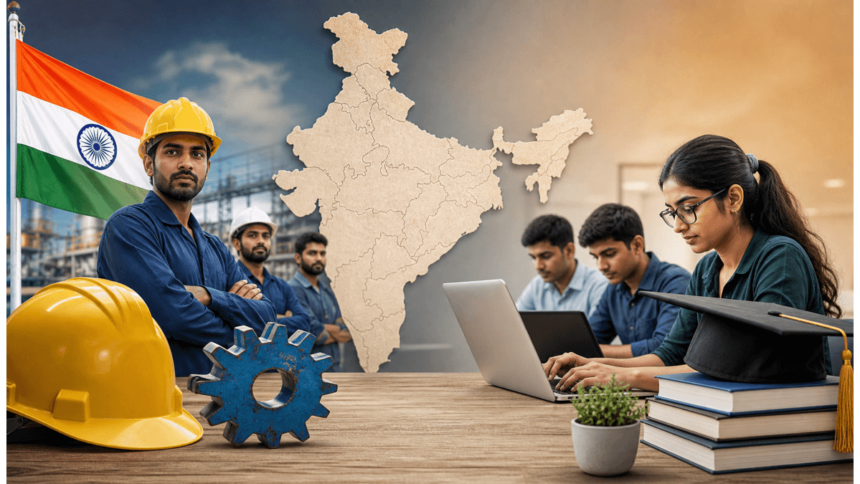
India’s development priorities came into sharp focus as the NITI Aayog Governing Council meeting brought together the Centre and states to discuss employment generation, skill development, economic growth and the broader Viksit Bharat vision. The discussions highlighted the need for coordinated action to accelerate development and create opportunities across sectors.
NITI Aayog Meeting Highlights Growth Priorities
The NITI Aayog Governing Council meeting is one of the most important policy forums in India, bringing together the Prime Minister, chief ministers, lieutenant governors and senior policymakers to discuss national development priorities. This year’s discussions centered on employment, skilling, investment, infrastructure and inclusive growth as India continues its journey toward becoming a developed nation under the Viksit Bharat vision.
The meeting comes at a time when India remains one of the world’s fastest-growing major economies. However, policymakers recognize that sustained growth must translate into higher employment, stronger workforce participation and better economic opportunities across both urban and rural regions.
Several states used the platform to present their development priorities, investment requirements and sector-specific growth strategies. The emphasis remained on creating jobs, improving education outcomes and strengthening skill development programs that align with future industry needs.
Jobs and Employment Remain Central to Development Agenda
Employment generation emerged as one of the key themes of the meeting. While India’s economy has expanded significantly in recent years, creating quality jobs for a growing workforce remains a major policy objective.
States highlighted the importance of attracting manufacturing investments, supporting micro, small and medium enterprises, and encouraging entrepreneurship. Policymakers discussed ways to improve employment opportunities across sectors such as manufacturing, technology, logistics, tourism, renewable energy and services.
The growing emphasis on local manufacturing and infrastructure development is also expected to contribute to job creation. Large-scale public investments in roads, railways, ports and digital infrastructure have already created opportunities, but states are seeking greater support to expand these benefits further.
Experts often point out that long-term economic success depends not only on GDP growth but also on the ability to generate productive employment across different income groups.
Skill Development Takes Center Stage
Another major focus area during the NITI Aayog discussions was skill development. As industries increasingly adopt automation, artificial intelligence and advanced technologies, workforce readiness has become a critical issue.
States stressed the need for stronger industry-academia partnerships, vocational training programs and region-specific skilling initiatives. The goal is to ensure that young people acquire skills that match evolving market demands.
India has one of the world’s youngest populations, creating both an opportunity and a challenge. If skill development programs are aligned effectively with industry requirements, the country could benefit from a significant demographic advantage over the coming decades.
Several policymakers emphasized improving access to digital education, technical training and professional certification programs, particularly in smaller cities and rural regions where employment opportunities are expanding.
Viksit Bharat Vision Drives Long-Term Economic Planning
The Viksit Bharat vision aims to transform India into a developed nation by 2047, marking 100 years of independence. The initiative focuses on economic growth, social inclusion, infrastructure expansion, innovation and improved quality of life.
During the meeting, discussions reportedly covered strategies to accelerate progress toward these long-term goals. States highlighted the importance of cooperative federalism, where both the Centre and state governments work together to implement reforms and development programs.
Infrastructure expansion, digital transformation, industrial growth and sustainable development remain central pillars of the broader vision. Policymakers also discussed improving governance efficiency, enhancing public service delivery and increasing private sector participation in economic development.
The meeting underscored the belief that achieving developed nation status will require coordinated efforts across multiple sectors and regions.
Why the Meeting Matters for India’s Economy
The NITI Aayog Governing Council meeting serves as a key platform for policy coordination between the Centre and states. Decisions and recommendations emerging from such discussions often influence future development strategies, investment priorities and reform initiatives.
For businesses, investors and industry stakeholders, the focus on jobs, skills and growth signals continued government attention toward economic expansion and workforce development. It also highlights the importance of preparing India’s workforce for changing global economic trends.
As India pursues ambitious growth targets, the outcomes of these discussions could play an important role in shaping future policies related to employment, education, infrastructure and industrial development.
Key Takeaways
• Jobs and employment generation were among the primary themes discussed during the NITI Aayog meeting.
• States emphasized skill development programs to prepare workers for future industries.
• The Viksit Bharat vision remains the long-term framework guiding India’s development strategy.
• Cooperation between the Centre and states is seen as essential for achieving sustained economic growth.
FAQ
What is the NITI Aayog Governing Council meeting?
It is the highest policy-making forum of NITI Aayog where the Prime Minister, chief ministers and other government leaders discuss national development priorities.
Why are jobs and skills important topics in the meeting?
Employment generation and workforce readiness are critical for sustaining economic growth and improving living standards.
What is the Viksit Bharat vision?
Viksit Bharat is India’s long-term goal of becoming a developed nation by 2047 through economic growth, infrastructure development and social progress.
How does the meeting affect businesses and investors?
Policy discussions and development priorities outlined during the meeting can influence future reforms, investments and economic strategies.
(Keywords: NITI Aayog meeting, Viksit Bharat vision, jobs and skills agenda, India economic growth, skill development India, employment generation, NITI Aayog Governing Council, Indian economy, workforce development, state growth strategies)