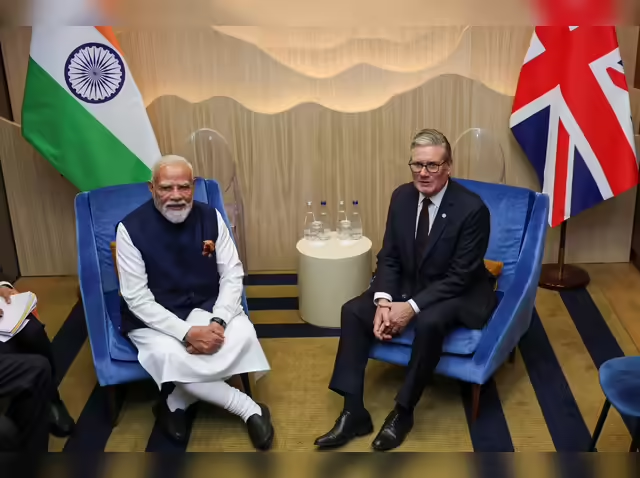
The India-UK trade pact is expected to come into effect in July 2026, marking one of the most significant trade agreements signed by India in recent years. The deal aims to reduce tariffs, improve market access, boost exports, and strengthen economic ties between two major economies.
India-UK Trade Pact Nears Implementation
The India-UK trade pact is entering its final phase ahead of a planned July rollout, opening a new chapter in bilateral economic relations. The agreement is designed to lower trade barriers, increase investment opportunities, and create a more predictable framework for businesses operating between the two countries.
The deal follows years of negotiations and comes at a time when both nations are seeking to diversify trade partnerships amid shifting global supply chains. Policymakers in New Delhi and London view the agreement as a strategic move that can accelerate economic cooperation while providing businesses with greater access to overseas markets.
For India, the pact offers an opportunity to expand exports in sectors where it enjoys a competitive advantage. For the United Kingdom, the agreement provides deeper access to one of the world’s fastest-growing major economies.
Tariff Cuts Expected Across Key Sectors
One of the most closely watched elements of the India-UK trade agreement is the reduction of tariffs on a wide range of goods. Lower import duties are expected to make products more competitive in both markets.
Indian exporters in sectors such as textiles, apparel, engineering goods, pharmaceuticals, gems and jewellery, and food products are expected to benefit from improved access to UK consumers. Reduced tariffs can help Indian businesses improve pricing competitiveness and expand market share.
On the other side, British exporters are likely to gain from lower duties on products such as automobiles, premium beverages, industrial goods, and certain manufacturing inputs. The agreement is expected to gradually reduce costs for businesses and consumers while encouraging higher trade volumes.
Trade experts believe tariff rationalization could significantly increase bilateral trade over the coming years by making cross-border commerce more efficient.
Market Access Gains Could Boost Business Opportunities
Beyond tariff reductions, the trade pact places significant emphasis on market access. This aspect is particularly important because modern trade agreements increasingly focus on regulatory cooperation, investment facilitation, and business mobility.
Indian companies operating in information technology, professional services, digital solutions, and financial services could gain better opportunities to expand in the UK market. At the same time, British firms may find it easier to enter and scale operations in India.
The agreement is also expected to encourage stronger collaboration between startups, technology companies, manufacturers, and research institutions. Improved business conditions could attract fresh investments and create new partnerships across industries.
Greater market access often delivers long-term economic benefits because it helps businesses expand beyond domestic demand and reach larger customer bases.
Strategic Importance for India and the UK
The timing of the agreement carries strategic significance. Global trade patterns have undergone major changes due to geopolitical tensions, supply chain disruptions, and shifting economic priorities.
India has been actively pursuing trade agreements with several major economies as part of its broader strategy to increase exports and strengthen its position in global value chains. The UK, meanwhile, has been seeking new trade partnerships following its departure from the European Union.
For both countries, the agreement represents more than a commercial arrangement. It is also a geopolitical signal that deeper economic cooperation remains a priority despite global uncertainty.
Economists note that stronger trade ties can support investment flows, job creation, technology transfer, and industrial growth over the medium term.
What Businesses Should Watch Next
As the July implementation date approaches, businesses are closely monitoring the final operational details of the agreement. Companies will need to understand product-specific tariff schedules, compliance requirements, rules of origin provisions, and sector-specific regulations.
Exporters and importers are expected to review supply chains and pricing strategies to take full advantage of the new opportunities. Industry associations have already begun advising members on how to prepare for the transition.
The agreement could particularly benefit small and medium-sized enterprises that have previously faced cost barriers when entering foreign markets. Easier access and lower tariffs may create new growth opportunities for businesses looking to expand internationally.
If implementation proceeds as planned, the India-UK trade pact could become one of the most influential economic agreements shaping bilateral trade in the coming decade.
Takeaways
• The India-UK trade pact is expected to be implemented in July 2026.
• Tariff reductions are likely to benefit exporters and consumers in both countries.
• Improved market access could create new opportunities in goods and services sectors.
• The agreement strengthens long-term economic and strategic ties between India and the UK.
FAQ
Q1. What is the main objective of the India-UK trade pact?
The agreement aims to reduce trade barriers, improve market access, boost exports, encourage investment, and strengthen economic cooperation between India and the United Kingdom.
Q2. Which Indian sectors could benefit the most?
Sectors such as textiles, apparel, pharmaceuticals, engineering goods, gems and jewellery, information technology, and professional services are expected to gain from improved access to the UK market.
Q3. Why is the trade pact important for the UK?
The agreement provides British businesses with greater access to India’s large and growing consumer market while supporting trade diversification efforts.
Q4. When is the agreement expected to take effect?
Current indications suggest that the trade pact is expected to roll out in July 2026, subject to the completion of implementation procedures.