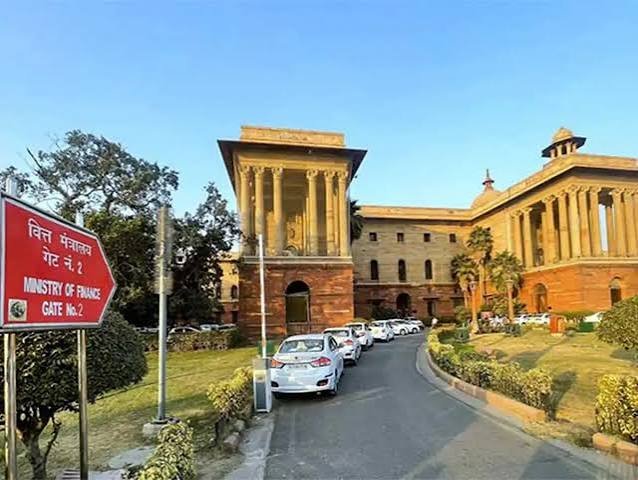
India’s Finance Ministry has said that easing crude oil prices and improving global supply chains are helping reduce external risks to the country’s economy. The assessment comes as policymakers monitor inflation, trade, and global uncertainties while maintaining expectations of steady economic growth.
Finance Ministry Highlights Lower External Risks for India’s Economy
The Finance Ministry’s assessment on India’s economy points to a more stable external environment, supported by softer crude oil prices and gradual improvements in global supply chains. The ministry believes these developments are reducing some of the key risks that have weighed on economic activity over the past few years.
India remains one of the world’s largest importers of crude oil, making international energy prices a critical factor in inflation, trade balance, and fiscal management. At the same time, smoother supply chains have eased pressure on manufacturers and exporters that previously struggled with shortages of raw materials, shipping delays, and elevated logistics costs.
Although global uncertainties have not disappeared, officials believe current external conditions are more favorable than they were during periods of pandemic-related disruptions and sharp commodity price spikes.
Easing Crude Oil Prices Offer Relief to Inflation and Imports
Lower crude oil prices provide several advantages for the Indian economy.
Since India imports nearly 85 percent of its crude oil requirements, a decline in international oil prices directly reduces the country’s import bill. This helps narrow the current account deficit while easing pressure on the Indian rupee.
Fuel prices also influence transportation costs across sectors. When crude prices moderate, businesses often experience lower operating expenses, which can eventually reduce cost pressures throughout supply chains. While domestic fuel prices depend on multiple factors, softer global oil prices generally create room for improved economic stability.
Lower energy costs also help contain inflation, making it easier for policymakers to maintain a balanced monetary policy without aggressive interventions.
Global Supply Chains Continue to Recover
Another factor highlighted by the Finance Ministry is the continued improvement in global supply chains.
Over the past few years, manufacturers worldwide faced repeated disruptions caused by the COVID-19 pandemic, shipping bottlenecks, semiconductor shortages, geopolitical conflicts, and rising freight costs. These issues delayed production and increased costs for businesses across industries.
Recent improvements in shipping availability, logistics efficiency, and manufacturing capacity have helped normalize international trade. Indian companies now face fewer delays in sourcing components and raw materials, improving production schedules and inventory management.
Export-oriented sectors including automobiles, electronics, engineering goods, and pharmaceuticals have particularly benefited from smoother global logistics.
Strong Domestic Fundamentals Support Economic Growth
While external conditions are improving, India’s growth story continues to rely heavily on domestic demand.
Government spending on infrastructure, healthy tax collections, expanding manufacturing, digital payments, and resilient services activity have helped maintain economic momentum. Consumption has also remained relatively stable despite global uncertainty.
Private investment has gradually improved across several sectors, supported by stronger corporate balance sheets and expanding capacity in manufacturing industries. Financial institutions have also remained well-capitalized, helping sustain credit growth.
These domestic strengths make the economy more resilient even when global conditions become volatile.
Global Risks Still Require Close Monitoring
Despite the positive outlook, policymakers continue to monitor several international risks.
Geopolitical tensions remain capable of disrupting energy markets at short notice. Conflicts in key regions could again trigger volatility in crude oil prices or affect shipping routes. Similarly, slower economic growth in major economies such as the United States, Europe, or China may influence India’s exports.
Currency movements, global interest rate decisions, and capital flows also remain important external variables. Changes in monetary policy by major central banks can affect emerging markets, including India.
For these reasons, the Finance Ministry’s assessment should be viewed as an indication that risks have moderated rather than disappeared entirely.
What This Means for Businesses and Investors
For businesses, a more stable external environment improves planning and investment decisions. Lower logistics costs, better availability of imported inputs, and reduced commodity price volatility can improve profitability across sectors.
Manufacturers may benefit from lower production costs, while exporters gain from more reliable shipping schedules. Consumer-facing industries may also experience steadier demand if inflation remains under control.
For investors, easing external risks strengthen confidence in India’s macroeconomic outlook. Stable inflation, manageable import costs, and healthy economic growth generally create favorable conditions for financial markets, although global developments will continue to influence investor sentiment.
Overall, the Finance Ministry’s latest assessment reflects growing confidence that India’s economy is entering a period of greater external stability. While international challenges remain, lower crude oil prices and stronger global supply chains provide meaningful support to inflation management, trade, and economic growth. Combined with resilient domestic demand and continued policy support, these factors strengthen India’s position as one of the faster-growing major economies.
Key Takeaways
- The Finance Ministry says easing crude oil prices are reducing pressure on India’s economy.
- Improving global supply chains are helping manufacturers, exporters, and importers.
- Lower external risks support inflation control, trade stability, and economic growth.
- Policymakers continue to monitor geopolitical tensions and global economic developments.
Frequently Asked Questions
Q1. Why are lower crude oil prices important for India?
India imports most of its crude oil. Lower global prices reduce import costs, help control inflation, and improve the country’s external balance.
Q2. How do better supply chains benefit businesses?
Improved supply chains reduce shipping delays, lower logistics costs, ensure smoother production, and make international trade more efficient.
Q3. Does this mean India’s economy is free from global risks?
No. Risks such as geopolitical conflicts, volatile energy prices, and slowing global growth continue to require close monitoring.
Q4. Which sectors are likely to benefit the most?
Manufacturing, automobiles, pharmaceuticals, engineering goods, consumer products, and export-oriented industries stand to benefit from lower costs and smoother global logistics.