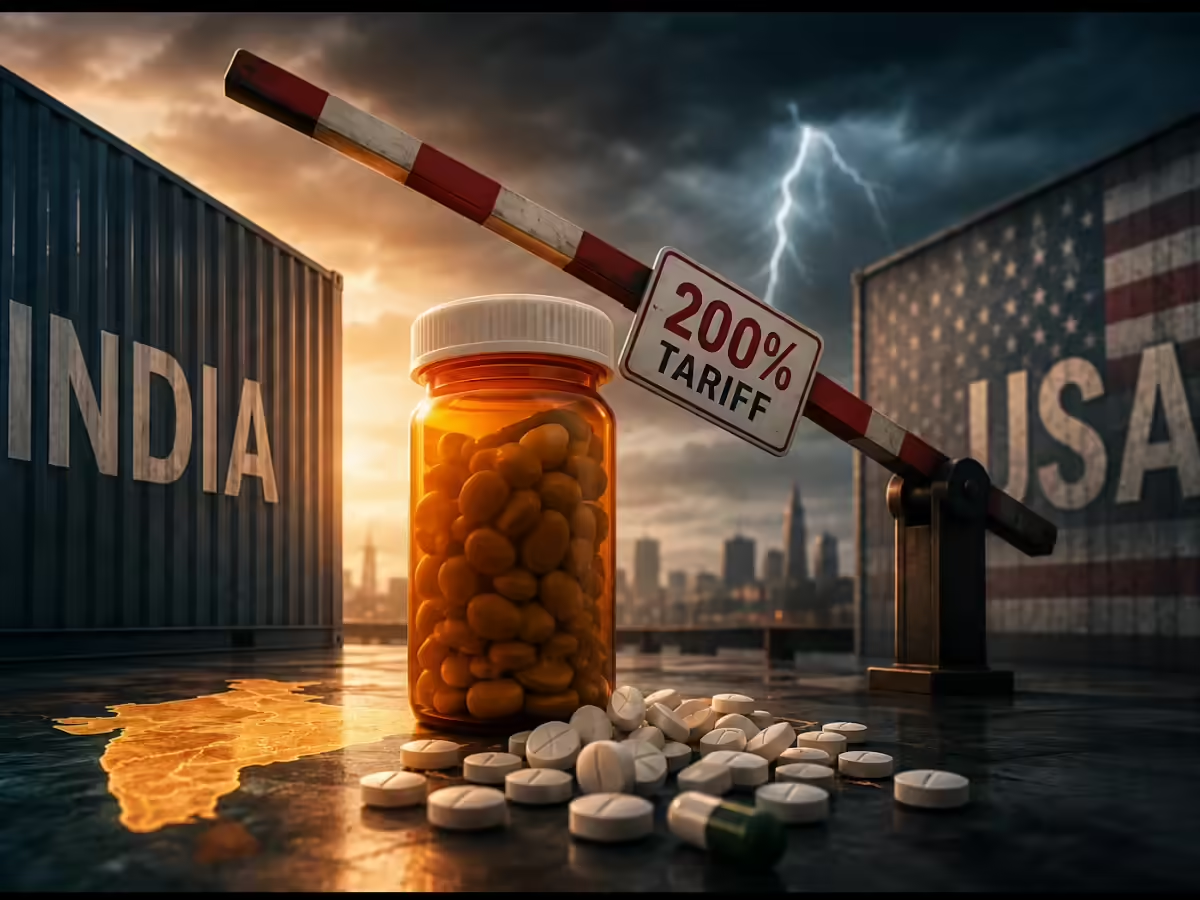
Global pharmaceutical exporters are closely monitoring changes in trade policy after fresh tariff proposals in the United States reignited concerns about cross-border medicine supplies. The debate has put Indian drug manufacturers, one of the world’s largest suppliers of generic medicines, under renewed investor and industry focus.
The topic is time sensitive (news) because it is linked to current trade policy announcements, proposed tariff measures, and ongoing international trade negotiations affecting pharmaceutical exports. Recent developments have increased uncertainty for global drugmakers and exporters.
Pharma exporters across the world are reassessing their global strategies after the latest tariff debate gathered momentum in the United States. While no immediate disruption to generic medicine exports has taken effect, proposed future tariffs have prompted companies, investors, and policymakers to evaluate how supply chains, manufacturing locations, and export competitiveness could change over the coming years.
India has emerged as the biggest focus of this discussion because it is among the largest suppliers of generic medicines to the U.S. market. Indian pharmaceutical exports to the United States are valued at nearly $10 billion annually, making the market crucial for many domestic drug manufacturers.
Proposed US Tariff Plan Raises New Questions
The latest debate follows comments from U.S. President Donald Trump outlining a phased approach toward tariffs on imported generic medicines. Under the proposal, generic drugs would continue entering the U.S. without tariffs for the next two years before significantly higher duties are introduced in later years to encourage domestic pharmaceutical manufacturing.
Although the proposal provides a transition period rather than an immediate policy change, financial markets reacted quickly. Investors interpreted the announcement as a sign that pharmaceutical companies may eventually need to rethink production strategies and expand manufacturing inside the United States.
Industry experts note that detailed implementation rules are still awaited, meaning companies are currently evaluating possible scenarios rather than responding to finalized regulations.
Indian Pharma Exporters Assess Their Global Position
India remains one of the world’s largest manufacturers of affordable generic medicines and supplies a significant share of prescriptions dispensed in the United States. Its competitive advantage comes from large-scale production, regulatory expertise, and cost-efficient manufacturing.
Despite the proposed tariff discussion, many analysts believe Indian pharmaceutical companies retain important strengths. Several major exporters already operate manufacturing facilities in the United States, while others have diversified export markets across Europe, Africa, Latin America, and Asia.
Research groups also point out that India’s pricing advantage may continue to make many generic medicines competitive even if higher tariffs are eventually introduced. However, companies with greater dependence on the U.S. market could face more pressure than firms with diversified revenue streams.
Global Trade Policies Are Reshaping Supply Chains
The tariff debate reflects a broader trend in global trade, where governments are encouraging domestic manufacturing in strategic industries such as pharmaceuticals, semiconductors, and clean energy.
Several multinational pharmaceutical companies have already increased investments in local manufacturing facilities across different regions to reduce geopolitical and supply chain risks. Companies are increasingly adopting a regional production model instead of relying on a single export hub.
For pharmaceutical exporters, future competitiveness may depend not only on production costs but also on regulatory compliance, local manufacturing capacity, and the ability to respond quickly to changing trade policies.
The pharmaceutical industry has become one of the sectors most closely watched in international trade discussions because medicines are both economically important and strategically significant for national healthcare systems.
Trade Negotiations Could Influence Future Outlook
Alongside the tariff discussion, India and the United States continue negotiations on a broader bilateral trade agreement aimed at improving market access and reducing trade barriers across multiple sectors.
Officials from both countries have indicated that discussions are progressing, although certain trade investigations and policy reviews remain ongoing. The outcome of these negotiations could influence the long-term environment for pharmaceutical exports alongside other major industries.
Market participants will also watch whether similar trade measures emerge in other major economies. If additional countries begin promoting local pharmaceutical production through tariff policies or incentives, exporters may increasingly adopt multi-country manufacturing strategies.
Investors Focus on Long-Term Industry Impact
The immediate market reaction has been visible in pharmaceutical stocks, with investors weighing the possible long-term effects of changing trade policies rather than expecting an immediate decline in exports.
Most industry executives believe there is sufficient time to adapt because the proposed tariff framework includes a multi-year transition period. During that time, companies could expand overseas manufacturing, strengthen regional supply chains, or diversify export markets.
At the same time, healthcare economists caution that sharply increasing tariffs on generic medicines could ultimately raise healthcare costs for consumers if lower-cost imported medicines become less accessible.
For now, the pharmaceutical sector remains in a wait-and-watch phase as governments continue trade negotiations and companies evaluate strategic responses to evolving global trade policies.
Key Takeaways
- Proposed U.S. tariffs have intensified the global debate over pharmaceutical trade and manufacturing.
- Indian drug exporters remain under close investor scrutiny because of their significant exposure to the U.S. market.
- Companies are evaluating diversification, regional manufacturing, and supply chain adjustments.
- Ongoing trade negotiations between India and the United States could shape the long-term outlook for pharmaceutical exports.
FAQ
Q1. Why are pharmaceutical exporters in focus today?
Recent U.S. tariff proposals on imported generic medicines have increased uncertainty about future global pharmaceutical trade policies.
Q2. Why is India particularly affected?
India is one of the largest exporters of generic medicines to the United States, making changes in U.S. trade policy especially important for Indian pharmaceutical companies.
Q3. Will the proposed tariffs affect exports immediately?
No. The announced proposal includes a transition period before higher tariffs would potentially take effect, and detailed implementation rules are still awaited.
Q4. How are pharmaceutical companies responding?
Many companies are assessing manufacturing expansion, supply chain diversification, and broader export strategies to prepare for possible future trade changes.
(Internal keyword suggestions: pharma exporters, pharmaceutical exports, generic drug tariffs, India pharma exports, US tariff proposal, global pharmaceutical trade, drug manufacturing, India US trade, generic medicines, pharmaceutical industry)