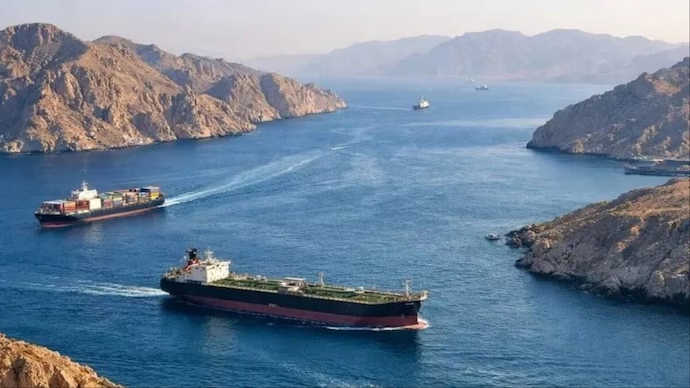
Strait of Hormuz shipping risks are back in focus on August 18 as stalled US-Iran diplomacy raises fresh concerns over vessel movements and energy supplies. Brent crude has climbed above $91 a barrel, putting global markets on alert over renewed disruption.
Iran tensions put Strait of Hormuz shipping back under scrutiny
The Strait of Hormuz has returned to the centre of global market attention as tensions between the United States and Iran intensify and hopes for a lasting diplomatic settlement weaken.
The latest concern comes after a 60-day period outlined in a US-Iran memorandum passed without the broader agreement that markets had hoped would reduce tensions. Iran has now warned that it could adopt a more offensive posture around the strategic waterway if diplomacy fails.
For global businesses, the issue is bigger than a regional security dispute. Hormuz is one of the world’s most important energy shipping routes, linking producers in the Persian Gulf with customers across Asia and other markets.
Any sustained reduction in vessel traffic can affect crude oil, petroleum products, liquefied natural gas, shipping rates and insurance costs.
Oil prices rise as Hormuz supply risks increase
Oil markets reacted quickly to the renewed uncertainty. Brent crude moved above $91 a barrel on Tuesday, August 18, as traders priced in a higher risk of supply disruption.
The rise reflects concerns over physical supply as well as the possibility of further escalation. The market does not need a complete closure of the strait to feel the impact. If shipowners become reluctant to send vessels through the area, available cargo capacity can tighten and transportation costs can rise.
That can push up the delivered price of energy even when production itself has not fallen by the same amount.
The latest price movement is therefore being watched closely by governments, refiners, airlines, shipping companies and industrial users that depend on predictable fuel supplies.
Why the Strait of Hormuz matters to global trade
The Strait of Hormuz connects the Persian Gulf with the Gulf of Oman and the wider Arabian Sea. It is a narrow maritime chokepoint through which large volumes of crude oil, petroleum products and LNG normally move.
Research from India’s Research and Information System for Developing Countries estimates that around 20.7 million barrels per day of oil moved through Hormuz in 2024, while first-half 2025 flows were around 20.9 million barrels per day.
The route is particularly important for Asian energy markets because major producers such as Saudi Arabia, Iraq, the United Arab Emirates, Kuwait and Iran rely on Gulf shipping routes to reach international buyers.
This concentration means that a disruption can quickly spread beyond the countries directly involved in the conflict.
Shipping companies face higher operational and insurance risks
The biggest immediate issue for shipping companies is not only whether the waterway is formally closed. It is whether commercial operators consider the route safe enough to use.
Earlier disruptions during the 2026 Iran conflict caused shipping activity through the strait to fall sharply as vessels avoided the area and operators assessed security risks. Research published by RIS described the waterway as having shifted from a high-volume trade corridor into a severely restricted and high-risk zone.
War-risk insurance is another important factor.
When insurers reassess the probability of attacks or vessel damage, premiums can increase significantly. Shipowners then have to decide whether the additional insurance, security and operational costs justify continuing the voyage.
Some vessels may choose to wait outside the area, while others may seek alternative routes where possible.
For cargo owners, these decisions can translate into longer delivery times and higher freight costs.
LNG markets could also feel the pressure
The Hormuz risk extends beyond crude oil.
The waterway is also important for LNG shipments from Qatar and the United Arab Emirates. A prolonged disruption could therefore affect natural gas markets, particularly in Asia where LNG imports play an important role in meeting electricity and industrial demand.
This matters because LNG markets can become particularly sensitive when spare supply is limited.
If cargoes are delayed or rerouted, buyers may have to compete for alternative supplies. That can increase spot prices and create additional costs for power producers and industrial consumers.
The consequences can then move through electricity markets, manufacturing costs and household energy bills.
The exact impact will depend on how long shipping remains restricted and how much alternative supply is available.
India faces a particularly important energy risk
India is among the countries watching the Hormuz situation closely because of its dependence on imported crude oil.
A prolonged disruption could raise India’s import costs and increase pressure on refiners, fuel prices and the country’s trade balance. Higher crude prices can also put pressure on the Indian rupee because more dollars are required to pay for energy imports.
The risk is especially relevant at a time when Brent crude has already moved above $90 a barrel.
For Indian refiners, the situation is complicated by changing crude sourcing patterns. Russia has become a major supplier of Indian crude, with Russian oil accounting for more than half of India’s crude imports in July, according to trade data reported earlier this month.
That gives Indian refiners an additional source of supply, but it does not completely remove the importance of Gulf shipping routes.
Global markets watch the next diplomatic move
Financial markets are now closely following the next developments between Washington and Tehran.
The immediate question is whether diplomacy can prevent another escalation around Hormuz. A reduction in tensions could bring some risk premium out of oil prices and encourage shipping companies to resume more normal operations.
A further deterioration could have the opposite effect.
Markets would likely react first through crude prices, shipping rates and energy-related equities. Currency markets could then reflect changing expectations for inflation and trade balances, while broader equity markets could become more defensive.
The longer the uncertainty lasts, the more important physical shipping data becomes. Traders will want to know whether vessels are actually moving through the strait, whether insurers are providing coverage and whether energy producers can redirect sufficient cargoes through alternative routes.
Alternative routes cannot fully replace Hormuz overnight
Some Gulf producers have access to pipelines and alternative export facilities that can bypass the Strait of Hormuz. Saudi Arabia and the UAE, for example, have infrastructure that can move some oil outside the immediate chokepoint.
However, these alternatives have limited capacity compared with the enormous volume that normally moves through Hormuz.
That means alternative routes can reduce the impact of a disruption, but they cannot simply replace the strait’s role on a one-for-one basis.
This is why even the possibility of a prolonged disruption can influence prices before a full physical supply shortage develops.
The market prices risk ahead of the actual loss of barrels.
Businesses prepare for another period of energy volatility
Companies exposed to fuel and transportation costs are likely to remain sensitive to developments around Hormuz.
Airlines, shipping companies, logistics operators, chemical manufacturers and other energy-intensive industries could face higher operating expenses if crude and fuel prices remain elevated.
Exporters may also face higher freight and insurance costs if vessels avoid the region or take longer routes.
For investors, the situation creates a complicated market environment. Higher oil prices can benefit some energy producers, while creating margin pressure for companies that cannot quickly pass higher costs to customers.
The impact will therefore vary significantly by sector and business model.
What happens next could determine the market reaction
The Strait of Hormuz shipping situation remains highly dependent on the direction of US-Iran relations.
For now, the key signal is that diplomatic uncertainty is again translating into higher energy risk. Brent crude above $91 a barrel shows that traders are already assigning a meaningful premium to the possibility of further disruption.
The next stage will depend on actual vessel movements, security incidents, diplomatic announcements and the ability of regional producers to maintain exports through alternative infrastructure.
A return to stable shipping would likely ease some of the pressure on energy markets. A prolonged confrontation, however, could keep oil, LNG, freight and insurance markets volatile.
For global businesses, Hormuz is once again a market issue to watch closely, not simply a geopolitical headline.
Key Takeaways
- Brent crude moved above $91 a barrel on August 18 as US-Iran tensions revived concerns about supply disruption.
- The Strait of Hormuz is a critical energy chokepoint carrying around 20 million barrels of oil per day under normal conditions.
- Shipping companies face increased security, insurance and operational risks when vessel traffic through the region is disrupted.
- India and other major Asian energy importers could face higher crude, LNG, freight and currency-related costs if disruption persists.
FAQ
Why is the Strait of Hormuz important to global markets?
The Strait of Hormuz is one of the world’s most important energy shipping routes. Large quantities of crude oil, petroleum products and LNG normally pass through it, making any sustained disruption relevant to global energy prices and trade.
Why are oil prices rising on August 18, 2026?
Oil prices are rising as hopes for a lasting US-Iran agreement have weakened and concerns over renewed shipping and supply disruption around Hormuz have increased. Brent crude moved above $91 a barrel on Tuesday.
Does a Hormuz disruption affect shipping costs?
Yes. Higher security risks can increase war-risk insurance premiums and operating costs. Shipping companies may also delay voyages or avoid the area, reducing available vessel capacity and increasing freight costs.
How could India be affected by Hormuz tensions?
India could face higher crude import costs if global oil prices rise for an extended period. More expensive energy imports can also put pressure on the rupee, inflation, fuel-sensitive industries and the country’s trade balance.