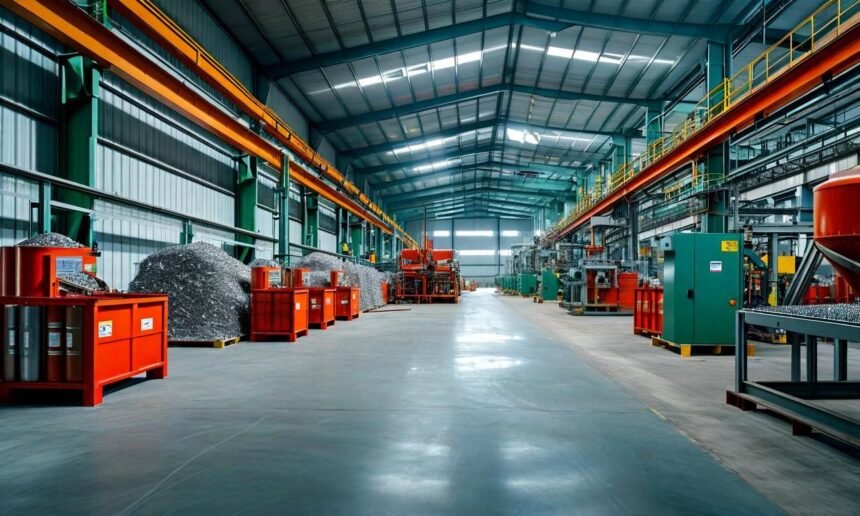
Gravita India has commissioned a 6,000 MTPA lithium-ion battery recycling pilot plant at Mundra, Gujarat, marking its entry into critical mineral recycling. The company is also pursuing a larger capacity expansion plan aimed at taking its overall recycling capacity beyond 800,000 MTPA by FY29.
Gravita India commissions lithium-ion recycling plant in Mundra
Gravita India has commissioned a 6,000 metric tonnes per annum lithium-ion battery recycling pilot facility at Mundra, Gujarat, bringing battery recycling into its expanding non-ferrous recycling portfolio. The development is being watched by investors as the company moves beyond its established recycling operations into a segment linked to electric vehicles and energy storage.
The Mundra facility was originally announced by Gravita in January 2026 with an investment of approximately ₹14 crore, funded through the company’s internal accruals. The company described the project as a step towards recovering valuable resources from end-of-life lithium-ion batteries while supporting a circular economy.
The latest commissioning update makes the project an operational milestone rather than simply a planned capacity addition. The facility gives Gravita an initial platform to develop capabilities in lithium-ion battery recycling and critical mineral recovery.
Battery recycling becomes a new growth area
Lithium-ion batteries are increasingly important because they power electric vehicles, portable electronics and energy-storage systems. As the installed base of batteries expands, the need to manage end-of-life batteries and recover materials from them is also becoming more significant.
For recyclers, the opportunity lies in recovering usable materials from spent batteries instead of allowing valuable resources to enter the waste stream. Gravita’s entry places the company in a market connected to the broader growth of electric mobility and renewable-energy storage.
The company has said its Mundra facility is intended to support safe and sustainable processing of lithium-ion batteries while reducing environmental impact and conserving valuable resources. Its stated approach is aligned with its broader strategy of building a circular-economy business around material recovery.
However, the 6,000 MTPA plant is best viewed as an initial step. Its capacity is relatively small compared with Gravita’s overall recycling ambitions, making future expansion and execution important factors for investors.
Gravita targets more than 800,000 MTPA capacity
The lithium-ion plant forms part of a much larger capacity expansion strategy. Gravita is targeting total recycling capacity of more than 800,000 MTPA by FY29 under its Vision 2030 plan. The company has formalised a ₹1,700 crore capital expenditure programme through FY29, according to recent market reporting based on company disclosures.
The broader programme is not limited to lithium-ion batteries. The company is also expanding other recycling verticals, including copper. Recent reports indicate that approximately ₹700 crore of the planned capex is earmarked for copper expansion.
That makes the Mundra plant part of a wider diversification strategy rather than a standalone battery project.
Gravita has traditionally built its business around recycling materials such as lead and other non-ferrous metals. Moving into lithium-ion batteries gives the company exposure to a different part of the recycling value chain, particularly one connected with India’s growing electric mobility ecosystem.
₹14 crore investment gives Gravita an entry point
The initial investment in the Mundra lithium-ion facility is approximately ₹14 crore. Gravita said the amount was funded through internal accruals rather than external borrowing.
That funding structure is relevant because it allows the company to establish its presence in battery recycling without making the project dependent on a large external financing programme.
The current plant’s 6,000 MTPA capacity also gives Gravita an opportunity to build operational experience before potentially scaling the business further. Battery recycling requires specialised handling, processing systems and appropriate safety controls, particularly because damaged or improperly stored lithium-ion batteries can present fire and other operational risks.
The company has highlighted the use of technology intended to improve recycling efficiency and scalability while minimising toxic chemicals and waste generated during processing.
The commercial performance of the facility will ultimately depend on factors such as battery waste availability, processing economics, recovery rates and demand for recovered materials.
Electric vehicle growth strengthens recycling demand
India’s electric vehicle market is creating a long-term need for battery lifecycle management. More electric two-wheelers, three-wheelers, passenger vehicles and commercial vehicles on the road will eventually translate into larger volumes of batteries requiring repair, repurposing or recycling.
Battery recycling can also reduce dependence on newly mined raw materials by recovering materials already contained in used batteries. This is particularly relevant for countries seeking greater control over critical mineral supply chains.
For India, the issue has both environmental and industrial significance. Recovering materials domestically can potentially support battery manufacturing and other industrial applications while reducing the amount of material that has to be sourced through primary mining or imports.
Gravita’s move therefore comes at a time when battery recycling is becoming more closely connected with India’s electric mobility, energy storage and critical-mineral strategies.
Still, the company has not indicated that the Mundra plant alone will transform India’s battery recycling market. Its immediate significance is that Gravita now has an operating facility from which it can develop its capabilities in this segment.
Gravita expands beyond traditional metal recycling
The Mundra project also reflects a broader shift in Gravita’s business strategy.
The company has been expanding its presence across different recycling categories rather than relying exclusively on its traditional businesses. Its current expansion roadmap includes lithium-ion batteries, copper and other material-recycling opportunities.
The 800,000 MTPA target is therefore considerably broader than the 6,000 MTPA lithium-ion facility. Achieving that goal will require multiple capacity additions and successful execution across the company’s different recycling verticals.
The company reported consolidated revenue of ₹1,475 crore and consolidated profit after tax of ₹106 crore for Q1 FY27, according to recent market reporting. Revenue was reported to have increased 41.8% year-on-year, while consolidated PAT rose 14%.
These figures provide the financial backdrop to Gravita’s expansion plans, although the contribution from the newly commissioned lithium-ion facility will take time to become material.
What the Mundra plant means for Gravita
The immediate significance of the project is strategic. Gravita now has an operational foothold in lithium-ion battery recycling, allowing it to participate in a market expected to become increasingly important as battery usage expands.
The company will now need to demonstrate that the facility can operate efficiently and secure sufficient battery feedstock. It will also need to show that recovered materials can be processed and sold economically.
The planned ₹1,700 crore capex programme indicates that management is looking beyond the initial pilot-scale operation. The longer-term target of more than 800,000 MTPA capacity by FY29 is substantially larger than the company’s current lithium-ion capacity and will require significant execution across multiple projects.
For investors, the development is therefore less about the immediate revenue potential of a 6,000 MTPA plant and more about whether Gravita can successfully build a diversified recycling platform over the next several years.
Battery recycling could become a larger business
The commissioning of the Mundra plant comes as battery recycling moves closer to the centre of India’s clean-energy supply chain.
Lithium-ion batteries contain materials that can potentially be recovered and reused, creating an economic incentive alongside the environmental case for recycling. As more batteries reach the end of their useful lives, recyclers with the necessary processing infrastructure could become increasingly important participants in the energy transition.
For Gravita, the opportunity is to use its experience in recycling and apply it to a newer material stream. The company has already stated that it intends to expand its recycling operations and work with participants in the electric vehicle and renewable-energy sectors.
The 6,000 MTPA Mundra plant is therefore an early operational milestone in a much larger strategy. The next test will be whether Gravita can scale this new business while maintaining the financial discipline and operational efficiency needed to support its broader FY29 capacity target.
Key Takeaways
- Gravita India has commissioned a 6,000 MTPA lithium-ion battery recycling pilot plant at Mundra, Gujarat.
- The facility was established with an investment of approximately ₹14 crore funded through internal accruals.
- Gravita is targeting more than 800,000 MTPA of total recycling capacity by FY29 under its Vision 2030 strategy.
- The company has formalised a ₹1,700 crore capex programme through FY29, including planned expansion in copper and other recycling businesses.
FAQ
What has Gravita India commissioned in Mundra?
Gravita India has commissioned a 6,000 metric tonnes per annum lithium-ion battery recycling pilot plant at Mundra in Gujarat.
How much did Gravita invest in the lithium-ion recycling plant?
The company invested approximately ₹14 crore in procuring and commissioning the facility, with the investment funded through internal accruals.
What is Gravita’s larger capacity target?
Gravita aims to increase its overall recycling capacity to more than 800,000 MTPA by FY29 as part of its Vision 2030 strategy.
Why is lithium-ion battery recycling important?
Lithium-ion batteries are increasingly used in electric vehicles and energy-storage systems. Recycling them can help recover valuable materials, reduce waste and support a circular supply chain for battery-related raw materials.