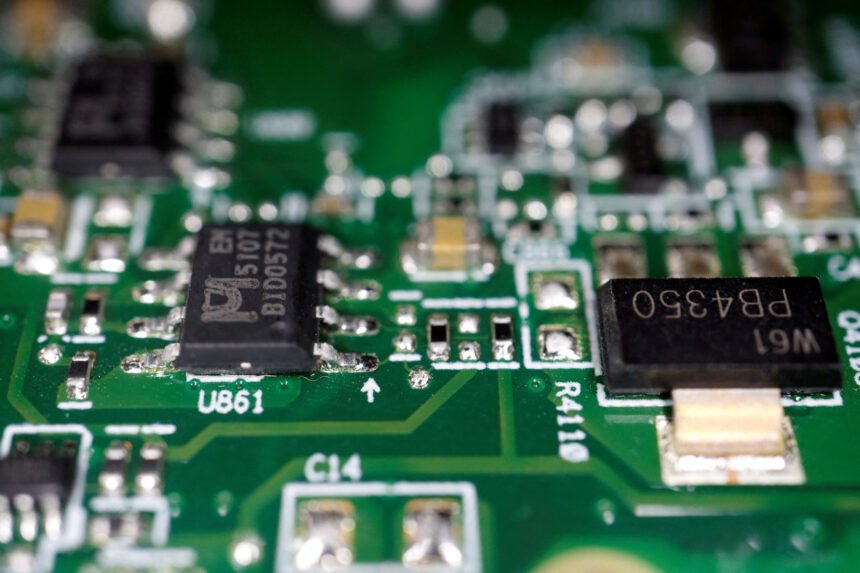
The AI-driven memory shortage is forcing smaller phone and laptop makers to rethink product designs as DRAM and NAND supplies remain tight. Companies including Fairphone, Jolla and Framework are changing hardware strategies, securing memory earlier and passing some costs to customers.
AI Memory Shortage Hits Smaller Device Makers
The AI memory shortage is creating a new problem for smaller electronics companies that do not have the purchasing power of major smartphone and PC manufacturers.
Independent phone and laptop makers are struggling to secure enough DRAM and storage memory for upcoming products as AI data centres absorb a growing share of global memory production. Executives at smaller manufacturers told Reuters that availability, rather than simply price, has become the biggest constraint.
The shortage is particularly difficult for companies operating in the lower and mid-priced device segments. Larger technology companies can negotiate long-term supply agreements and place large orders, while smaller brands often have to make advance commitments without knowing exactly how much memory they will receive or what the final price will be.
As a result, some companies are redesigning products around the memory they can realistically obtain.
This is changing more than component sourcing. It is influencing motherboard design, storage configurations, product pricing and even how companies plan future launches.
Memory Demand Rises With AI Data Centres
The current memory squeeze is closely connected to the rapid expansion of artificial intelligence infrastructure.
AI data centres require large quantities of high-performance memory, including high-bandwidth memory, or HBM, for AI accelerators. They also require conventional DRAM and NAND-based storage for servers and data systems.
Memory manufacturers have increasingly prioritised DRAM and HBM capacity because of strong AI-related demand. That has limited the pace at which new NAND flash capacity is being added, according to TrendForce research cited by Reuters.
The result is pressure across several parts of the memory market.
For device manufacturers, the problem is not simply that memory costs more. They also have to compete with customers that are buying enormous volumes for data centres and AI systems.
That gives large AI infrastructure buyers greater purchasing leverage and makes it harder for smaller electronics companies to guarantee future supplies.
Smaller Brands Redesign Hardware Around Supply
Companies including Fairphone, Jolla and Framework are already adapting their product strategies.
Dutch repairable-phone maker Fairphone has been dealing with supply constraints while trying to maintain its product pricing. Finnish handset company Jolla has designed two motherboard variants so it can use either a combined memory package or discrete memory chips, giving the company more flexibility when sourcing components.
Framework, the US-based repairable laptop company, has taken another approach. Its modular design allows customers to install memory separately, including memory salvaged from older machines.
These strategies show how a supply-chain problem can move directly into product engineering.
Instead of designing a device first and sourcing every component afterwards, smaller manufacturers increasingly have to consider component availability during the design process.
That can make products easier to adapt when a particular memory package becomes difficult to obtain.
It can also reduce the risk of a complete production stoppage when a supplier cannot deliver the originally specified component.
Jolla Builds Flexibility Into Motherboard Design
Jolla is among the companies changing its hardware architecture because of the shortage.
The Finnish smartphone manufacturer has created two motherboard configurations that allow it to switch between different memory arrangements. This gives the company an alternative when a specific combined DRAM and storage package becomes unavailable.
Jolla is also testing memory samples from each incoming batch to check that chips are new rather than refurbished components being sold as new.
That additional testing reflects another challenge created by tight supply.
When legitimate supply becomes scarce, manufacturers can face more pressure from brokers and secondary-market suppliers. Device makers therefore need to verify not only whether memory is available, but also whether the components meet their required specifications and quality standards.
For a smaller manufacturer, receiving a batch of unreliable or incorrectly sourced memory could create much larger problems because it may not have the financial flexibility or inventory depth of a major electronics company.
Framework Uses Modular Memory to Reduce Pressure
Framework’s modular laptop design provides another response to the shortage.
The company’s laptops allow users to replace and upgrade memory rather than treating RAM as a permanently fixed component. During the current shortage, that flexibility has become useful because customers can reuse memory from previous machines where compatible.
Framework has also been placing non-cancellable memory orders well ahead of production. The company does so without always knowing the final price, timing or exact volume it will receive, according to Reuters.
That illustrates the uncertainty facing smaller manufacturers.
Normally, companies can make production plans around expected component prices and delivery schedules. Under tight supply conditions, manufacturers may instead have to secure whatever allocation they can find and adjust the commercial details later.
For a smaller company, this approach can create significant financial risk.
Yet failing to secure inventory could be even more damaging if it leaves the company unable to manufacture its products.
Memory Costs Are Reshaping Device Economics
The shortage is also changing the economics of smartphones and laptops.
Reuters reported that memory can account for almost 60% of the bill of materials for handsets priced around $400, according to Fairphone CEO Raymond van Eck.
When memory represents such a large share of manufacturing costs, even a relatively moderate increase can have a significant effect on margins.
This is especially important for lower-priced devices because manufacturers have less room to absorb additional component expenses.
Companies have responded differently.
Framework has adjusted prices as higher memory costs reach production. Jolla has offered paid memory upgrades, while Fairphone has so far kept its prices unchanged despite the higher cost environment.
The different strategies reflect the financial realities of smaller device companies.
Some can pass higher costs directly to customers. Others may change specifications, delay launches or absorb the additional expense in order to remain competitive.
Budget Smartphones Face Growing Pressure
The shortage is particularly significant for entry-level smartphones.
Budget phones typically operate with narrow margins, and manufacturers compete heavily on price. When memory becomes more expensive, companies can struggle to maintain the same specifications without raising retail prices.
Counterpoint Research forecast in June that global smartphone shipments could fall 13.9% in 2026 to 1.08 billion units, which would represent the steepest annual decline on record. The research firm linked part of the pressure to rising memory costs that make some entry-level models uneconomical to produce.
That creates a difficult choice for manufacturers.
They can increase prices and risk weaker consumer demand, reduce specifications and potentially make their products less attractive, or discontinue certain models altogether.
The effects may be particularly visible in price-sensitive emerging markets, where even a relatively small increase in the cost of a smartphone can affect purchasing decisions.
Laptop Makers Face Similar Supply Problems
Laptop manufacturers are facing many of the same pressures.
Memory is a core component of every modern laptop, and companies need to balance RAM capacity, storage and retail pricing.
For smaller laptop makers, the shortage can make product planning more complicated because they may not have guaranteed access to the same memory allocations as the largest PC brands.
Modular designs can provide some flexibility, but they do not eliminate the underlying shortage.
If DRAM or NAND becomes unavailable, a modular laptop maker still needs to obtain compatible components before the device can be shipped.
The difference is that flexible hardware architecture can make it easier to substitute one memory configuration for another without redesigning the entire product.
That can reduce engineering delays and allow companies to adapt more quickly to changing supply conditions.
Memory Shortage Could Last Through 2027
The supply problem is not expected to disappear quickly.
SK Hynix CEO Kwak Noh-jung said in July that 2027 could be the industry’s worst year from a supply perspective, with demand expected to outpace available capacity. Reuters also reported that industry executives expect the broader memory shortage to continue through at least 2027.
TrendForce expects NAND supply tightness to ease only in the second half of 2027.
That timeline matters because semiconductor manufacturing capacity cannot be expanded immediately. Building fabs and bringing new production lines online can take years and requires billions of dollars in investment.
At the same time, AI infrastructure spending continues to generate strong demand for memory.
This means smaller device manufacturers cannot simply wait for the market to return to normal. They have to operate within the shortage.
That is why flexible hardware designs, advance purchasing and alternative component strategies are becoming increasingly important.
AI Boom Creates Uneven Pressure Across Electronics
The current shortage illustrates how AI investment can affect companies far outside the AI sector.
Large technology companies are spending heavily on data centres and AI accelerators, creating strong demand for specialised memory. Memory manufacturers have an incentive to prioritise these higher-value products and customers.
Meanwhile, phone and laptop companies are competing for conventional memory needed for everyday consumer electronics.
The result is an uneven supply-chain impact.
AI companies can support much larger infrastructure budgets, while smaller consumer-device manufacturers generally operate with tighter margins.
That difference in purchasing power is forcing independent brands to rethink how they design and manufacture products.
The shortage is therefore becoming an issue of product strategy rather than simply procurement.
What Happens Next for Phone and Laptop Makers?
The response from smaller manufacturers suggests that product design may remain more flexible even after the current shortage eventually eases.
Modular memory, alternative motherboard configurations and greater component testing can provide companies with additional supply-chain resilience.
However, these strategies also have limitations.
Flexible designs can increase engineering complexity, while advance orders can tie up capital. Passing costs to consumers can weaken demand, and reducing specifications can make products less competitive.
For now, manufacturers are balancing those risks against the possibility of being unable to secure enough memory to build their products at all.
The immediate challenge is likely to continue as AI infrastructure expands and memory producers prioritise capacity accordingly.
For consumers, the impact could appear through higher prices, different RAM and storage configurations, fewer entry-level models or longer waits for new devices.
The memory shortage has therefore moved from semiconductor factories into the design rooms of smaller technology companies.
Key Takeaways
- Smaller phone and laptop makers are redesigning products and changing sourcing strategies as memory availability becomes a major constraint.
- Fairphone, Jolla and Framework are using different approaches, including flexible motherboard designs, modular memory and extensive component testing.
- AI data-centre demand is contributing to tight DRAM, HBM and NAND supply, while manufacturers continue to prioritise AI-related memory capacity.
- Industry executives expect memory supply conditions to remain difficult through at least 2027, putting continued pressure on consumer-device makers.
FAQ
Why is AI causing a memory shortage?
AI data centres require large quantities of high-performance memory and storage. Memory manufacturers are allocating significant capacity to products such as HBM and DRAM for AI infrastructure, while NAND supply expansion has also been constrained. This has increased competition for memory across the electronics industry.
Which phone and laptop makers are redesigning products?
Reuters reported that smaller companies including Fairphone, Jolla and Framework are adapting their hardware strategies. Their approaches include flexible motherboard designs, modular memory, advance purchasing and additional testing of incoming memory batches.
Will the memory shortage increase smartphone prices?
It can. Memory represents a significant portion of the cost of some smartphones, particularly higher-specification devices. Smaller manufacturers may respond by raising prices, reducing specifications, changing configurations or discontinuing products that are no longer economical to manufacture.
How long could the memory shortage last?
Current industry commentary points to continued tightness through at least 2027. SK Hynix’s CEO has warned that 2027 could be particularly difficult from a supply perspective, while TrendForce expects NAND supply tightness to ease in the second half of 2027.
(Internal keyword suggestions: AI memory shortage, memory chip shortage 2026, DRAM shortage, NAND shortage, smartphone memory shortage, laptop memory shortage, AI data centre demand, Fairphone memory shortage, Jolla smartphone memory, Framework laptop memory, memory chip prices, global semiconductor shortage)