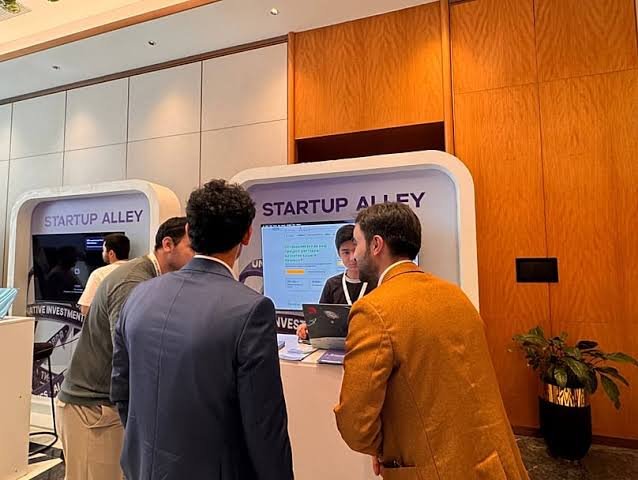
Central Asian startups are stepping up international expansion as venture funding, cross-border partnerships and new market-entry programmes create more routes into Asia, the Middle East, Europe and the United States. Recent moves in Uzbekistan and Kazakhstan show a growing focus on building companies for global markets.
Central Asian startups gain access to global markets
Central Asian startups are increasingly looking beyond their domestic markets as investors and technology organisations build new channels connecting the region with international ecosystems.
The shift is particularly visible in Uzbekistan and Kazakhstan, which account for much of the region’s startup and venture activity. A 2026 report from RISE Research found that Central Asia’s venture capital market reached a record $320 million in 2025. Kazakhstan accounted for $209 million of that total, while Uzbekistan’s venture funding reached $33.8 million.
The expansion is not limited to fundraising. Startups are also gaining access to international accelerators, foreign investors, technology hubs and market-entry programmes.
Recent developments involving South Korea, Southeast Asia, the Middle East and China indicate that Central Asian founders are building more direct connections with major technology and capital markets.
For startups from relatively small domestic markets, international expansion can provide access to larger customer bases and additional sources of venture capital.
Uzbekistan builds new routes into international markets
Uzbekistan has become one of the most active markets in the region for developing startup infrastructure and international connections.
The country has more than 750 startups and 15 venture funds with combined capital exceeding $180 million, according to data presented at the Central Eurasian Venture Forum 2026 in Tashkent. The government has also set a target of supporting 200 companies in entering international markets.
IT Park Uzbekistan has been developing programmes designed to help technology companies expand outside the country.
In April, IT Park Uzbekistan, Kazakhstan’s Astana Hub and Big Sky Capital agreed to establish an international technology hub in Malaysia. The initiative is designed to provide Central Asian B2B technology startups with a soft landing into Southeast Asian markets, including Malaysia and Singapore.
The hub creates a physical and commercial connection between Central Asian founders and one of the world’s fastest-growing technology regions.
Golden Gate Ventures expands its Central Asia focus
A more recent development has added another international investor to Uzbekistan’s startup ecosystem.
Singapore-based Golden Gate Ventures plans to launch a two-year programme for 20 startup founders from across Central Asia. The programme will be run with IT Park Uzbekistan and is intended to provide founders with mentors and access to the firm’s international network.
The announcement followed ICT Week Uzbekistan 2026, which took place in Tashkent in September.
Golden Gate Ventures also opened an office in Tashkent in June and said it plans to invest in Uzbek startups. The move gives the firm a local presence while providing a potential channel between Central Asian companies and international venture capital.
For founders, having international investors physically present in the region can reduce some of the barriers associated with fundraising and establishing commercial relationships overseas.
South Korea becomes another expansion route
Central Asian startups are also exploring South Korea as a destination for technology partnerships and market access.
On September 15, IT Park Ventures met with Korean venture firm PEN Ventures in Seoul to discuss opportunities for Uzbek technology companies to enter the South Korean market. The talks included the possibility of an acceleration programme for Uzbek startups through PEN Ventures’ existing programmes.
The development came during Uzbek President Shavkat Mirziyoyev’s state visit to South Korea.
The focus on South Korea is significant because the country has established strengths in semiconductors, electronics, manufacturing and advanced technology. Access to that ecosystem could give Central Asian startups opportunities to develop partnerships beyond traditional regional markets.
It also reflects a broader effort by Uzbek institutions to establish direct relationships with international technology hubs rather than relying only on domestic investors.
New venture fund links Uzbekistan with Korea
The Korea connection is also moving into venture capital.
On September 15, IT Park Ventures, SparkLabs Group Management and Mirae Asset Venture Investment signed a term sheet for the creation of SparkLabs Mirae Silk Road Fund I LP.
The proposed fund initially targets $2 million, with the potential to increase its capital to $10 million. The agreement was signed in Seoul during the Uzbek presidential visit.
The proposed structure would create another financing channel for startups connected to the Central Asian ecosystem.
It also shows how international capital is becoming more closely linked with local venture institutions. Instead of startups having to independently build relationships with overseas funds, regional institutions can help create those connections.
Kazakhstan startups look toward China and international capital
Kazakhstan is also developing stronger links with international investors and capital markets.
The country’s venture capital market reached $209 million in 2025, nearly three times the previous year’s level, according to RISE Research. The country’s startup ecosystem was valued at approximately $2.16 billion.
Recent discussions in Kazakhstan have focused on expanding access to international capital through routes involving Hong Kong and China.
A September 2026 discussion in Astana involving the Astana International Exchange, Hong Kong Exchanges and Clearing, Alem Capital Management and Gobi Partners examined ways Central Asian companies could connect with international capital through private investment, RMB financing and potential public-market routes.
The conversations reflect a wider effort to diversify the region’s financial connections.
Kazakhstan’s startup ecosystem remains relatively young, but investment platforms are increasingly looking beyond traditional sectors such as oil and gas toward technology, critical minerals and AI infrastructure.
AI remains a major investment theme
Artificial intelligence is one of the clearest areas attracting international attention in Central Asia.
In Kazakhstan, AI venture funding increased from approximately $14 million to $73 million between 2023 and 2025, according to data presented at the Central Eurasian Venture Forum. AI accounted for more than half of the country’s venture investment during that period.
Applications range from enterprise software and industrial automation to marketing, education and healthcare.
This is important for international expansion because AI products can often be adapted for multiple markets without requiring the same physical infrastructure as traditional businesses.
Central Asian founders working in AI can therefore target international customers from an earlier stage, particularly when their products are designed for business-to-business use.
The region’s growing access to accelerators, foreign venture funds and technology hubs is creating additional opportunities for these companies to test their products abroad.
Startup funding is growing, but capital gaps remain
The expansion of Central Asia’s startup ecosystem does not mean that the region has reached the funding levels of larger global technology markets.
RISE Research identified a significant capital gap, estimating that the region would need between $500 million and $1.1 billion in annual venture capital to approach global benchmarks.
That gap helps explain why international investors are becoming increasingly important.
Domestic funding can help startups develop their initial products and establish local traction, while foreign capital can provide additional resources for international hiring, sales, regulatory compliance and market entry.
The challenge is also about building enough companies capable of attracting larger rounds. A larger number of startups does not automatically translate into globally competitive technology businesses.
For Central Asia, the next stage of ecosystem development will therefore depend partly on whether startups can convert international connections into customers, funding and sustained overseas operations.
Central Asian startups move toward a global-first model
The region’s startup ecosystem is increasingly showing signs of a shift from local-first businesses toward companies designed to operate across borders.
A KPMG report on Central Asian venture capital noted that more entrepreneurs are building companies with international markets in mind from the beginning. It also highlighted the growing role of accelerators such as Y Combinator and 500 Global in connecting Central Asian startups with the global venture ecosystem.
Recent developments reinforce that trend.
Uzbek startups are being connected with Southeast Asia and South Korea. Kazakhstan is exploring deeper links with China and Hong Kong. International venture firms are establishing local offices and programmes.
These developments do not guarantee that every startup will succeed internationally. They do, however, show that the region is building more routes for founders to move beyond domestic markets.
For Central Asian startups, global expansion is increasingly becoming part of the funding and growth strategy rather than a step reserved for much later stages.
Key Takeaways
- Central Asia’s venture capital market reached a record $320 million in 2025, according to RISE Research.
- Uzbekistan is building startup links with Southeast Asia, South Korea and international venture investors.
- Kazakhstan’s venture market reached $209 million in 2025, with AI becoming a major investment area.
- International expansion remains a key focus as Central Asian startups seek larger customer bases and new sources of capital.
FAQ
Which Central Asian countries are leading startup activity?
Kazakhstan and Uzbekistan currently account for much of the region’s documented venture activity. Kazakhstan recorded $209 million in venture investment in 2025, while Uzbekistan’s venture funding reached $33.8 million.
Where are Central Asian startups expanding?
Recent initiatives are connecting Central Asian startups with Southeast Asia, South Korea, the Middle East, China and other international markets. Malaysia, Singapore and South Korea are among the markets receiving particular attention in recent programmes.
Why is Uzbekistan attracting international investors?
Uzbekistan has been developing its startup infrastructure, venture funds and international market-entry programmes. IT Park Uzbekistan is also working with overseas investors and technology organisations to help local startups expand internationally.
How important is AI to Central Asian startup funding?
AI is becoming a significant investment category, particularly in Kazakhstan. AI venture funding there increased to approximately $73 million in 2025, accounting for more than half of venture investment according to data presented at the Central Eurasian Venture Forum.